

























































Thousands packed Hoboken's waterfront this weekend as the Hoboken Italian Festival marked its 100th anniversary, anchored by a Feast Day procession that carries an 800-pound statue of the Madonna dei Martiri through city streets and down to the Hudson River. Festival-goers browsed booths along the river, sampled Italian food, and took in live entertainment and family activities during the four-day celebration at Sinatra Park.
The Feast Day tradition, which began in 1927, traces back to Italian immigrants from Molfetta who brought the custom with them to Hoboken, according to PIX11. The statue is carried from St. Francis Church to the water, where organizers reenact the Blessing of the Fleet by taking the Madonna out on a boat before returning her to the church, a ritual detailed by The Hoboken Girl. The marine ceremony honors a maritime protection tradition that originated among fishermen in Molfetta, Italy.
Gregory Gallo, a feast committee member, told PIX11 that Feast Day gives visitors a chance to experience Italian culture firsthand, and said the festival represents the broader history of the country and the story of immigrant assimilation. That theme of arrival and belonging also ran through a reading by children's author Jennifer Payne, who shared passages from her book Sounds of America, which follows a young boy named Paulie as he arrives from Italy and discovers his new home through its people and sounds. Payne set the story in 1926 and placed it specifically in 1926, and told PIX11 the book's setting connects directly with the festival's own history.
A Tradition Rooted in the 12th Century
The Madonna dei Martiri devotion itself stretches back far earlier than Hoboken's century of celebration. Its origins date to 1188, when Crusaders returning to Molfetta, Italy, reportedly recovered an icon of the Madonna floating in the Adriatic Sea, according to the Hoboken Italian Festival. The street festival and feast were formally combined by royal decree in 1399 under King Ladislao di Durazzo of Naples, and Molfettese fishermen adopted the Madonna as their patron protector long before the tradition crossed the Atlantic to New Jersey.
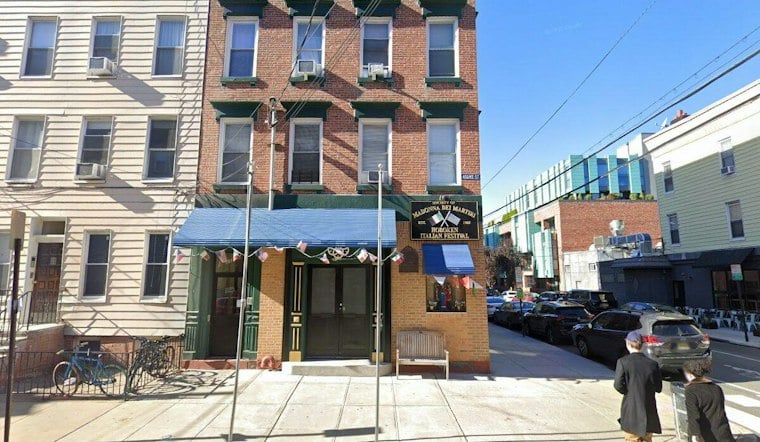
The Society Madonna dei Martiri, which organizes the feast, established its permanent headquarters at 332 Adams Street in Hoboken in 1950, two years after relocating its sacred statue to St. Francis Church on Jefferson Street. That parish remains the spiritual home for Molfettese Americans in the city. To keep the feast from fading the way other neighborhood celebrations did, younger organizers moved the event date in 1998 to the weekend after Labor Day and shifted its main footprint to Sinatra Park along the river, a change credited with saving the tradition after feasts honoring St. Lucy and Our Lady of Mount Carmel had already shuttered in prior decades.
From Country Music to a Drone Show
This year's centennial program stretched the celebration across distinct daily themes along the waterfront: a Country Music Night on Thursday, a Salute to America 9/11 memorial service on Friday, and a 100th anniversary drone show over the Hudson River on Saturday night that started at 9 p.m. and closed out that day's festivities. The festival continued Sunday with the NFL Experience, featuring a performance from the Hoboken High School Marching Band and a closing set from the Jersey Tenors.
Organizers projected attendance for the four-day centennial festival at up to 250,000 visitors, a scale that would make it one of the largest Italian-American cultural events in the New Jersey tri-state area, per figures cited by the Hoboken Italian Festival. The 2026 edition also partnered with local businesses through a Centennial Hospitality Suite on Pier A that spotlighted historic eateries, including Leo's Grandevous, established in 1939 and known as Hoboken's oldest family-owned restaurant.
Waterfront Space in Demand
The centennial arrived alongside a shift in how Hoboken manages its own waterfront programming. The city canceled its long-running Washington Street Fall Arts & Music Festival this year and replaced it with a smaller, single-day River City Fair that banned AI-generated vendor merchandise, according to reporting from Bill and Guy. Both events had competed for the same stretch of Sinatra Drive in September, and the change left the Italian Festival with an even larger footprint along the river as it marked its milestone year.
The festival's staying power reflects Hoboken's deep Italian roots. Self-reported Italian ancestry is the single largest ancestral group in the city, accounting for roughly 27.8% of the population, or more than 14,800 residents, according to Statistical Atlas. Statewide, more than 1.5 million New Jersey residents identify as Italian-American, per records from the New Jersey Italian and Italian American Heritage Commission, representing one of the highest concentrations of Italian ancestry anywhere in the country.


