

























































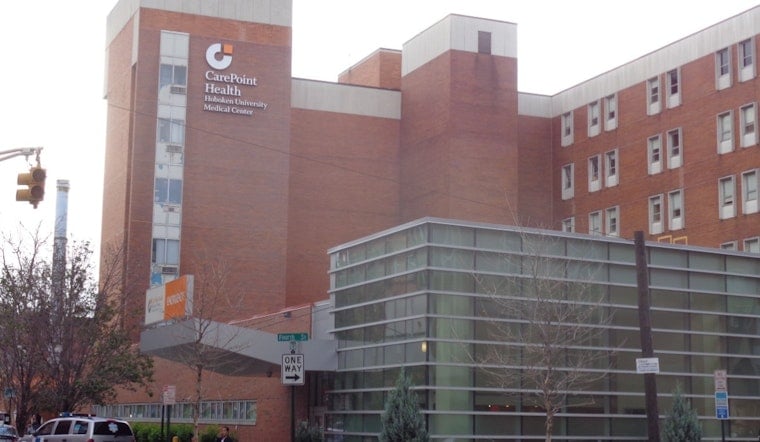
Hoboken University Hospital has doubled the size of its infusion center, adding six new treatment chairs, a second patient restroom and extra staff as it expands the days it treats patients from three to five each week. The renovation touched patient care spaces and waiting rooms throughout the unit, which delivers chemotherapy, immunotherapy, blood transfusions, hydration treatments, antibiotic infusions and other specialized medications.
Hudson Regional Health, the four-hospital system that now oversees operations at the Hoboken facility, said it recently unveiled the newly remodeled center, according to ROI-NJ. The upgrade added two chemotherapy-certified nurses and a medical assistant to the unit, along with workstations on wheels. The outlet reports that patients are now treated by nurses with specific oncology and infusion-services expertise, and that the expanded schedule and added staffing have increased both appointment availability and overall treatment capacity.
Part of a Bigger Cancer Care Push in Hoboken
The infusion center sits within a broader cancer program at Hoboken University Hospital that includes surgical oncology and dedicated care for breast, colorectal, lung and prostate cancer patients, per the same account. The hospital also offers survivorship care, nutrition counseling, patient navigation, clinical research opportunities and other support services in Hoboken. Sister facilities Bayonne University Hospital and Secaucus University Hospital offer the same cancer-care support services, the report notes.
Michael Hochberg, chief hospital executive of Hoboken University Hospital, said Hudson Regional Health is fully committed to investing in the hospital to improve patient care and modernize its facilities. The remodeled infusion center is the first of a number of infrastructure projects planned at the hospital, the article notes, signaling more upgrades are on the way for the 190-bed facility, which serves as an academic teaching affiliate for New York Medical College, according to Wikipedia.
Rebuilding After Bankruptcy
The expansion follows a turbulent stretch for the hospital's parent company. Hudson Regional Health officially formed as a four-hospital system in May 2025 after a U.S. Bankruptcy Court confirmed CarePoint Health's Chapter 11 restructuring plan, backed by more than $120 million in funding from Chairman Yan Moshe, according to a release carried by PR Newswire. CarePoint filed for Chapter 11 in November 2024.
That September, Hudson Regional Health unveiled a $75 million to $100 million capital improvement plan to modernize infrastructure, medical technology and service lines across its hospitals in Hoboken, Bayonne, Jersey City and Secaucus, as reported by Becker's Hospital Review. Before the infusion center project, Hoboken University Hospital's robotic surgery program had already reopened by September 2025 as part of the network's initial clinical expansion phase, according to Jersey's Best. The hospital traces its roots to January 8, 1863, when it was founded as St. Mary Hospital by the Poor Sisters of St. Francis to treat wounded Civil War soldiers, making it the oldest continuously operating hospital in New Jersey; it was renamed Hoboken University Medical Center in 2007.
Financial Strain Elsewhere in the Network
The investment in Hoboken stands in sharp contrast to troubles at a sister facility. In March, Hudson Regional Health suspended emergency room operations at Heights University Hospital, formerly Christ Hospital, in neighboring Jersey City, citing $74 million in annual operating losses in 2025, Becker's Hospital Review reported. Jersey City officials sought an emergency court injunction to halt the closure but were unsuccessful.
The following month, Hudson Regional Health withdrew its state Certificate of Need application to permanently close Heights University Hospital, opting instead to reopen lease negotiations with property landlords to explore sustainable care models in Jersey City, according to HudPost. The withdrawal canceled a scheduled state public hearing on the hospital's future, underscoring how volatile the network's footprint remains even as it pours new money into facilities like Hoboken's infusion suite.
Why Outpatient Cancer Care Is Growing
The Hoboken expansion also highlights the role of outpatient care in cancer treatment. New Jersey's cancer mortality rate fell 18.8% between 2016 and 2024. The available account does not provide verified figures for changes in overall cancer prevalence or cancer-related hospitalizations, identify what drove any hospitalization changes, or establish a national shift from inpatient beds to outpatient clinics.
The article also touches on workforce issues at the former CarePoint properties, but it does not provide verified details of a collective bargaining agreement, its terms, or changes in union relations under CarePoint's ownership.





