

























































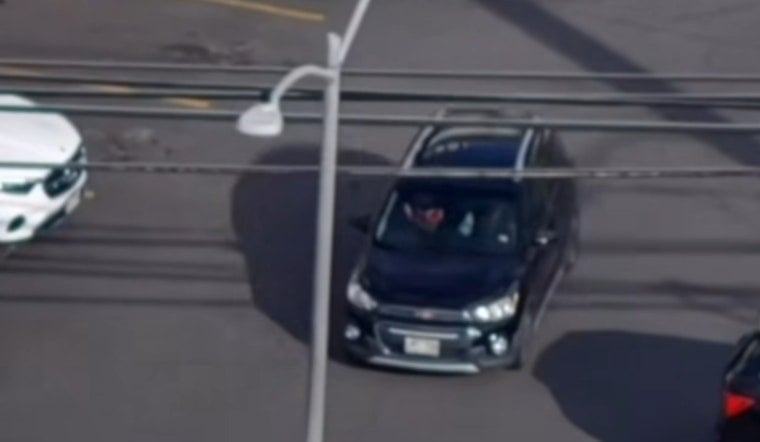
Honolulu police have released footage of the first arrest made with help from their new drone program, showing how officers tracked a stolen pair of Apple AirPods to a black Chevy Spark before cornering three suspects tied to a burglary, an auto theft, a robbery, and a car break-in. Two of the suspects bolted on foot when officers closed in, while a third was found hiding near the Palama Street off-ramp.
The Honolulu Police Department showcased its Drone as First Responder program on Sunday, September 6, detailing how the technology was used to track vehicles and suspects tied to a crime spree investigated by its Crime Reduction Unit, according to Hawaii News Now. The Crime Reduction Unit requested drone assistance after connecting the stolen AirPods to the suspect's vehicle, and the drone was airborne tracking both the car and the suspects by September 2. Officers eventually stopped the suspect vehicle near Loʻi Kalo Mini Park, where the Crime Reduction Unit provided real-time support on the ground.
How the Chase Unfolded on the Ground
Police detained the suspect connected to the stolen AirPods along with a second suspect, while two others fled on foot once the vehicle was stopped. HPD ultimately located the third suspect hiding near the Palama Street off-ramp with help from the drone, and all three were taken into custody. The department said the investigation remains ongoing, and no additional details about charges have been released.
The arrest marks the first publicized use of aerial tracking to close out a case since HPD launched its Drone as First Responder pilot on August 5, flying out of Alapaʻi Headquarters to cover District 1 — Downtown Honolulu, Chinatown, Ala Moana, and Kakaʻako — as well as District 5, which includes Kalihi, Kapālama, Moanalua, and Salt Lake, according to the Honolulu Police Department. The program runs in partnership with the Hawaiʻi State Department of Law Enforcement, which supplied FAA-certified HPD pilots with Skydio X10 and Skydio R10 drones. During preliminary testing before the official launch, the drones showed they could reach incident locations in as little as 30 seconds, giving officers eyes on a scene well before ground units arrive.
Policy Limits and a Debut Under Pressure
HPD policy restricts the drones to a strict call-for-service basis, meaning they can only be deployed in response to 911 calls or requests for officer assistance, and the department explicitly bars random surveillance or routine patrols. That constraint became relevant almost immediately: on the program's first day of operation, the drones were deployed not for a routine call but to assist law enforcement searching for an inmate who had escaped from the Oʻahu Community Correctional Center.
The rollout has not gone unchallenged. A day after launch, the ACLU of Hawaiʻi publicly opposed the program, calling on HPD and state authorities to halt flights until the Honolulu City Council passes binding oversight legislation with civil liberties protections. The organization pointed to national research showing more than 1,400 police departments across the country now operate drone programs, noting that pioneering Drone as First Responder initiatives have flown beyond visual line of sight in cities like Chula Vista, California, since 2018.
Property Crime Backdrop Across Oʻahu
HPD has framed the technology as a response to a persistent property crime problem. In public safety reporting from October 2025, the department noted that its officers respond to more than 1,600 burglaries and over 10,000 theft incidents across Oʻahu every year. Under Hawaii Revised Statutes § 708-836.5, unauthorized entry into a vehicle with intent to commit a crime inside is classified as a Class C felony, underscoring the potential legal exposure facing suspects in car break-in cases like this one.
The arrest near Loʻi Kalo Mini Park took place within District 5, a zone spanning 36 square miles and serving roughly 147,400 residents across neighborhoods including Kalihi, Moanalua, Salt Lake, and Iwilei, as Hoodline previously reported in coverage of a separate Moanalua burglary that also drew on the new drone program. District 5 was one of two zones chosen for the pilot's initial coverage, alongside District 1 downtown.





