

























































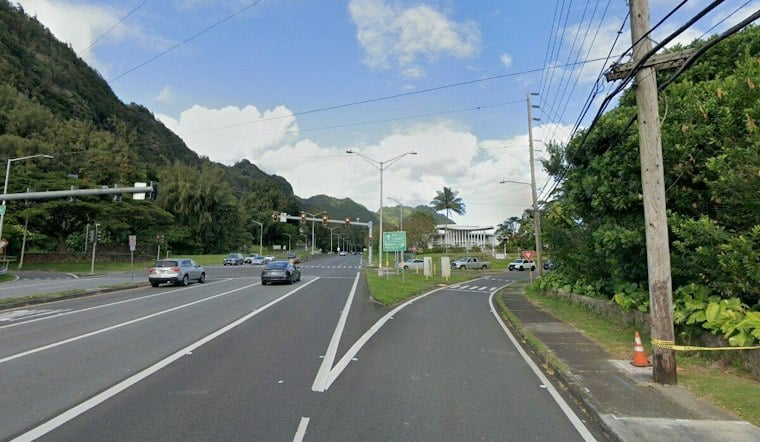
A federally funded study to cap a sunken stretch of the H-1 Freeway in Downtown Honolulu with a public park is running headlong into neighborhood fatigue, as Kalihi-Palama residents already worn down by years of construction question whether the state has its priorities straight. The idea, still in early planning stages, would place green space atop a covered structure over part of the freeway near Liliha Street and Pali Highway. It has already sparked questions and concerns in the community.
The concept comes from a $1.6 million Reconnecting Communities Pilot discretionary grant that the U.S. Department of Transportation awarded to the Hawaiʻi Department of Transportation in January 2025 to conduct the Reconnecting Downtown Honolulu H-1 Cap Park Planning study, according to AASHTO Journal. As reported by KHON2, the study area runs from the Liliha Street overpass to the Queen Emma Street overpass, and the project is expected to affect not just that stretch but the wider community and everyone who uses the corridor.
HDOT's own project materials describe the goal as reducing pollution while increasing access to open space and embracing traditional ahupuaʻa land principles, the Hawaiian land management system that runs from mountain watersheds to the ocean. The federal Reconnecting Communities Pilot program itself was created under the Bipartisan Infrastructure Law specifically to address urban transportation barriers that have long divided established neighborhoods, per the same AASHTO Journal report.
Kalihi-Palama Says It's Already Stretched Thin
The Dillingham Boulevard project and a coming transit-oriented development plan are part of the current discussion in Kalihi-Palama. The area has also seen roadway disruptions and utility relocation tied to the H-1 project.
That construction fatigue is compounding fast. HDOT described the nearby Gulick Avenue overpass as closed for one year for overpass reconstruction as part of an ongoing $100 million-plus H-1 eastbound widening and bridge-reconstruction project in Kalihi, a project that required building a temporary pedestrian bridge just to keep walking routes open for elementary students and residents. The H-1 corridor through Honolulu's urban core carries roughly 180,000 vehicles a day past the adjacent Kalihi neighborhood, according to Michigan Contractor & Builder.
Lawmaker Says Basics Come Before Big Ideas
The discussion has included whether basic infrastructure needs, such as sidewalks, should be addressed first. Online reaction to the cap park idea has also been substantial, but social media outrage does not translate into formal public comments that actually shape the study.
Kila said residents should take their concerns directly to decision makers rather than venting online, and community leaders are urging the public to weigh in sooner rather than later while the study is still taking shape. HDOT has scheduled an in-person open house for Tuesday, September 29, at the Keʻelikōlani Middle School Cafeteria, located at 1302 Queen Emma Street immediately adjacent to the study area. The event runs from a 5:30 p.m. presentation through interactive activities until 7:30 p.m.
How Honolulu's Plan Fits a National Model
Highway cap parks are a subject of federal guidance. The Federal Highway Administration has a report on cap parks, according to Hawaii Department of Transportation.
The state has also flagged safety concerns nearby, noting weaving and congestion in the eastbound H-1 project area. The USDOT's Reconnecting Communities Pilot funds the Honolulu study.
A Growth Plan Layered on Top
The cap park proposal also lands amid broader development discussions in Downtown and Kalihi, including the Dillingham project and a forthcoming transit-oriented development plan. For many in Kalihi-Palama, the immediate question remains whether the neighborhood can absorb one more major infrastructure undertaking while still living through the ones already underway.





