

























































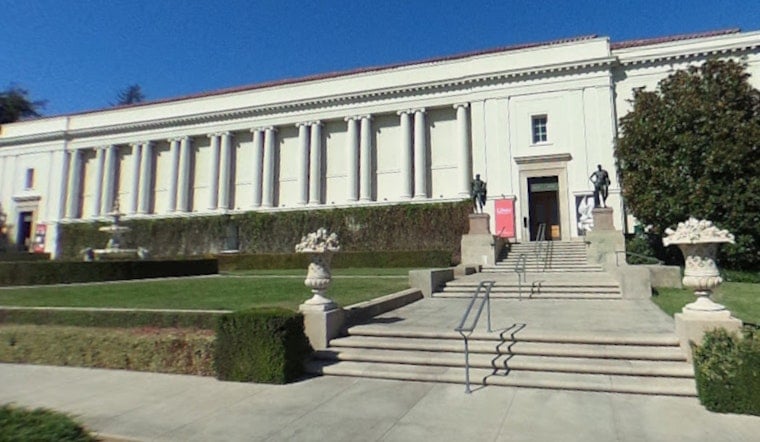
The Huntington Library has acquired an extensive archive documenting the Integratron, the strange metal-free dome built in the Mojave Desert by a self-described alien contactee, along with materials on its builder George Van Tassel and the postwar UFO community he led. The collection, announced September 1, 2026, includes more than 250 audio recordings, nearly 630 photographs, negatives and slides, 8-millimeter film footage, books, publications and other ephemera dating from the 1910s through the 1990s.
The archive came to the Huntington from collectors Donald and Dale McKinney, who had preserved items belonging to Van Tassel in a climate-controlled room for years, according to the Los Angeles Times. The acquisition marks the Huntington's first major purchase centered on ufology, expanding its collecting interests beyond the rare books, manuscripts and historical items — spanning the 11th through the 21st centuries — that the institution is best known for holding.
A Dome Built on Telepathic Instructions
Van Tassel, who worked as an aviation mechanic and test pilot, built the Integratron in 1960 after an alleged extraterrestrial encounter, per the Times' report. He claimed to have received telepathic instructions for constructing the metal-free dome and said it could generate electrostatic energy, help rejuvenate human cells and even make time travel possible. He also claimed to have communicated with a being from Venus he called Solganda, and the archive contains recordings of him channeling what he described as beings from beyond.
The 38-foot-tall cupola-style structure sits in the Mojave Desert and was reportedly built atop a geomagnetic vortex. Before settling in Landers in 1947, Van Tassel had worked in Southern California's aerospace industry for Douglas Aircraft and Lockheed, and as a flight test inspector for Howard Hughes, who later contributed funds toward the dome's construction, according to background compiled by PBS SoCal. That aviation background directly shaped his approach: the 55-foot-diameter wooden dome relies on 16 glued laminated wooden arches held together at the top by a central ring and friction, engineered entirely without metal nails or fasteners.
From Desert Convention to FBI File
Starting in the mid-1950s, Van Tassel hosted the annual Giant Rock Interplanetary Spacecraft Convention in the desert for 23 years, giving contactees a platform to speak about their experiences. The gatherings peaked at an estimated 11,000 attendees in 1959, a scale documented by the Integratron's own historical materials. Those conventions also funded the dome's construction through publicity and donations.
The scene drew federal scrutiny during the Cold War. An FBI investigation into Van Tassel began after a May 1954 complaint sent on Los Angeles Times letterhead criticized his group's chants of “peace, love and harmony” as un-American, the Times reported in its coverage of the Huntington acquisition. The Los Angeles Times itself filed the initial complaint that triggered the federal file on Van Tassel's community, and architectural historian Daniel Paul says agents ultimately found Van Tassel and his followers harmless.
Digitizing a Desert Legend
Much of the groundwork for preserving this history came from outside academia. Jack Wagner, who hosts the “Otherworld” podcast, visited the McKinneys in Landers and began digitizing the Integratron collection with help from his producers and Paul, an architectural historian who researched the Integratron and later prepared the successful nomination that placed the dome on the National Register of Historic Places in April 2018. Paul said California has historically been accepting and tolerant of different beliefs, and he hopes the archive will deepen understanding of the openness that drew people like Van Tassel to the state.
Erin Chase, the Huntington's associate curator of architecture and photography, said the institution had to have the archive. She hopes it will help people appreciate the Integratron's experimental architecture, and said whether the dome is actually healing is up to the person experiencing it. Chase added the acquisition could possibly lead to more collections along similar lines. The archive has already been cataloged and is available for ordering in the Huntington's reading room.
Where Aerospace Meets the Fringe
The Integratron materials intersect with two collections the Huntington already holds: its aerospace and architecture archives. Since 2005, the Huntington has documented Southern California's aviation and defense history through its Aerospace History Project, a collaboration with USC that holds more than 60 oral histories and extensive corporate records, according to the Huntington. The Integratron archive, which includes an architectural model and original blueprints, now documents the point where that mainstream aerospace history collided with fringe desert counterculture.
The Huntington's move also fits a broader national pattern of major institutions legitimizing paranormal archives. Rice University's “Archives of the Impossible,” launched in 2014, holds more than one million documents across 18 collections on unexplained phenomena, built in part around astronomer Jacques Vallée's papers, according to Rice University.
A Commercial Afterlife in Landers
The physical dome outlived its founder. After Van Tassel's death in 1978, ownership changed hands for decades until sisters Joanne, Nancy and Patty Karl acquired the property in 2000 and restored it into a commercial sound bath venue, according to Courthouse News. The venue now uses 22 quartz crystal singing bowls and draws hundreds of visitors weekly. The dome's acoustics have also attracted pop culture attention beyond wellness seekers: British rock band Arctic Monkeys recorded portions of their 2009 song “Secret Door” inside, a detail noted by The Guardian.
The desert surrounding the Integratron has not entirely shed its unpredictable edge. In August 2025, the San Bernardino County Sheriff's Department investigated a shooting near Landers' Giant Rock — the original site of Van Tassel's conventions — after gunfire struck a vehicle amid a gathering of 20 to 30 people, though no one was injured, as previously reported by Hoodline. Giant Rock remains an unmonitored gathering spot in the Mojave Desert, a modern echo of the crowds Van Tassel once summoned there for very different reasons.





