

























































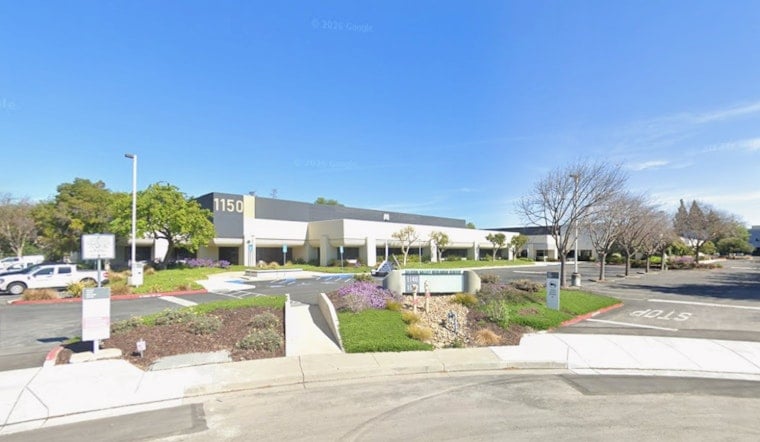
ISE Labs has spent $29.5 million to acquire two office and research buildings at 1140 and 1150 Ringwood Court in North San Jose, expanding the semiconductor testing company's local footprint to more than 143,000 square feet across three nearby buildings. The company, which tests semiconductor devices to determine whether they are likely to fail, employs roughly 200 people and is a subsidiary of Taiwan-based Advanced Semiconductor Engineering.
The board of ASE Technology Holding Co. formally approved the purchase on August 20, according to SmBom, which reported the price at $29,526,817.14, paid to Exeter 1140-1150 Ringwood LLC. An independent appraisal by Colliers had valued the 80,472-square-foot property at roughly $30.5 million, or $366.92 per square foot, meaning ISE Labs picked up the buildings slightly below market value, the outlet's reporting shows. As reported by The Real Deal, the seller's identity beyond the LLC was not disclosed, and the 1150 Ringwood Court building measures 28,000 square feet while 1140 Ringwood Court spans 52,400 square feet.
The two buildings sit less than a mile from ISE Labs' 2201 Qume Drive facility, which the company opened in 2024 after buying the 63,000-square-foot building in late 2023 for $24 million, per The Real Deal's account. That earlier purchase doubled ISE's total available R&D lab and operational space to 150,000 square feet across its Fremont and San Jose sites, according to a statement from parent company ASE Technology. The Fremont headquarters at 46800 Bayside Parkway remained intact after the Qume Drive acquisition, and the company's local footprint now centers on these three closely clustered North San Jose properties.
Built for Heavy Power, Not Just Desks
Built between 1984 and 1985 on a 5.41-acre parcel, the Ringwood Court campus features 2,000 amps of electrical power at 277/480 volts per building, along with dedicated dock and grade-level loading bays and heavy HVAC infrastructure designed for R&D lab work, according to a property listing on LoopNet. That kind of power capacity is a common requirement for semiconductor failure-analysis and testing operations, which rely on specialized cleanroom and lab equipment rather than standard office buildout.
The buildings previously changed hands in February 2022, when chipmaker Synaptics sold them along with adjacent parcels to South Bay Development as part of a $58 million portfolio sale, per a listing on Traded. ISE Labs President Jui Ko said in 2024 that the firm had already invested roughly $500 million in its U.S. laboratories and anticipated investing up to $200 million more into its San Jose footprint over time to keep pace with demand for artificial intelligence and high-performance computing chip testing, according to the Taipei Times. ASE Chairman Tien Wu separately said the company was firmly committed to its investment in Silicon Valley, per Mercury News.
A Regulatory Boost From Federal Trade Status
ISE's existing Qume Drive site carries Foreign-Trade Zone status, approved by the U.S. International Trade Administration in January 2024 under Subzone 00P of FTZ Zone 018 for the 2.8-acre site — a designation that can reduce import duties tied to testing and assembly operations. That regulatory backing has coincided with a broader wave of semiconductor firms choosing to buy rather than lease specialized flex space in Silicon Valley. Nokia-owned optical chipmaker Infinera, for instance, purchased its 82,100-square-foot facility at 6373 San Ignacio Avenue in South San Jose for $27 million in cash earlier this year to expand optical chip production, as reported by The Real Deal.
The trend reflects a split in the region's commercial real estate market. Silicon Valley's overall direct office vacancy rate stood at 16 percent in the second quarter, and had declined over the past year from 17.7 percent in the same period a year earlier, though it had ticked up from 16.6 percent in the first quarter of 2026, per The Real Deal's reporting on data from Kidder Mathews. San Jose's own office vacancy rate was notably higher at 19.3 percent, while Milpitas sat at 20.3 percent, Newark at 32.3 percent, and Campbell at 33.1 percent.
Specialized lab and industrial space tells a different story. Kidder Mathews reported that Silicon Valley's R&D property vacancy rate stood at 11.7 percent in the second quarter, up 50 basis points from the prior quarter but still well below the region's overall office vacancy. Industrial vacancy was tighter still, falling 100 basis points quarter-over-quarter to just 4.4 percent, reflecting persistent demand for functional, hardware-capable flex buildings that companies like ISE Labs need for testing infrastructure.
Bigger Deals Moved Through Silicon Valley This Summer
ISE's purchase was far from the largest transaction in the local market this quarter. Great America Commons, a 635,000-square-foot development, sold for $310 million after PGIM offloaded the property to Ellis Partners and the Baupost Group, making it the priciest Silicon Valley office sale of the second quarter, per The Real Deal. Apple, meanwhile, paid $162.2 million for the 684,000-square-foot building at 684 West Maude Avenue, purchasing it from Union Investment and Metzler Real Estate in the second-largest office deal of the quarter.
Those blockbuster sales underscore how differently large corporate landlords and specialized manufacturers are approaching the market right now — one chasing scale in traditional office towers, the other locking down power-hungry lab space it can control for the long haul. Hoodline previously reported on a related shift in the region's corporate real estate scene, including the sale of Sunnyvale’s old Juniper HQ and Altera’s listing of its own San Jose campus. Hoodline also covered an earlier chapter of this same growth pattern among South Bay chipmakers back in 2023, when NXP Semiconductors leased space nearby to expand its own operations.





