

























































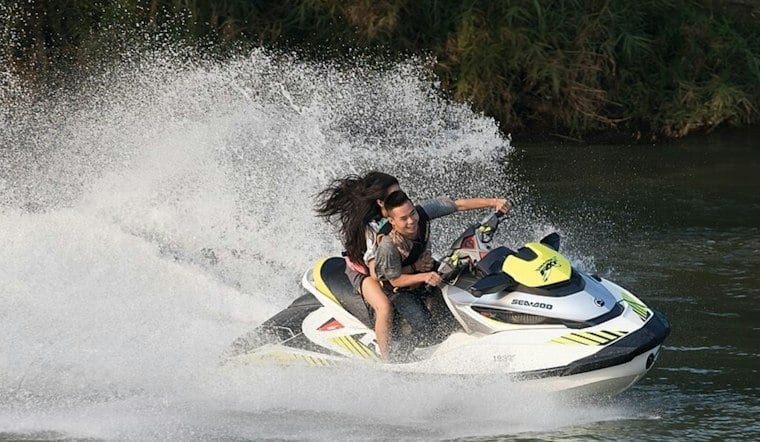
A woman riding in a jet ski tour group returning from Catalina Island spent roughly an hour alone in the open ocean in late July after falling off the back of her jet ski, with nobody in her group noticing she was gone. She survived by staying afloat in her life vest and calling for help on a cell phone stored in a dry bag, before wildlife officers patrolling nearby spotted her waving her arms in the water.
The rescue unfolded when the crew of the California Department of Fish and Wildlife's Patrol Boat Coho, on patrol offshore near Catalina Island, heard an emergency call broadcast over the VHF marine radio, according to the California Department of Fish and Wildlife. The call reported a female wearing a blue and red life vest stranded afloat in the water, but it came with GPS coordinates and no further information. Lt. Rob Rojas, the Coho's operator and supervisor, entered the coordinates into the vessel's chart plotter and directed the boat toward the location while also notifying the U.S. Coast Guard, which was separately attempting to locate the victim.
Spotted Waving in Rising Swells
As the Coho approached, wildlife officers aboard spotted the woman waving her arms in the water. The rescue was complicated by increasing swell and windy conditions in the San Pedro Channel, the roughly 20-mile-wide strait separating the Southern California mainland from Catalina Island. The channel is depicted in NOAA Nautical Charts.
Wildlife officers assisted the woman onto the vessel while Rojas remained at the helm, and the crew assessed her for injuries. She had no obvious injuries and was in good spirits after being pulled from the water, having spent approximately one hour adrift. She told rescuers she had fallen off the back of the jet ski during a guided tour returning from Catalina Island with her husband, and that other participants in the tour group had not noticed she'd fallen off, leaving her floating and abandoned in the open ocean.
A Dry Bag and a Life Vest Made the Difference
The woman had called for help using her cell phone, which she'd kept stored in a dry bag, and she wore a life vest throughout her time in the water. The open-ocean setting added to the challenge of the rescue.
While the Coho crew waited for the Coast Guard to arrive, they gave the woman a towel and fluids. She was ultimately transferred to a Coast Guard vessel, which transported her safely back to the mainland. Personal flotation devices are important on vessels of any kind and in any marine environment, wildlife officials noted in describing the rescue.
Why the Life Vest Mattered
California law requires every operator, passenger, and person being towed on a personal watercraft to wear a U.S. Coast Guard-approved life jacket at all times on the water, according to Ace Boater. That requirement, paired with the woman's dry-bagged phone, likely made the difference between a frightening hour adrift and a far worse outcome. Her life vest and dry-bagged phone were important safety tools during the rescue.
Falls overboard, falls within vessels, and ejections are additional risks in recreational boating. The Coho itself has a history of joining multi-agency ocean rescues; in June 2023, its crew helped after 14 people abandoned the charter passenger boat Sea Jay when it struck rocks at Pelican Harbor off Santa Cruz Island, according to Islapedia. CDFW's Law Enforcement Division also operates patrol vessels such as the Coho.





