

























































Three young children who wandered away from their family's campsite east of Buena Vista were found safe Saturday afternoon after a sheriff's K-9 deputy named Arch picked up their scent and led searchers straight to them. The children, two 6-year-olds and a 9-year-old, were located around 2 p.m. after being missing for roughly five hours, and none of them were injured.
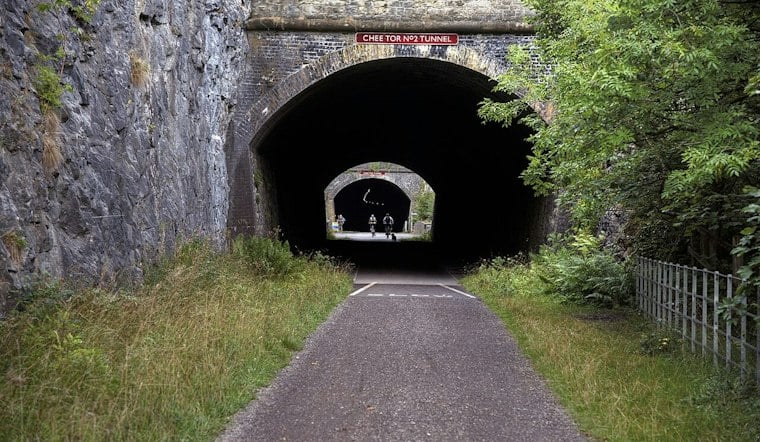
Relatives realized around 9 a.m. that the children were missing and searched for about two hours before calling law enforcement. Deputies were dispatched around 11 a.m. last Saturday to the Midland Bike Trail, according to KOAA News 5. The children were part of a large family group visiting from the Denver area. MTB Project lists BLM Colorado as the land manager for Breakfast Meats Loop in the Midland Trail Route System, according to MTB Project.
Arch Picks Up the Scent
The response brought together deputies, Chaffee County Search and Rescue volunteers and several search tools. KOAA reported that crews used multiple drones and a helicopter while foot teams searched the area in a grid. Sheriff’s office K-9 deputy Archie, known to the department as Arch, was brought in and picked up a scent from the campsite.
Arch led searchers in the direction the children had traveled, and teams followed his lead until they spotted the children from higher ground. The children were found about 1.5 miles from the campsite, according to the same account. Arch has been deployed as a specialized scent-tracking canine deputy with the Chaffee County Sheriff's Office.
Sheriff Credits Volunteers and the K9
Sheriff Andy Rohrich credited the outcome to the search-and-rescue volunteers and Arch, and praised the response as quick and effective. He said, “I am very proud of them all.”
Rohrich was unanimously appointed sheriff by county commissioners in September 2024, following the retirement of longtime Sheriff John Spezze, after 22 years with the department that included a stint as undersheriff overseeing search and rescue operations, according to Heart of the Rockies Radio. Backcountry search operations in Chaffee County are carried out by two separate all-volunteer nonprofits, Chaffee County Search and Rescue North in Buena Vista and Chaffee County Search and Rescue South in Poncha Springs, both of which mobilize under the sheriff's direction, per Chaffee County Search and Rescue South.
Colorado's Backcountry Search-and-Rescue Work
The response also reflects the scale of volunteer search-and-rescue work across Colorado. Teams respond to more than 3,600 callouts each year, and the state has an estimated 2,800 to 3,000 volunteers, according to The Colorado Sun. In April 2026, Colorado Parks and Wildlife and the Colorado Division of Homeland Security signed an interagency agreement shifting statewide oversight and coordination away from the volunteer-led Colorado Search and Rescue Association. The Colorado Sun reported that the agreement starts Aug. 1, runs through July 2031, and leaves responsibility for search-and-rescue activities with sheriffs.
Much of the funding for costly operations involving helicopters, drones, and K9 units like Arch flows through the Backcountry Search and Rescue Reimbursement Fund, which draws on $5 annual CORSAR cards and surcharges on hunting, fishing, and recreational vehicle licenses to reimburse search-and-rescue teams, according to Colorado Parks and Wildlife. The state's Keep Colorado Wild Pass, an opt-in program tied to vehicle registrations, adds another $2.5 million a year earmarked for search and rescue grants that help volunteer teams cover gear and training costs.
How Colorado Supports Search and Rescue
The statewide callout and volunteer estimates cited above are a snapshot, not a year-by-year comparison. The Colorado Search and Rescue Association notes that its published total volunteer-hours figure excludes roughly 400,000 hours per year of on-call duty. Under the reimbursement system described by The Colorado Sun above, Colorado Parks and Wildlife distributes Backcountry Search and Rescue Fund and Keep Colorado Wild Pass money through team requests for reimbursement of specific expenses, using a formula that considers each team’s number of responses.





