

























































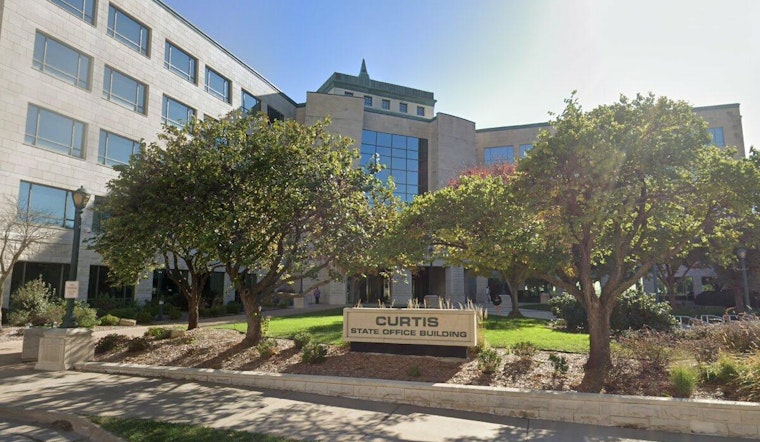
A Kansas National Guard staff sergeant who says the state pulled the funding for her public health job right after learning she was headed overseas has finally secured a $35,000 settlement, capping a legal fight that stretched more than four years through federal court. The Kansas Department of Health and Environment agreed to pay Staff Sgt. Stacy Gonzales after the U.S. Department of Justice accused the agency of violating the federal law that protects servicemembers from losing their civilian jobs because of military duty.
Gonzales worked as a Disease Intervention Specialist for the Finney County, Kansas, Department of Health from May 2001 through June 2010, a stretch during which she also deployed on active duty to Iraq and Kuwait, according to the U.S. Department of Justice complaint. The complaint states that KDHE eliminated the grant funding tied to her position after learning of her upcoming 2010 deployment, a move Gonzales claimed amounted to discrimination under the Uniformed Services Employment and Reemployment Rights Act, commonly known as USERRA. As reported by FOX4KC, the Justice Department formally filed suit against KDHE in June 2022, alleging the agency discriminated against servicemembers in violation of the 1994 law.
Under the settlement agreement, KDHE will pay Gonzales $35,000 and has committed to updating its USERRA policies and procedures to ensure employee compliance going forward, per the same FOX4KC report. The agency also agreed to provide training for all employees on those updated policies, according to the Justice Department. Assistant Attorney General Harmeet K. Dhillon, who leads the department's Civil Rights Division, said no servicemember should lose her civilian job because of National Guard service. The department said it will continue to defend and champion servicemembers' employment rights.
A Legal Fight That Outlasted Two Courts
The case took an unusually long road to resolution. In January 2024, U.S. District Judge Toby Crouse initially granted summary judgment dismissing the lawsuit, according to the Topeka Capital-Journal. That ruling effectively let the state sidestep liability for years while Gonzales's paycheck, technically issued by Finney County, complicated the question of who legally employed her.
The case then reached the U.S. Court of Appeals for the Tenth Circuit in December 2025, according to the Tenth Circuit's opinion. The case ultimately settled rather than face a federal trial.
State Leaders Signed Off Before DOJ's Announcement
Kansas state officials approved the payout well before the Justice Department's public announcement. The Kansas State Finance Council approved the $35,000 payment from the state's Tort Claims Fund in July 2026 following an executive session requested by Kansas Attorney General Kris Kobach, the Topeka Capital-Journal reported. The settlement drew on public funds set aside specifically for legal claims against the state, a detail that underscores how seriously state leadership treated the exposure created by the appellate ruling.
Part of a Bigger Legal Trend
The case is one entry in a broader pattern of USERRA enforcement nationwide. Congress enacted USERRA in 1994 to prohibit civilian employers from discriminating against employees based on past, present, or future military obligations and to guarantee reemployment rights after active duty, per the U.S. Department of Labor. The U.S. Department of Labor's Veterans' Employment and Training Service handles USERRA complaints.
The Littler Mendelson article discusses a DOJ USERRA action against a private Texas assisted-living facility and explains the private-employer referral process.
Hoodline has covered similar enforcement actions before. Federal prosecutors reached a consent decree over Guard rights with New York's Liberty Central School District in 2024 after the district denied proper compensation to a teacher serving in the Army National Guard. And in August 2026, a federal judge granted class-action status to Delta Air Lines pilots suing under USERRA over unpaid short-term military leave, covering roughly 119,000 instances of military service. Taken together, the cases show federal regulators and courts increasingly unwilling to let employers, public or private, treat military service as a liability rather than a protected right.




