

























































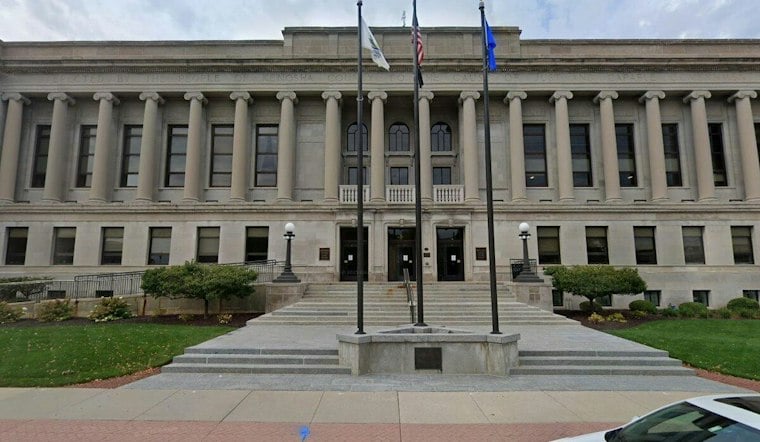
A Kenosha County man twice convicted of poisoning his wife with antifreeze in 1998 is now asking a judge to throw out his second conviction and grant him a third trial. Mark Jensen, 67, filed a post-conviction motion this month arguing that his defense attorneys during his 2023 retrial botched their handling of the computer evidence that helped put him away for life.
Jensen was convicted of first-degree intentional homicide in February 2023 in the death of his wife, Julie Jensen, who died in their Pleasant Prairie home in 1998, according to FOX6 News Milwaukee. It was actually his second conviction for the crime — he was first found guilty in 2008, but that verdict was later overturned. Kenosha County Circuit Court Judge Anthony Milisauskas sentenced Jensen to life in prison without parole on April 14, 2023, telling the court the killing was planned, intentional, and researched, and that Jensen had psychologically and emotionally tortured Julie for years before her death.
Prosecutors alleged Jensen began poisoning his wife with ethylene glycol in December 1998 and drugged her with sleeping medication before suffocating her in her bed on December 3 of that year, according to CBS News. Kenosha County Medical Examiner Dr. Mary Mainland testified that Julie Jensen's cause of death was ethylene glycol poisoning coupled with terminal asphyxiation, as reported by Court TV. Jensen has maintained he is innocent and has claimed his wife poisoned herself.
A Case Built Twice on Different Evidence
Jensen's first trial hinged on a handwritten letter Julie Jensen left behind identifying her husband as the person police should look to if anything happened to her — evidence that became known as the letter from the grave. That letter, along with police voicemails, was central to his 2008 conviction, but it was ultimately thrown out because its admission violated Jensen's Sixth Amendment right to confront his accuser, since he never had the chance to cross-examine his late wife. The Wisconsin Supreme Court reached that conclusion in March 2021, citing U.S. Supreme Court precedent barring testimonial hearsay without cross-examination, according to court records cited by Justia Law.
That ruling followed years of federal court intervention. In September 2015, the U.S. 7th Circuit Court of Appeals affirmed a federal district court order granting Jensen habeas corpus relief, finding the letter had been a pivotal piece of improperly admitted evidence, per Justia Law's case record. The U.S. Supreme Court declined to review the Wisconsin Supreme Court's ruling in 2022, closing off Jensen's final federal avenue and forcing Kenosha prosecutors to rebuild their case from scratch for a retrial, as noted by Courthouse News.
Computer Searches Replaced the Letter as Key Evidence
With the letter gone, prosecutors leaned heavily on digital evidence at the January 2023 retrial. Wisconsin Department of Justice Division of Criminal Investigation digital examiner Jason Ruff testified that the Jensens' home computer recorded searches for ethylene glycol, poison, toxins, assisted suicide, and low pulse symptoms in the period leading up to Julie's death, according to the same FOX6 News Milwaukee report. That search history became the circumstantial backbone of the state's case for premeditation once the letter was no longer usable.
Jensen's original 2008 trial had been presided over by Kenosha County Circuit Court Judge Bruce Schroeder and was relocated to Walworth County because of extensive local news coverage. The retrial, by contrast, proceeded in Kenosha, Wisconsin, according to court records and prior reporting on the case.
New Motion Targets the Computer Evidence Directly
Jensen's latest motion, filed by attorney Joseph Bugni, argues ineffective assistance of counsel and asks for an evidentiary hearing at which his 2023 defense attorneys would testify. The motion claims those attorneys failed to investigate the timeline of internet searches presented at trial and failed to closely examine the underlying computer files, allegedly leaving the jury to convict Jensen based on inaccurate evidence.
The filing goes further, claiming the state failed to turn over crucial computer evidence and that withheld material could actually clear Jensen. Bugni has represented Jensen for more than a decade, having previously served as his federal public defender with Federal Defender Services of Wisconsin during the 2015 federal appeals, according to a case record from FindLaw.
Under Wisconsin post-conviction rules, the circuit court now has 60 days from the September filing to either grant an evidentiary hearing or deny the motion outright, per FOX6 News Milwaukee's reporting on the filing. Whatever the court decides can be appealed to the Wisconsin Court of Appeals, extending a legal fight that has already stretched across nearly three decades since Julie Jensen's death.
Jensen was returned to Dodge Correctional Institution in Waupun after his 2023 sentencing, according to Courthouse News. In the years following his wife's death, Jensen married a woman with whom he had reportedly had an affair while married to Julie — a detail prosecutors have pointed to as part of the case's backdrop, though Jensen has continued to insist he played no role in her death.





