

























































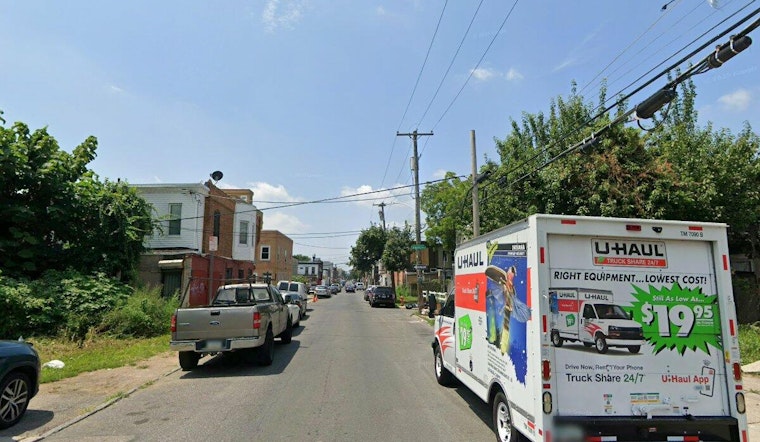
Holes, uneven pavement, large metal plates and sections of roadway that have simply caved in — that's what residents on the 100 block of Amber Street in Kensington describe when they talk about the ground beneath their feet. The street, located between Westmoreland and Ontario Streets, has been the subject of complaints for years, and neighbors say they're running out of patience.
According to NBC10 Philadelphia, residents said some of the street's issues trace back to pipes running from their own homes, and they ended up paying for that pipe work themselves. Cellphone video obtained by the station showed a large hole open in one section of the street. NBC10 investigators found the block has generated 39 complaints to 311 over a cave-in dating back to 2022, and three of those complaints remain open today.
Under Philadelphia Water Department regulations, the city is not on the hook for that kind of repair. Property owners are legally and financially responsible for maintaining private water service pipes and sewer laterals running from their homes to the city main beneath the street, according to the Philadelphia Water Department. Homeowners who receive a Notice of Defect are required to hire licensed plumbers to excavate and fix those private lines themselves, often at a cost of thousands of dollars.
Gas Smells Bring Crews Back Again and Again
Beyond the crumbling pavement, residents raised concerns about a recent gas smell on the block, and crews investigated it repeatedly, per the station's report. Teresa Ball said crews entered homes three or four times while investigating the odor, and residents said the gas-smell issues were ultimately attributed to the street itself. Mary Gregory said her house is falling in and that her insurance company isn't covering the damage.
Victor Berdecia told the outlet he's been trying to get the problems addressed for more than a year. Karen Vail said residents want more than temporary patches — they want the underlying problems actually fixed, not just papered over with asphalt.
Why a Caved-In Street Takes So Long to Fix
The Philadelphia Department of Streets draws a hard line between a pothole and a cave-in. A pothole is crumbling in the upper asphalt layer, but a cave-in is a bottom-up collapse caused by soil erosion beneath the road, according to the City of Philadelphia. That erosion is often traced to leaking pipes or manholes, and it means cave-ins require investigation by multiple agencies and full utility repairs before the Streets Department can permanently repave — which is part of why fixes on blocks like Amber Street can drag on for months.
That underground vulnerability isn't unique to this block. Much of Philadelphia's rowhouse-lined street grid sits atop 19th-century streams that were enclosed into brick sewer conduits, leaving the soil beneath many neighborhoods, including Kensington, prone to chronic erosion and collapse as that infrastructure ages, per Billy Penn at WHYY. Neighbors fear the consequences could be severe: they worry that a vehicle could fall into a hole and cause a serious accident, and they're especially anxious about large vehicles like school buses and garbage trucks rolling down the block.
The Philadelphia Inquirer reported that a large sinkhole on the 1400 block of N. 57th Street in West Philadelphia closed the street in July 2023, with the cause unknown at the time.
A Pattern Playing Out Across the City
Amber Street is far from the only Philadelphia block wrestling with this exact problem this year. Hoodline reported in May that a sinkhole near 4th and Jefferson lingered unpaved for weeks after utility repairs wrapped, eliminating parking and disrupting traffic in another part of Kensington. A West Oak Lane cave-in in January expanded after a secondary leak surfaced outside the original work zone, according to CBS News Philadelphia, delaying the sewer and roadway reconstruction there. And in August, a water main break tore open a sinkhole on Logan's 11th Street tied to the city's aging pipe network.
Some of these delays may not be evenly distributed across the city. A July analysis of nearly 466,000 Philadelphia 311 service requests found residents in lower-income ZIP codes face median wait times roughly 54 percent longer than those in higher-income ZIP codes, according to The Philadelphia Citizen. Median wait times ranged from four days in Center City to 18 days in lower-income neighborhoods, the outlet found.
The stakes when these repairs are delayed can be extreme. A 2019 Philadelphia Inquirer investigation into a fatal South Philadelphia street explosion found that subterranean water leaks from defective sewer laterals and city hydrants had washed away supporting soil, creating underground caverns that exposed and compromised nearby gas mains. That explosion killed two residents and leveled several rowhouses. Roughly half of Philadelphia Gas Works' 3,000-mile distribution system still consists of aging cast-iron pipes, which are susceptible to cracking when the soil supporting them erodes. According to the Pennsylvania Public Utility Commission, PGW's approved 2022 plan called for replacing another seven miles of cast iron main, financed through its DSIC, previously capped at 5%. Philadelphia Gas Works says it anticipates replacing all of its unprotected steel service lines by 2038 and all cast iron mains by 2058.
Where Things Stand on Amber Street
The city performed work on the Amber Street block throughout the year, addressing individual problem areas as they came up, but residents say that patchwork approach hasn't solved the underlying issue. The three complaints still open on the block are expected to be addressed by mid-November, per NBC10's reporting. As of Thursday afternoon, the city had not responded to the station's questions about residents' concerns, though a city spokesperson later confirmed receipt of those questions.
Homeowners facing costly private lateral repairs do have one avenue for help: the city's Restore, Repair, Renew program offers low- or zero-interest loans to cover mandatory sewer lateral and water pipe work beneath public streets, according to the Philadelphia Water Department. For now, though, Amber Street residents are left watching the pavement outside their homes shift and sink, waiting to see whether November brings the permanent fix they say they've been asking for since 2022.





