

























































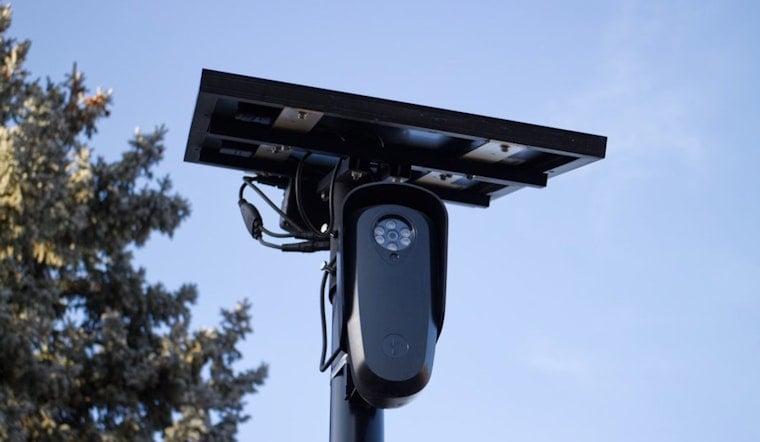
Kentucky lawmakers are weighing whether the state’s current limits on automated license plate readers go far enough. House Bill 58, signed by Gov. Andy Beshear in April and effective in July, capped standard license plate reader data retention at 90 days, banned the sale or broad sharing of raw plate data, and required police departments to adopt written ALPR policies. According to the Kentucky Legislative Research Commission, the 90-day storage limit has some exceptions. According to the Kentucky Legislative Research Commission, House Bill 58 requires the retention and destruction of captured license plate data to occur every 90 days, subject to exceptions.
The next question is who can search the data
At Thursday’s September 3, 2026, meeting of the Interim Joint Committee on Judiciary in Frankfort, lawmakers considered an additional step: requiring police to obtain a warrant before searching for a specific plate, except in exigent circumstances. House Majority Caucus Whip Jason Nemes said a warrant should generally be required, according to The Courier-Journal. Nemes also backed potentially stronger penalties for officers who misuse the cameras and a public audit system that would allow people to determine whether police had searched their own license plate. Misuse is currently a class A misdemeanor carrying up to 12 months in jail. Rep. Daniel Elliott agreed that reasonable safeguards and a warrant requirement were appropriate, while Nemes warned that a lack of balance could move the state toward what he described as a police state.
The scope of any warrant requirement remains unresolved. Lawmakers heard testimony from Flock Safety, police and retail representatives, and the proposal remains under discussion. Nemes, Elliott and other Republicans have signaled support for warrants, public audits and tougher penalties, months after the passage of House Bill 58.
Recent cases have made access controls a central concern
The debate is unfolding after allegations that officers used Flock systems to monitor former romantic partners. A Shively police officer was charged in late August with using the cameras to track the mother of his child. Hoodline previously reported that Shively Officer Asad Zahir was arrested on August 26 and charged with five counts of official misconduct and five counts of unlawful access to a computer after Flock’s AI auditing software flagged 2,048 unauthorized searches of two vehicles belonging to his former girlfriend between January and May, according to NBC Palm Springs. Records show 241 of the searches occurred after the victim obtained a protective order against him.
Separately, an LMPD officer is awaiting trial on allegations of using the system to stalk and harass a former romantic partner. A separate LMPD incident also raised questions about account sharing: an LMPD detective was disciplined in 2025 after giving Flock login credentials to a federal officer, who used the account for immigration-related searches. The investigation led to discipline for an LMPD lieutenant as well.
A Dec. 3, 2024, report from the U.S. Government Accountability Office said DHS law enforcement agencies reported they could view information from third-party automated license plate readers.
Skepticism extends beyond individual investigations
Rep. Nima Kulkarni and Rep. Pam Stevenson questioned Flock cameras and the adequacy of current data safeguards at the hearing. Rep. Jennifer Decker said the cameras were the leading concern she had heard from constituents and warned that Kentucky surveillance could be approaching the kind of state described in George Orwell’s 1984. Rep. Savannah Maddox said many residents simply do not want to be monitored and surveilled by the cameras.
The concern has also appeared outside the hearing room. Vandalism targeting cameras has surged in Louisville: police arrested a Louisville man last month after he allegedly shot at a Flock camera, and additional stolen cameras were found.
Some communities are choosing not to continue
While state lawmakers debate uniform requirements, several Northern Kentucky cities have already ended or interrupted their relationships with Flock Safety. Hoodline has tracked at least eight Greater Cincinnati and Northern Kentucky municipalities that canceled, paused or allowed contracts to expire between July and September amid privacy concerns, with Pierce Township becoming the eighth city to cut ties. The municipalities include Fort Thomas, Fort Mitchell, Independence, Taylor Mill, Erlanger and Newport. Fort Thomas cited internal audits and declining network benefits as neighboring towns backed out.
Supporters point to investigations and public safety
Company, police and retail representatives told lawmakers that the cameras have effective uses. Flock cameras helped lead to the recent arrest of two people in the killing of a 16-year-old Louisville girl, and the company operates more than 120,000 automated license plate readers nationwide. Civil liberties groups, including the American Civil Liberties Union and the Cato Institute, have criticized the technology’s privacy implications, leaving lawmakers to weigh those concerns against its investigative value.



