

























































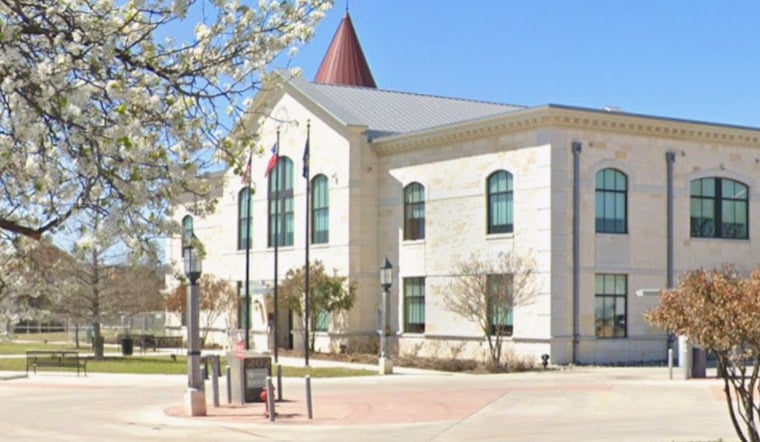
Kerrville homeowners are facing another property tax increase after the City Council voted to adopt a rate of 59.95 cents per $100 of property value, the second consecutive year the city has raised taxes to help pay for flood recovery. City officials say property damage within Kerrville city limits is estimated at $65 million to $100 million following flooding that struck the Guadalupe River basin again this summer, and they argue the city needs the extra revenue while federal reimbursement timelines remain uncertain.
According to the San Antonio Express-News, the city council used the state's disaster tax rate formula to adopt the higher rate without triggering an automatic voter-approval election. That formula, laid out in Section 26.042 of the Texas Tax Code, lets taxing entities in governor-declared disaster areas calculate their voter-approval rate using an 8% maintenance-and-operations revenue growth cap instead of the standard 3.5% cap, according to FindLaw. Governor Greg Abbott's disaster declaration covering Kerr County, issued July 17, 2026 following the summer flooding, supplied the legal trigger that made the higher rate available.
The newly adopted rate is 1.49 cents below what the Express-News reports is the highest rate Kerrville could have adopted without a ballot measure, listed at 58.46 cents per $100 of value; the disaster tax rate is expected to generate roughly $490,000 more for the city than that voter-approval rate would have produced. Per the city's own budget notice published August 27, the proposed rate breaks down into a Maintenance and Operations rate rising from 43.05 cents to 46.03 cents, alongside a slight reduction in the Interest and Sinking debt rate from 14.06 cents to 13.92 cents per $100.
What It Means for Homeowners
The Express-News reports that for a median-value Kerrville home, now valued around $334,000, the new rate will produce a $2,003 property tax bill in 2026 — an increase of $70 over last year's $1,923 bill. Separately, the city's own figures for an average residence homestead, where taxable value rose 2.57% from $376,665 to $386,330, show an estimated bill increase of $165, from $2,151 to $2,316. Citywide, the rate is projected to raise $15,041,539 in total property tax revenue, a $1,054,846 increase of 5.6% over last year, with $314,674 of that growth coming from new construction added to the tax roll.
Kerrville resident Jeff Harris told the Express-News he supports the increase, saying the city has to do something to help itself. His family will feel the effect of the higher bill directly, but he framed the tax hike as a necessary response to the scale of the damage. Not everyone agrees: some residents told the paper the city should pursue budget cuts before raising taxes further.
Council Members Debate Cuts Versus Revenue
Kent McKinney said Kerrville faces a major challenge and needs to cut expenses, according to the Express-News. Council member George Baroody went further, saying the city cannot generate enough revenue through taxation alone to resolve its budget shortfall and that Kerrville must both raise taxes and make steeper annual operational cuts to balance its budget. The council reportedly looked for budget cuts after the July 4 disaster and says it will continue searching for cuts throughout the fiscal year.
This is not the first time Kerrville has leaned on the state's disaster tax provisions. As KSAT reported, the city council used the same mechanism in September 2025 to raise property taxes by nearly 8% after the catastrophic Fourth of July weekend floods killed 119 people in the Guadalupe River basin — a disaster Hoodline previously covered as the community mourned and named its victims. That fiscal year 2026 budget set the disaster tax rate at 57.11 cents per $100 valuation, according to Texas Public Radio. This year's proposed rate of 59.95 cents represents a further 2.84-cent jump on top of that.
Federal Aid Remains Limited to Infrastructure
President Donald Trump approved a federal major disaster declaration on September 2, authorizing FEMA Public Assistance for infrastructure repairs across 19 Texas counties, including Kerr County, according to the Office of the Governor of Texas. Individual assistance requests for residents remained pending at the time of approval, and the timeline and scope of any direct aid to homeowners is still unclear, as the Texas Tribune reported.
Kerr County property owners whose structures sustained at least 15% physical damage in the July 2026 floods do have one avenue for relief: a temporary disaster property tax exemption under Section 11.35 of the Texas Tax Code. The Kerr Central Appraisal District says affected owners have until October 30, 2026 to file Form 50-312 to seek that exemption.
The tax increase lands in a city of roughly 24,278 residents with a median household income of $62,102, according to U.S. Census Bureau estimates. Kerrville has already seen federal grant money flow toward physical recovery — Hoodline previously reported the city secured $14M for its Guadalupe riverfront — even as the tax bill for ordinary homeowners keeps climbing alongside the recovery effort.



