

























































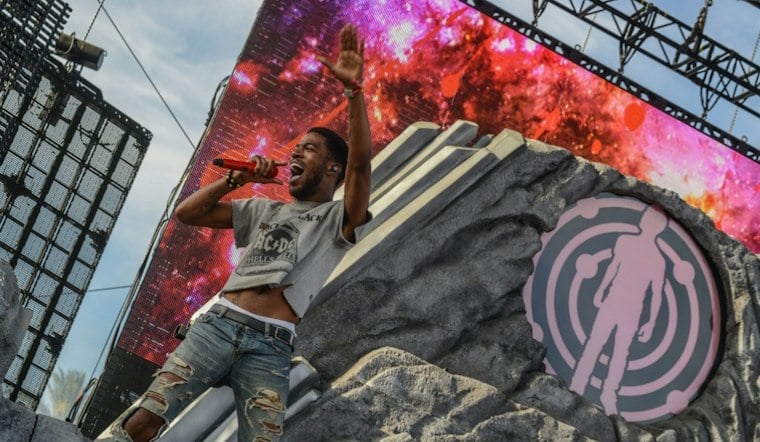
Kid Cudi wants a judge to throw out M.I.A.'s $2.8 million lawsuit before it ever reaches trial, arguing that firing her from his Rebel Ragers Tour was a First Amendment right, not an illegal breach of contract. His legal team filed a motion in September 2026 seeking immediate dismissal of the case, insisting the rapper born Scott Mescudi had every right to decide who appears on his own stage.
The fight traces back to May 2026, when Kid Cudi announced that M.I.A. had been removed from the tour after her opening set in Dallas drew boos from the crowd. According to K-Jewel 99.3 FM, M.I.A. told the audience she had been canceled for being a “brown Republican voter” following her 2024 endorsement of Donald Trump, while also calling for a free Palestine, condemning ICE, and referencing her song “Illegal” in connection with undocumented fans in the crowd, according to Billboard. Kid Cudi has said he would not have someone on his tour making remarks that upset his fanbase, and he warned M.I.A.'s team beforehand that he did not want anything offensive during the run.
M.I.A. Says the Firing Was a Publicity Stunt
M.I.A., born Mathangi Arulpragasam, filed suit against Kid Cudi in federal court in California on May 29, 2026, claiming her removal was illegal. Per the same account from K-Jewel 99.3 FM, she and her touring company are seeking $2,805,000 for her guaranteed performance fee, plus over $290,000 for lost secondary revenue tied to a canceled private booking, merchandise pop-ups, and VIP ticket sales, as reported by Exclaim!.
Her complaint goes further, alleging that Kid Cudi directed Live Nation to fire her purely as a publicity stunt meant to drum up attention for a tour that was, in her words, “drastically underselling” and struggling with low ticket sales — not because of genuine fan backlash, as reported by Okayplayer. Her attorney, Howard King, has claimed M.I.A. was terminated to generate publicity for a tour that was already struggling with ticket sales, and has said she was contractually allowed to say whatever she wanted on stage.
Dueling Contract Claims Over Free Expression
Central to M.I.A.'s case is her contract, which she says was executed directly with promoter Live Nation through Neet Touring LLP and guaranteed her $2,805,000 while authorizing her to express herself freely on stage without headliner censorship, according to court filings cited by Hit Channel. Her attorneys argue that agreement gave her the right to speak her mind regardless of what happened once she took the stage.
Kid Cudi's team sees it differently. As reported by Rolling Stone, his motion argues he retained overarching First Amendment authority over the artistic vision of his own tour. His attorneys contend he was legally entitled to decide what the shows would look like, and that removing M.I.A. concerned the casting, content, and character of a live musical performance — describing the tour itself as a form of artistic expression.
Anti-SLAPP Law and the Eddie Money Precedent
Lead defense attorney Mathew Rosengart, who filed the motion to dismiss, argued that the lawsuit seeks to hold a musical artist liable for exercising First Amendment free-speech rights concerning artistic expression, and said the case threatens Kid Cudi's constitutional rights.
Cudi's attorneys are leaning on California's anti-SLAPP statute, arguing the claims are barred because they concern free-speech rights and matters of public interest. Enacted in 1992 under California Code of Civil Procedure Section 425.16, the law establishes a special motion to strike claims targeting protected free speech and automatically halts discovery proceedings until a court determines whether the lawsuit has minimal legal merit, according to the Justia Law. California's anti-SLAPP protections can also be relevant in entertainment disputes involving alleged protected speech.
Cudi's attorneys have also cited a 2019 ruling favoring rocker Eddie Money, in which the California Court of Appeal held that Money was shielded from a discrimination lawsuit by the anti-SLAPP statute after firing his longtime drummer, Glenn Symmonds, from a concert tour. In that case, Symmonds v. Mahoney, the court found that a primary artist's selection of performing personnel directly advances artistic free speech.
What's at Stake If the Motion Succeeds
The financial risk to M.I.A. is significant. Under California Code of Civil Procedure § 425.16(c)(1), a defendant who prevails on an anti-SLAPP special motion to strike is statutorily entitled to recover mandatory attorney's fees and litigation costs from the plaintiff, a mechanism intended to deter meritless lawsuits against protected speech. If Rosengart's motion succeeds, M.I.A. could be on the hook for Kid Cudi's legal bills on top of losing her claim entirely.
This is not Kid Cudi's first brush with tour turmoil. In April 2024, he was forced to cancel his planned Insano: Engage The Rage World Tour across North America and Europe after breaking his heel bone jumping off stage at the Coachella Valley Music and Arts Festival, an injury that led to plans for surgery, according to the Los Angeles Times. As of now, M.I.A.'s attorney has not returned a request for comment on the motion to dismiss, and the lawsuit was filed in California federal court.





