

























































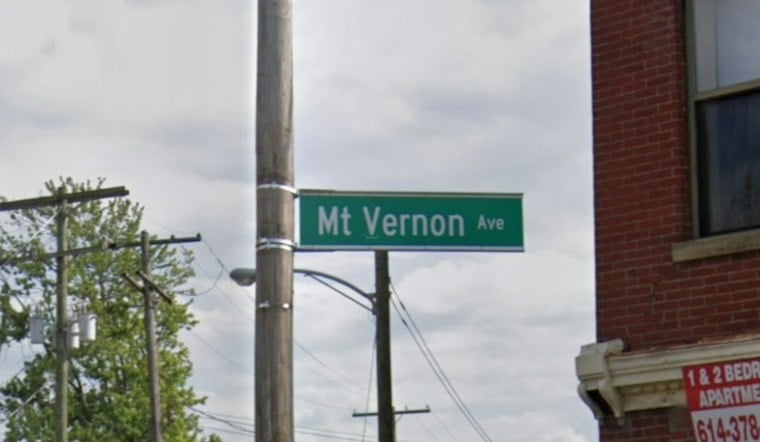
Columbus Mayor Andrew Ginther joined city officials and community leaders Wednesday to break ground on a roadway safety project in the Mount Vernon Avenue area, marking the start of work that will bring the first protected bike lane to the King-Lincoln Bronzeville neighborhood.
The groundbreaking, held on Sept. 16, was reported by The Columbus Dispatch, which confirmed that Ginther, city officials and community leaders gathered to launch the project in the Mount Vernon Avenue area. The Dispatch reported that the roadway safety work will deliver King-Lincoln Bronzeville's first protected bike lane, a milestone for a neighborhood where Mount Vernon Avenue and Long Street have long served as the community's two main thoroughfares, according to the Columbus Urban League.
A Corridor Already in the Middle of Change
Mount Vernon Avenue has been on the city's radar for infrastructure upgrades before now. A city bulletin describes planned improvements for the Mount Vernon Avenue corridor between Hamilton Avenue and North Champion Avenue, including the addition of on-street separated bike paths, per a bulletin posted at columbus.gov. The dossier does not specify how that earlier planning document connects to Wednesday's groundbreaking, but it places the new protected lane within a corridor city planners have already flagged for separated bike infrastructure.
Nearby Long Street has also seen public investment in recent years. Columbus City Council approved $3.6 million for new storm sewers, water lines, sidewalks and streetlights along part of that street, the Columbus Urban League notes. The organization Partners Achieving Community Transformation has spent roughly a decade working to revitalize about 800 acres near Ohio State University Hospital East, part of a broader push to reshape the King-Lincoln Bronzeville area beyond just its roadways.
Bikes as Part of a Bigger Vision Zero Push
The Mount Vernon Avenue lane fits into a citywide effort. Columbus has committed to building out 25 miles of protected bike lanes around the city by 2028 through its Vision Zero Columbus Action Plan, according to Columbus Underground. The outlet also reports the city is studying a possible Broad Street Capital Trail that would run from Alum Creek on the Near East Side all the way through Downtown, a separate project still in the study phase.
A comparable effort is already underway on the Near East Side, where the city planned pilot protected bike lanes along East Broad Street from Parsons Avenue to Nelson Road, timed to a planned 2025 resurfacing project, the same outlet's reporting shows. Officials described that stretch of work as a pilot using materials that can be installed quickly and inexpensively, and adjusted based on community feedback once the lanes are in use. Part of the East Broad Street funding comes from a $1.38 million grant through the U.S. Department of Transportation's Safe Streets for All program, which is also backing a pilot Neighborhood Slow Zones initiative developed with the Near East Area Commission, including community outreach, surveys and focus groups.
A Neighborhood Long Watched for Reinvestment
The visibility of King-Lincoln Bronzeville's cultural identity is already stamped onto its infrastructure. The Long Street Cultural Wall, which spans I-71, displays 139 images tied to the neighborhood's history, per the Columbus Urban League. That kind of public investment has coincided with shifting demographics in the area: the estimated population of ZIP code 43203 rose from 7,297 in 2013 to 8,014 in 2019, while the estimated share of Black residents fell from 78% to 69% and the estimated white population share rose from 14% to 25% over the same period, according to Columbus Monthly. Those figures are estimates tied specifically to that period and are not current population counts.
Rising property values have followed the reinvestment. Columbus Monthly reported that a three-bedroom, 1,400-square-foot house on Martin Luther King Boulevard sold for $55,000 in 2004 and again for $142,000 in 2018, with the buyers on track to sell it for $248,000 after renovations. Against that backdrop, Wednesday's groundbreaking adds a tangible piece of transportation infrastructure to a neighborhood that has been reshaping itself, block by block, for years.





