

























































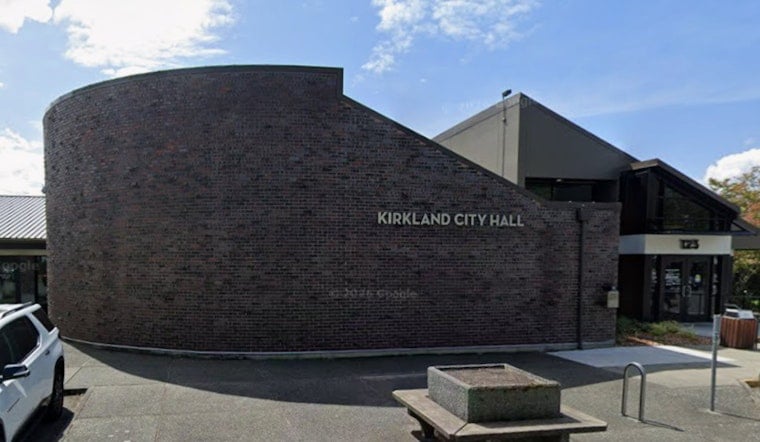
Kirkland's city council voted 3-4 last Tuesday to leave its new affordable housing fee structure exactly as it was written in 2025, rejecting a push to raise the exemption threshold for smaller homes even as one council member argued the fee itself should climb even higher. The decision means a $15-per-square-foot charge on larger new homes in the city's low-density zones will take effect January 1, 2027, funding a subsidized housing program that city staff project will raise $3.3 million within its first 18 months.
The vote, detailed in a report by The Urbanist, capped a debate rooted in the state's push to end single-family-only zoning. Under Washington's House Bill 1110, Kirkland is classified as a Tier 1 city required to allow at least four housing units per lot citywide and up to six near major transit stops, a mandate the state set with a June 30, 2025 deadline, according to MRSC. Thirteen days before that deadline, the Kirkland City Council adopted Ordinance O-4905, the package that established the city's new development standards for middle housing, accessory dwelling units, parking, and design review, per the City of Kirkland's own planning records.
Why Kirkland Attached a Fee to Middle Housing
The fee itself charges $15 per square foot, but only on the portion of a home above 2,000 square feet, and applies specifically to housing built in the city's lower-density zones. Kirkland's city council approved those affordability requirements in mid-2025, and staff say the money raised will go toward the subsidized housing the city needs to hit state-mandated targets. Housing advocate Adam Weinstein said that 80% of Kirkland's housing need is for households making less than 50% of median income, according to the same report.
That target is not small. Under Washington's House Bill 1220 and King County planning mandates, Kirkland's 2044 Comprehensive Plan requires the city to accommodate 13,200 net new housing units, with 56 percent — more than 7,300 units — reserved for households earning half the area median income or less, per King County planning documents. Separately, the report notes Kirkland needs about 10,444 units affordable to households making less than 50% of median income. A 2024 East King County housing study from A Regional Coalition for Housing found that market-rate middle housing built under standard HB 1110 rules would still be out of reach for low- and middle-income families without cities stepping in with their own fee structures, a finding consistent with Kirkland's median household income of $135,608, well above King County's overall $116,340, according to King County's 2024 demographic assessment.
The Fight Over Where to Draw the Line
Council member Shilpa Prem pushed in the opposite direction from critics of the fee, proposing to raise it to $20 per square foot rather than loosen it, arguing that townhouses and smaller single-family homes are exactly the kind of middle housing Kirkland should be incentivizing. The council ultimately approved that higher $20-per-square-foot rate by a 4-3 vote. Prem also voted against leaving the broader 2025 plan in place, joined by council members Amy Falcone and John Tymczyszyn in that same dissent.
The separate proposal to raise the fee's exemption threshold from 2,000 to 2,500 square feet failed by a single vote, even after city staff had recommended keeping the exemption at 2,000 square feet. Falcone, according to the report, said taxing housing to address the housing crisis is counterintuitive but reflects the limited tools available to the city. Council member Neal Black offered the counterpoint, saying the mandate will create more funding for affordable housing in Kirkland and will foster the construction of smaller homes over the next 20 years, while preventing affordable housing responsibilities from falling disproportionately on multifamily housing.
Kelli Curtis, per the same account, said the ordinance process involved two years of work with the community and the planning department before landing on its current form. In the end, the affordable housing ordinance failed after the fee amendment passed, leaving the original 2025 framework as the operative policy heading toward its January 2027 start date.
How Kirkland's Fee Compares Regionally
Kirkland's approach stands apart from both its Eastside neighbor and Seattle. Redmond has no exemptions for smaller units and charges a $30 per-square-foot affordable housing fee that has been phasing in since 2025, with its full rate taking effect at the same time as Kirkland's. Seattle, meanwhile, took a different path entirely: its neighborhood residential zones require no affordable housing fees from builders at all, since the city's Phase 1 zoning update implementing HB 1110 took effect January 21, 2026 without attaching mandatory fees to low-density construction, according to srs. architecture. Seattle instead reserves its Mandatory Housing Affordability requirements — which force builders in denser districts to set aside 5 to 10 percent of units as affordable for 75 years — for higher-density areas.
San Francisco offers yet another model, having cut its multifamily affordable housing requirement from 15 percent to 5 percent of new units while exempting buildings with fewer than 24 units altogether. Kirkland's permitting numbers show the middle-housing shift already underway locally: the city issued permits for 64 new cottage housing units between May 2024 and December 2025, compared with 104 new single-family homes over the same stretch. Townhomes in Kirkland's low-density zones average around 2,400 square feet, while those in medium-density zones run closer to 2,400 to 2,500 square feet — sizes that place many projects squarely within reach of the new fee.
What Comes Next
Kirkland was among the first in the region to act on middle housing, having approved one of the area's earliest missing middle housing laws back in 2020. The city will consider additional code amendments later this year aimed at making middle housing easier to build, but it will not reconsider the new affordable housing fee during those amendments. Kirkland's adopted 2026–2028 Planning Work Program schedules a Phase 2 middle housing optimization process for late 2026, while explicitly directing staff not to revisit the fee structure until at least 2028, according to city planning documents. The city may reassess the fee no earlier than 2028, meaning last week's narrow vote locks the current framework in place for years to come.





