

























































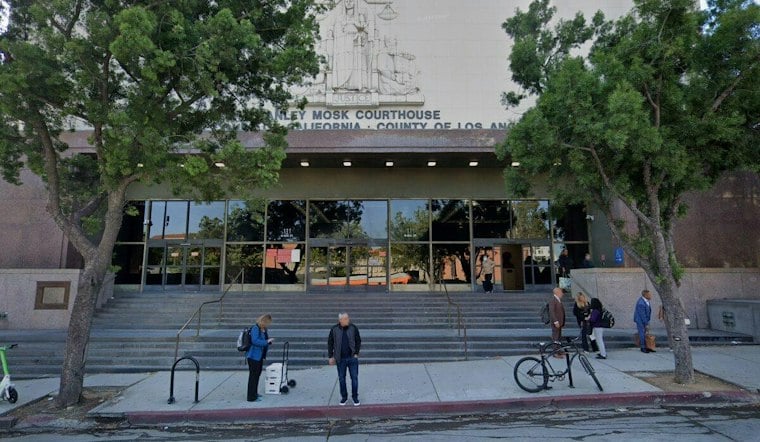
The Los Angeles County Superior Court is offering current employees $35,000 to voluntarily walk away from their jobs, an attempt to shrink its payroll without resorting to layoffs as the nation's largest trial court system grapples with a budget shortfall it says tops $233 million. Court leaders say the incentive is meant to spare workers from forced job cuts, but they're also warning the public to brace for longer waits and slower service no matter how many people take the deal.
Under the voluntary separation incentive program, full-time employees with at least five years of continuous service can qualify for the $35,000 payment if they resign, according to ABC7 Los Angeles. Positions vacated under the program will be eliminated outright rather than refilled, and the court is also reviewing programs outside its core mission for potential reduction or elimination. It's the same basic playbook the court used in July 2024, when a $30.3 million cut to state trial court funding first pushed it to offer $35,000 buyouts to avoid nonconsensual layoffs and furloughs, according to the Metropolitan News-Enterprise.
A Shortfall Court Leaders Call the Worst in Over a Decade
Presiding Judge Sergio C. Tapia II said the court's operational costs continue to outpace its budget resources, per the ABC7 report. The state budget provided the court with partial inflationary funding, but rising costs — including vendor costs, county-provided services, custodial operational expenses, and negotiated employee salary increases — will exceed that funding by roughly $9.1 million, the outlet reports. Cumulatively since 2021, inflationary funding has fallen short of the state Department of Finance's calculated need by 13.1%, an inflationary funding shortfall of roughly $88 million, and the current state budget leaves the court funded at just 76.77% of its calculated need — its lowest funding level since 2021 and its largest raw funding shortfall since at least 2013.
Altogether, the court says it is underfunded by $233.7 million compared with what it would need to properly process its roughly 1.3 million annual filings. David W. Slayton, the court's executive officer and clerk of court, said the court hopes enough employees will voluntarily separate to generate savings while protecting the broader workforce, according to the same ABC7 account. The court previously ran a voluntary separation program in 2024 that produced approximately $4 million in ongoing budget reductions.
What Slower Staffing Could Mean at the Counter
Court officials are direct about the tradeoff: staffing reductions and operational cuts are expected to include longer service-window wait times, delays in legal document processing, and slower call-center response, per ABC7's reporting. The court has also delayed or eliminated select special projects as part of the belt-tightening. Court leaders say they remain committed to identifying reasonable cost-saving measures before considering layoffs or furloughs.
The Los Angeles Superior Court is not a small operation feeling this squeeze — it's the nation's largest trial court system, running 36 courthouses across 12 judicial districts with more than 580 judicial officers and roughly 5,000 full-time employees serving 9.5 million county residents, according to the Judicial Council of California. Even modest staffing cuts at that scale can ripple across dozens of courthouses and specialized divisions at once.
Employees Weighing the Trade-Offs of Leaving
Workers considering the buyout face a real restriction: anyone who accepts the $35,000 payment is barred from being rehired by the court for at least a full year, per the Metropolitan News-Enterprise's earlier reporting on the program's rules. On the financial side, the Los Angeles County Employees Retirement Association has confirmed that the buyout operates independently of the county pension system, meaning eligible workers can still draw lifetime retirement or retiree healthcare benefits immediately if they qualify, according to LACERA.
Part of why the court can't simply absorb the shortfall is structural. State law caps trial court reserves at 3% of annual operating expenditures, according to the Judicial Council of California. Former Presiding Judge Samantha P. Jessner had already flagged the danger of this dynamic back in July 2024, calling state cuts to trial court funding “consequential” and warning that losing personnel through voluntary separations would directly harm the court's ability to provide timely access to justice, per the Metropolitan News-Enterprise.
Echoes of the Great Recession-Era Cuts
This isn't the court's first brush with austerity of this magnitude. During the Great Recession, the court reduced annual spending by $187 million and underwent major restructuring and service reductions, according to Duke Law School's Judicature. That history looms over the current round of cuts, with the restructuring and service reductions from that era still shaping the court today.
Labor union SEIU Local 721 has opposed courthouse closures, arguing that staffing cuts create serious public access barriers and lengthen travel distances for lower-income litigants, according to Courthouse News Service. The tension isn't purely about cutting bodies, either — the court has faced severe labor shortages in that specialized role, according to a Superior Court of California, County of Los Angeles side letter obtained by the Los Angeles County Court Reporters Association.
For now, though, court officials say the immediate priority is convincing enough eligible employees to take the buyout to avoid the layoffs and furloughs they say remain on the table.





