

























































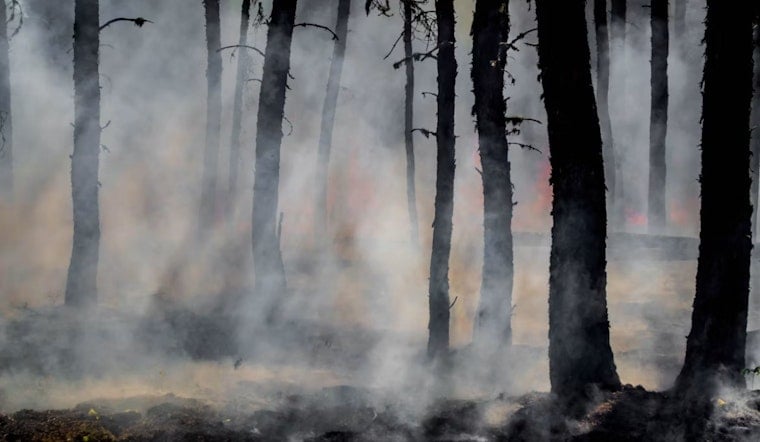
A wildfire broke out north of Lyons on Labor Day morning, prompting evacuation orders for residents along Lonestar Road and Stagecoach Trail as crews raced to contain flames burning through dry foothill terrain in Larimer County. The order went into effect after daybreak Monday, catching some residents at the start of the holiday and pushing local agencies into another rapid-response scramble just over a week after a similar fire forced people from their homes in the same corner of the county.
According to 9News, citing a Pinewood Springs Fire Protection District update, the blaze burned approximately 15 acres about 1.75 miles east of Pinewood Springs, drawing responses from the Larimer County Sheriff's Office and the Lyons Fire Protection District. Per CBS Colorado, the affected area sits near Lonestar Road and Stagecoach Trail, and officials directed residents there to gather essential items and be ready to leave. Larimer County ordered the voluntary evacuations for that stretch of homes as the fire was reported Monday morning.
A Second Foothill Fire in Just Over a Week
The Labor Day fire lands squarely in territory that has already seen its share of wildfire scares this season. Just nine days earlier, the Moose Mountain Fire triggered mandatory evacuations for Pinewood Springs and voluntary warnings for Blue Mountain before crews contained that blaze along U.S. Highway 36, as Hoodline previously reported. Smoke from the Moose Mountain Fire drifted into neighboring Boulder County at the time, underscoring how quickly conditions can shift across the corridor.
The back-to-back incidents are not isolated. Four days before the Labor Day fire, Poudre Fire Authority crews contained a fast-moving grass fire along Interstate 25 near East County Road 40, lifting mandatory evacuation orders just 25 minutes after issuing them, according to Hoodline's earlier coverage. Together, the three incidents illustrate how frequently late-summer ignitions have hit Larimer County this year, even as suppression crews have generally moved fast to keep fires small.
How Residents Are Being Notified
Larimer County emergency managers rely on the NOCO Alert system, run by the Larimer Emergency Telephone Authority, to push voluntary and mandatory evacuation notices to residents' phones, as the Estes Valley Voice has detailed. Residents can sign up to receive text updates by sending “LCEVAC” to 888777. The system, rebranded as NOCO Alert in 2019, has become the primary tool local authorities use to keep foothill communities informed as fires flare up with growing regularity.
Newly built infrastructure is also playing a role in how the county responds. In August, Larimer County opened a $30 million, 40,000-square-foot Emergency Services Complex northwest of Fort Collins, giving the county a centralized incident command post, heli-base, and fire camp spread across 50 acres, Hoodline has reported. The facility replaced an outdated 1950s-era fire cache and now supports the kind of multi-agency wildland fire response seen during both the Moose Mountain and Labor Day incidents.
State Forecasts Flagged Above-Normal Fire Risk
The cluster of fires also fits a pattern state officials warned about months in advance. In April, the Colorado Division of Fire Prevention and Control presented its 2026 Wildfire Preparedness Plan to Governor Jared Polis, forecasting above-normal fire potential across the Front Range for summer and early fall due to expanding drought, elevated heat, and dry vegetation. State fire officials emphasized at the time that wildfire has become a year-round challenge in Colorado, not just a summer concern.
Nearby Lyons has been grappling with how to reduce that risk at the structural level. The town considered a municipal ordinance last month that would make it the first in Colorado to require existing homeowners, not just new construction, to complete wildfire mitigation and defensible space work on their properties, a proposal Hoodline covered after the fatal Stone Canyon Fire. That 2024 blaze burned 1,557 acres and helped drive local support for the measure. Colorado separately adopted a statewide Wildfire Resiliency Code in 2025 under Senate Bill 23-166, which set standardized building hardening and defensible-space requirements for properties in designated wildfire hazard areas, overseen by the state Division of Fire Prevention and Control.
A County With a History of Major Fires
Larimer County's foothills carry a heavy history when it comes to wildfire. The county was the site of the 2020 Cameron Peak Fire, which burned 208,913 acres over 112 days in the Arapaho and Roosevelt National Forests and destroyed 469 structures, becoming the largest wildfire in Colorado history, according to the USDA Forest Service. More recently, the human-caused Alexander Mountain Fire burned 9,668 acres in the Roosevelt National Forest west of Loveland in July 2024, destroying 26 homes and forcing multi-week evacuations.
As of Monday, the Labor Day fire remained far smaller than those historic blazes, but its cause, containment status, and any changes to the evacuation zone had not yet been detailed beyond the initial reports from Pinewood Springs Fire Protection District. Residents along Lonestar Road and Stagecoach Trail were still being told to remain ready to leave as crews worked the fire line.




