

























































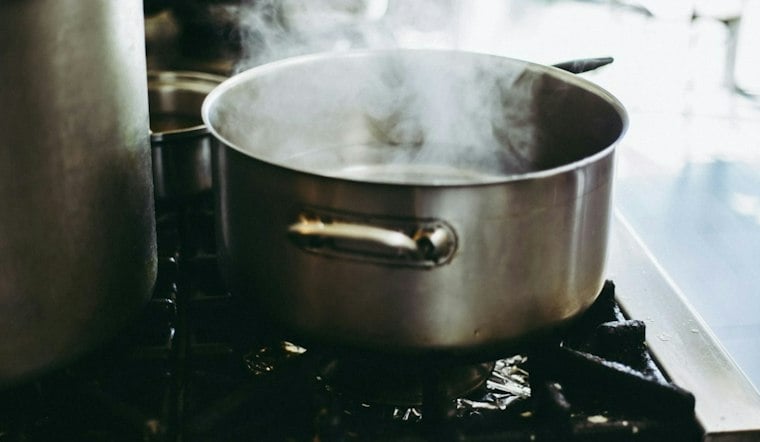
Lake City, Minnesota has told its roughly 5,000 residents to boil their tap water after E. coli bacteria turned up in a drinking water sample collected Thursday, September 24. City officials say they hope to resolve the issue by Tuesday, September 29, but until then, no one should drink, cook with, or brush their teeth using untreated water straight from the tap.
What Triggered the Advisory
According to KIMT, the city says the presence of bacteria may have occurred because of poor sampling methods or other unknown causes, meaning officials have not confirmed whether the water itself is contaminated or whether the test sample was compromised during collection. According to Bonner Analytical, the U.S. Environmental Protection Agency's Revised Total Coliform Rule lists specific conditions for an acute MCL violation, including repeat-sample results or failure to take required samples, rather than treating any E. coli detection alone as an automatic violation.
The city's water department is now chlorinating the distribution system, per the KIMT report. That approach lines up with World Health Organization and EPA standards, which call for utilities to maintain a free chlorine residual of 0.2 to 0.5 mg/L throughout the network for at least 30 minutes of contact time in order to kill E. coli and similar pathogens, according to the World Health Organization. Minnesota Department of Health sampling protocols also note that false positives can occur if sample taps, aerators, or spigots aren't properly sterilized before collection, which is why utilities typically pair disinfection with immediate repeat testing.
How Residents Should Handle Water Until the Advisory Lifts
Lake City is telling residents to use only boiled or bottled water for drinking, making ice, brushing teeth, and food preparation, per the KIMT report. Officials are advising a full rolling boil for at least one minute to kill bacteria and other organisms in the water. The Centers for Disease Control and Prevention backs up that guidance, noting that a full rolling boil neutralizes bacterial pathogens like E. coli, while standard home filters or pitcher filtration systems are generally not rated to remove microbial contaminants.
The health stakes go beyond an upset stomach. The CDC notes that while E. coli ingestion commonly causes severe abdominal cramps, vomiting, and bloody diarrhea, young children under five, adults over 65, and immunocompromised individuals face a heightened risk of severe complications like Hemolytic Uremic Syndrome, a serious form of kidney failure. KIMT reports that Lake City asked residents to share the advisory with people in apartments, nursing homes, schools and businesses.
What It Will Take to Lift the Order
Minnesota Department of Health procedures spell out exactly what has to happen before a boil water advisory tied to E. coli contamination can be lifted: the system must complete system-wide flushing, restore adequate chlorine residuals, and submit consecutive repeat bacteriological samples that come back negative from a certified lab. That process is why Lake City's timeline points to Tuesday, September 29, as the anticipated resolution date rather than an immediate fix. Consecutive clean samples over a 24- to 48-hour window are generally required to confirm bacteria are no longer present.
Lake City sits along Lake Pepin on the Mississippi River and draws its municipal supply from public groundwater wells, according to the Minnesota Department of Health. Federal compliance data suggests that acute E. coli incidents in small groundwater systems like Lake City's are most frequently traced to localized backflow events, loss of system pressure, aging wellhead seals, or sampling errors — rather than broad contamination of the underlying aquifer, per Bonner Analytical. It remains unclear which, if any, of those factors is at play here, and city officials have not said whether chlorination will become a permanent fixture of the system or remain a temporary emergency measure.
Residents with broader questions about water quality safety can call the EPA's Safe Drinking Water Hotline at 1-800-426-4791, KIMT reports. Lake City's advisory also arrives amid a string of similar incidents around the state; KTTC TV notes that Grand Meadow issued a bacterial boil advisory this September, following a multi-city advisory that hit Twin Cities suburbs including Crystal, Golden Valley, and New Hope in July 2025.





