

























































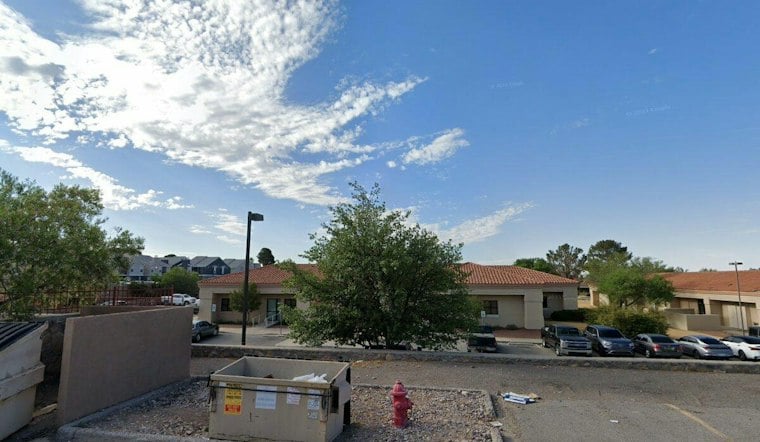
A new Regional Infant Hearing Testing Center has opened in Las Cruces, giving parents in southern New Mexico a local option for diagnosing infant hearing loss instead of driving hundreds of miles north. The New Mexico School for the Deaf hosted a ribbon cutting alongside its clinical partner, Expert Hearing Care, to mark the facility's launch.
The center is designed to identify early signs that an infant is having difficulty hearing, according to KRWG Public Media. Before it opened, parents in Las Cruces and the surrounding area often had to travel as far as Albuquerque to get infant hearing care, a trip that covers roughly 225 miles one-way and takes about 3.5 hours along Interstate 25, according to Rome2Rio.
Maribel Grijalva, whose child was tested at the new center, said not having to drive was a huge weight off and that the staff helped make the experience easier. Grijalva also said she does not currently have a car but has a helpful helper, according to the same KRWG report.
How the Diagnosis Process Works
The hospital screening process checks infants for hearing trouble shortly after birth, and any infant showing signs of hearing loss is then taken to a specialized hearing testing facility, per the station's report. That facility measures an infant's brain waves while they sleep as sounds are played, a method known as Auditory Brainstem Response testing that evaluates how sound travels along the auditory nerve to the brainstem, unlike the simpler otoacoustic emissions tests often used in initial hospital screens, according to the UNM Health System.
New Mexico administrative code requires all birthing hospitals in the state to perform newborn hearing screenings before discharge and report results to the Department of Health's Early Hearing Detection and Intervention program on strict bi-monthly deadlines, per the New Mexico Department of Health. Hospitals must upload data on the 1st and 15th of each month and fax referral forms within 48 hours for flagged infants, the department's rules state.
Closing a Statewide Gap in Follow-Up Care
The Joint Committee on Infant Hearing and the American Academy of Pediatrics recommend a “1-3-6” benchmark: screening completed by 1 month of age, a confirmed diagnosis by 3 months, and enrollment in early intervention by 6 months, according to the Centers for Disease Control and Prevention. That timeline includes a goal of confirming a diagnosis by 3 months of age.
A report presented to the New Mexico Legislature found that identifying and treating hearing loss before 6 months of age can prevent severe academic delays, while unaddressed hearing loss can cost up to $400,000 per child in special education expenses, according to the New Mexico Legislature. Dr. Jennifer Herbold, superintendent of the New Mexico School for the Deaf, said early identification of hearing difficulty is key to a child's development, per KRWG.
What Early Intervention Looks Like
Herbold said that early access to language allows children with hearing difficulties to thrive on the same developmental trajectory as children who hear typical language at typical levels. Late access to language, she said, can cause long-lasting developmental delays and may prevent children from ever making up that lost time.
The Las Cruces site joins a broader push by the New Mexico School for the Deaf to open similar regional testing centers in Artesia, Hobbs, Santa Fe, and Gallup, aiming to close the diagnostic gap for rural families statewide. Once a diagnosis is confirmed, families can be connected to educational support that remains available to children until age 22, and the school's Parent Infant Child program — created in 1981 as one of the earliest home-based early intervention programs for deaf infants in the country — conducts thousands of home visits across New Mexico each year, according to the Clerc Center.
Founded in Santa Fe in 1887 from a school started in 1885 by deaf educator Lars Larson, the New Mexico School for the Deaf is the state's first public school and a land-grant institution serving students from birth to age 21 statewide, according to KSFR. In Las Cruces, the school's clinical partner, Expert Hearing Care, operates audiology practices licensed by the New Mexico Speech, Audiology & Hearing Aid Dispensers Board, according to the Better Business Bureau.





