

























































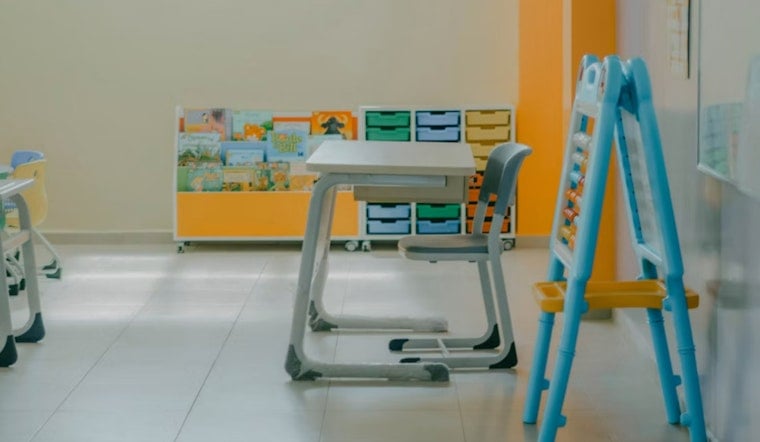
A national daycare franchise is planting six new flags across the fast-growing suburbs ringing Sacramento, betting that Folsom, Rocklin, Dixon, Turlock, Lincoln and Roseville have enough young families — and enough desperation for open slots — to fill them. The Learning Experience currently operates just one center in the Sacramento market, but that number is set to grow sixfold over the next two and a half years as the chain pours 60,000 square feet of new freestanding commercial space into the region.
The expansion, first reported by Connect CRE, will unfold in phases starting with locations in Folsom and Rocklin in the third quarter of 2027, followed by Dixon in the fourth quarter of that year. Lincoln and Turlock are slated to open in the first quarter of 2028, with a Roseville center rounding out the buildout in the second quarter of 2029. Each new center is designed to include up to 10,000 square feet of indoor space and a playground as large as 5,000 square feet, with room to serve upwards of 180 children ranging from six weeks to six years old.
The Folsom location will anchor the Southpointe commercial site inside Folsom Ranch, one of Northern California's largest master-planned residential developments, according to LRE & Companies, the developer that secured the daycare chain as an anchor tenant there in November 2024. The site will be run by multi-unit franchisees Parag Laddha and Kunal Rao. Each of the six planned centers is expected to employ as many as 30 staff members and certified teachers once fully staffed.
A Florida Chain With Private Equity Backing
The Learning Experience is based in Florida and currently operates 488 centers across the United States, three more in the United Kingdom, and 491 total, per Connect CRE's reporting. The company is owned by Harvest Partners, a private equity group that completed its majority acquisition of the chain from Golden Gate Capital in July 2025, according to a release from PR Newswire. Co-founder and CEO Richard Weissman retained a significant ownership stake in the deal.
Every center relies on the company's proprietary L.E.A.P. curriculum, a play-based academic program paired with a cast of 90 original characters led by the blue mascot Bubbles the Elephant, along with companion media under the Bubbles and Friends brand. When scouting expansion sites, the company's real estate team weighs the local density of children age six and under, traffic patterns and household income, and requires franchisees to sign 15-year licensing agreements, according to the Real Deal. The Sacramento buildout is one piece of a larger campaign to open more than 150 new centers across North America and the U.K. over three years.
Expansion Meets a Childcare Squeeze
The new centers are landing in a region where families are already struggling to find and afford care. Center-based infant childcare in Sacramento County runs families an average of $18,040 to $21,110 annually per child as of this year, according to TOOTRIS, making the region considerably pricier than the national average and helping push California to the fifth most expensive state for childcare in the country. Statewide, California is short roughly 900,000 licensed childcare slots relative to its population of children under five, despite a workforce of more than 200,000 licensed providers.
Those costs have real consequences locally. A regional poll released by Valley Vision in April found that 17% of Sacramento-area parents or primary caregivers were not working because of prohibitive childcare costs, while 32% reported leaving a job to provide unpaid care, as Hoodline previously reported on the local childcare squeeze. That burden fell heaviest on households earning under $50,000 a year.
Complicating matters further, California's statewide rollout of Transitional Kindergarten for 4-year-olds has been drawing older children out of private centers and into public classrooms, cutting into a revenue stream that private daycare operators traditionally relied on to offset the higher cost of infant care. Under Title 22 regulations from the California Department of Social Services, licensed centers must maintain a ratio of one adult per four infants and one adult per 12 preschool-age children — staffing rules that make infant care inherently low-margin, since it demands far more staff per child than older age groups. It remains to be seen how a large, standardized franchise like The Learning Experience will manage those economics while covering high commercial real estate and staffing costs across six new Northern California sites at once.
The Sacramento push also fits into the company's broader national growth pattern, which has included suburban high-growth corridors in California and the Washington, D.C. area, and even a childcare center folded into a mixed-use residential and commercial project on Staten Island. Whether six additional centers meaningfully dent the region's capacity shortage will depend on how quickly they fill up once doors open — the earliest of them, in Folsom and Rocklin, isn't expected until the third quarter of 2027.





