

























































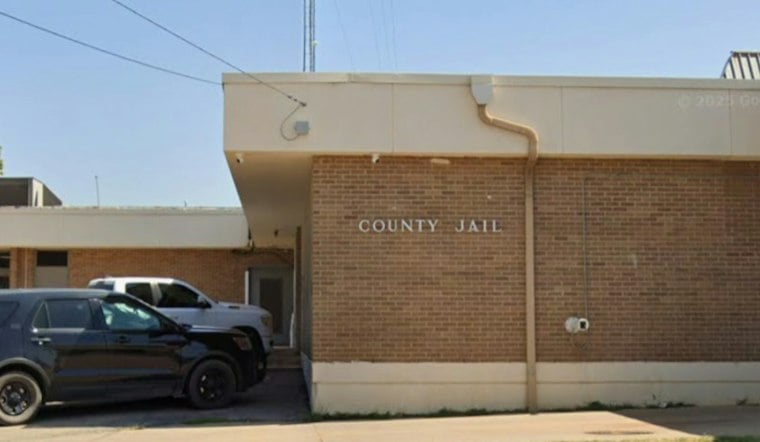
A lawsuit filed by former Lincoln County Jail inmate David Nall alleges that interruptions in his prescribed seizure treatment preceded repeated medical emergencies and a disabling neurologic injury. The allegations, reported by KFOR, have not been tested or resolved in court.
According to the complaint as described by KFOR, Nall was prescribed Keppra but did not consistently receive it while in custody. The lawsuit alleges that he suffered multiple seizures in August 2024, was taken by ambulance to a hospital and later transferred for treatment of acute kidney injury and alcoholic ketoacidosis. It further alleges that he became hypoxic, incoherent and hallucinating, and that subsequent emergency care culminated in an intensive-care admission.
The complaint says Nall spent almost 37 days on a ventilator in January 2026 and survived with a permanent neurologic injury. It alleges that he now needs assistance to walk and use the bathroom. Nall’s attorney, Spencer Bryan, characterized the harm as avoidable, while the lawsuit attributes the injury to missed medication, recurrent seizures and delayed care. Those are allegations, not findings by a court.
What the state standards require
Oklahoma’s published jail standards provide a benchmark for evaluating the type of care alleged in the case. The Oklahoma State Department of Health standards require continuity of care when inmates are transferred or discharged and call for sufficient medication for inmates with known serious health conditions. The standards do not establish whether Lincoln County officials or the jail’s former medical provider violated them.
The state health department says it must inspect every city and county detention facility at least once a year and issue reports identifying deficiencies and whether facilities substantially comply with detention standards, according to its jail-inspection information. Those inspections offer an oversight mechanism, but they do not provide a statewide count of seizure-related emergencies and cannot determine the truth of Nall’s allegations without facility-specific records.
Earlier cases show why the comparisons are limited
Oklahoma court records contain other disputes involving medical care in custody, but they involve different people, facilities and legal questions. In a case arising from a 2007 detention at the McCurtain County Detention Center, the Tenth Circuit reviewed allegations that ignored medical complaints preceded a seizure, brain surgery and disability. The case is a limited comparison: it concerns a different detention, medical history and set of defendants, and does not prove what happened to Nall.
In Lucas v. Turn Key Health Clinics, the Tenth Circuit in 2023 affirmed most dismissals in an appeal involving the estate of a Tulsa County Jail detainee. The court said the applicability of Oklahoma governmental immunity to the private medical provider could not be decided prematurely at the dismissal stage, according to the court’s opinion. That ruling illustrates a procedural issue that can arise in jail-health litigation; it is not a ruling on Nall’s claims.
Another Oklahoma example involved Terral Ellis, who died at the Ottawa County Jail in October 2015 after, according to The Frontier, seeking medical attention for more than 20 hours. A federal jury awarded his family $33 million against the county. The Frontier reported that Turn Key was hired at the jail after Ellis’s death, so that judgment does not establish that Turn Key treated Ellis.
What remains unknown
The public account does not resolve whether Nall received some doses of Keppra, why any doses may have been missed, what jail staff knew about his condition or whether the alleged delays caused his permanent injury. Those questions will depend on medical records, jail records, expert testimony and the court’s treatment of the claims.
The broader record supports scrutiny of medication continuity and medical oversight in jails, but the cited cases are not evidence that similar failures are increasing statewide or that Turn Key is liable in Nall’s case. For now, Nall’s lawsuit remains an allegation of a serious failure in custody, with the central facts and legal responsibility unresolved.




