

























































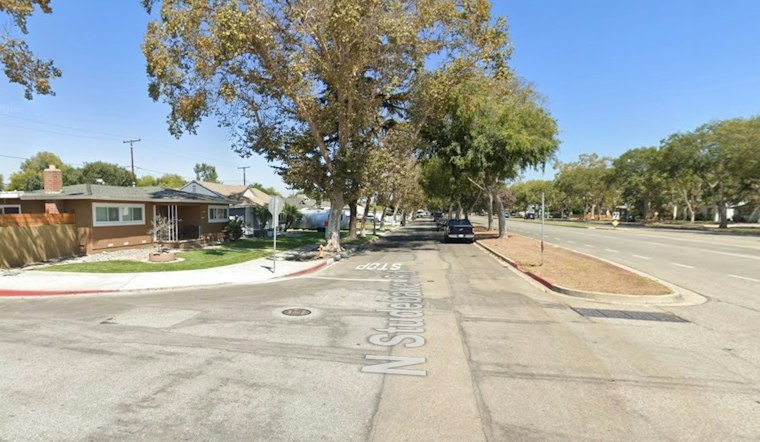
Long Beach is in the middle of remaking 5.9 miles of Studebaker Road, from Second Street to Carson Street, in what city officials call the largest single street project in the city's history. The $65 million overhaul includes protected bike lanes, raised bus stops, new sidewalks and hundreds of new trees and shrubs, and it has become a flashpoint for residents who disagree over whether the disruption is worth the payoff.
According to lbpost.com, the project broke ground at a ceremony at El Dorado Park, and its scope goes well beyond bike lanes. Plans call for protected bikeways running in both directions along the corridor, concrete boarding islands at 24 bus stops with shaded shelters, more than 100 newly planted trees, over 2,000 shrubs, and new sidewalks, traffic signals and bikeways. Funding came from a patchwork of 13 local, county, regional, state and federal sources, the outlet reports.
Timing on the project is murky. As reported by cal.streetsblog.org, construction is expected to wrap in late 2026, while the Long Beach Post's original reporting on the project indicates completion is expected in 2027. The project is also described as a once-in-a-generation undertaking that must be finished before the Olympics, per that same reporting.
Bike Lanes Get Wider, and Physically Protected
Studebaker's old bike lanes measured six feet wide; the new ones will be nine feet, per the Long Beach Post's reporting. Streetsblog California notes that the design reflects a broader shift in engineering philosophy: the existing bike lanes will evolve into Class IV protected bikeways, buffered by physical barriers rather than paint, rather than the painted lanes that have long been standard.
North of Second Street, a new bidirectional Class I shared path will let cyclists and pedestrians move away from traffic altogether, the same outlet reports. The project also folds in ADA-compliant sidewalks and ramps along with safer school crossings featuring flashing beacons and bulb-outs, according to Streetsblog California's account of the plan. Long Beach officials were also in talks with Caltrans about linking Studebaker Road to the bike trail along the San Gabriel River, per the Long Beach Post.
Raised Bus Stops Draw Mixed Reaction
Among the more debated features are the raised bus stops, standing about five inches tall, which require buses to stop in the No. 2 lane and halt traffic behind them. Long Beach Transit discussions revealed that buses were sometimes hit while pulling into traffic under the prior street configuration. After resident feedback, the project added a bus shelter that wasn't originally part of the plan.
Not everyone is on board. Joey Schilling, who rides his bicycle to work in Seal Beach, criticized the Studebaker project as impractical and too costly. “It's not a reasonable solution. It's not even for the greater good, that would be to appease the 95 percent who use their cars,” Schilling said. A social media post from Schilling drew almost 1,000 comments, reflecting how divisive the project has become among residents.
City Council Members Weigh In
City officials have offered their own accounts of how the project came together. Daryl Supernaw said he supported the $65 million Studebaker project despite having reservations about its price, and he said the city chose bike lanes instead of a straight repave in order to use available grant money. Jocelin Padilla said that breaking the work into shorter construction segments would have increased both costs and timelines.
Community meetings on the project were held in 2024, ahead of construction. Resident Leslie Goldman reported that piles of construction dirt blocked residents from crossing streets or seeing oncoming traffic, an on-the-ground complaint that underscores how disruptive a five-mile rebuild can be for people living along the corridor. Another resident, Dan Olsen, said Studebaker will benefit the neighborhood despite the construction drawbacks.
A Broader Push for Bike Infrastructure
The Studebaker project isn't happening in isolation. Long Beach adopted its bicycle master plan 25 years ago and has said it aims to become a top-five global cycling city. Pacific Avenue and Orange Avenue are next in line as planned backbone bikeway projects, while the Clark Avenue project is already in progress, according to the Long Beach Post's reporting.
Kurt Canfield, who organizes Car Lite Long Beach, said the new infrastructure gives people the ability to be safer. The city has recorded 36 traffic deaths through mid-September 2026, following 53 traffic deaths in 2025, including 32 bicycle, pedestrian and e-scooter deaths that year, per the same reporting. City officials have said the Studebaker project aims to create safer streets and expand bicycle culture in Long Beach, even as reviews from residents along the corridor remain mixed.



