

























































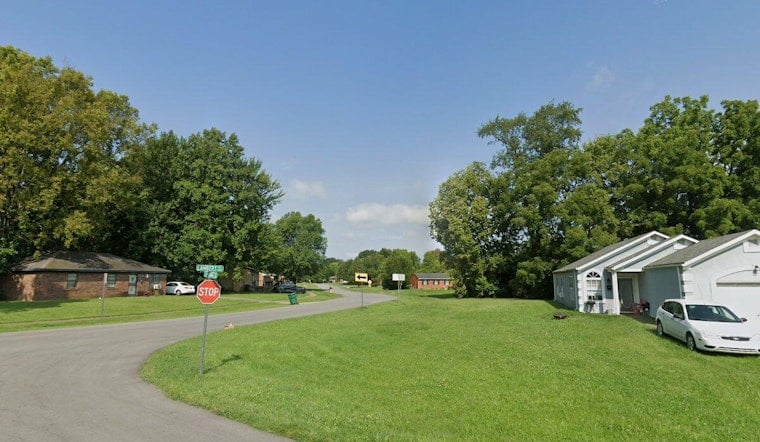
Nineteen-year-old Isaiah Warner was found fatally shot inside a slowly rolling car just before 2 a.m. on June 21 in the 2000 block of Landing Drive in Louisville's Buechel neighborhood. He died shortly after at UofL Hospital. His killing remains unsolved, and it was not the first time gun violence tore through his family — his father, Devon Warner, was shot and killed in October 2022, just three months after gaining custody of his son.
That means Isaiah's grandmother, Debra Warner, has now buried both her son and her grandson to gun violence in under four years. She has said she is processing the loss of her grandson after previously losing her son, according to WLKY, whose investigation into repeated family gun violence in Louisville forms the basis of much of this account. Isaiah's death was also reported by WAVE News, which detailed the exact timeline and circumstances of the shooting.
Warner's family is far from alone. Marian Dean received a call about her son Arian Dale's death on August 6 — the 27-year-old father of four was shot while driving along West Main Street in Portland late that Wednesday night in August, and later died at the hospital, adding his name to the Louisville Metro Police Department's 2026 open homicide roster. Dean has lost five members of her family to gun violence altogether, the same report notes. Keisha Heath said her niece was killed on August 13, and Heath's mother died September 27.
A Pattern That Predates This Summer
The unsolved case of Susie Coleman, also known in the community as Susie Offutt, adds another name to the list of grieving West Louisville families. The 46-year-old was shot on June 28, 2025, in the 2700 block of West Madison Street in the Russell neighborhood and died three days later at UofL Hospital, with her case still listed on LMPD's open homicide roster. Marion Caldwell IV was killed in September 2025, another loss that fits the same grim pattern of repeated violence striking single families and single blocks.
The concentration is not random. Data from the Louisville Metro Office of Violence Prevention found that between 2020 and 2025, census blocks representing just 7% of Louisville's population accounted for more than 40% of all homicides and non-fatal shootings citywide, a pattern previously documented by Hoodline. Citywide data covering 2020 through 2025 shows Black residents represented approximately 77% of all fatal and non-fatal shooting victims in Louisville, with more than 80% of victims male and 56% between ages 18 and 35, according to Louisville Metro Government figures.
Researchers Trace the Roots of Repeat Trauma
Dr. Monique Williams conducted a 2024 study in collaboration with the Whitney Strong Foundation, interviewing 20 people between the ages of 14 and 45 who had been shot by age 18. The research, titled “Unveiling the Impact of Childhood Gun Violence in Louisville” and funded by the Jewish Heritage Fund, examined the emotional and economic consequences on youth shot before adulthood in West Louisville, according to the Whitney Strong Foundation.
The study identified four common themes: the expectation of gun violence, traumatic experiences after victimization, changes in expectations and outcomes for survivors' lives, and what survivors believe actually helps them heal. Trauma from repeated exposure to violence can linger through post-traumatic stress disorder, which affects mental health and the ability to function day to day, and repeated exposure to violence can make violence seem normal, the study found. The foundation said the research provides insight into survivors' efforts to move forward after gun violence. According to a study available through the National Institutes of Health, youth exposed to community violence showed increased aggression and conduct problems, along with depressive and anxious symptoms. A 2024 study available through the National Institutes of Health found a longitudinal association between stress related to community-violence exposure and future PTSD symptoms.
Whitney Strong Foundation founder Whitney Austin survived gun violence herself, having been shot 12 times during the September 6, 2018 mass shooting at the Fifth Third Center headquarters in Cincinnati, Ohio, according to background from Building Kentucky. That personal history informs the foundation's push for solutions the study identified, including accessible mental health care for survivors and families, community-led violence-prevention programs, and trauma-informed support in hospitals, schools and workplaces.
Breaking the Cycle Before It Repeats
Eddie Woods has worked for decades to interrupt cycles of violence in Louisville. He co-founded No More Red Dots with Norman Martin in 2011, naming the nonprofit after the red dots Louisville Metro Police Department once used on maps to track violent crime locations, according to WHAS11. The organization aims to reach people harmed by violence and those at risk of continuing it.
Woods has estimated that about 60% to 80% of violence in the city is generational. His message to those caught in that cycle is direct: people should live for their loved ones instead of dying for them, he has said.
Mayor Craig Greenberg's 2026 “Safe Louisville” report found that citywide homicides dropped 22% in 2025 compared to 2024, with non-fatal shootings down 28% — the lowest annual total of gun violence incidents the city has recorded in over a decade, according to Louisville Metro Government figures. But that citywide decline offers little comfort to families like the Warners, the Deans and the Heaths, whose losses keep piling up even as the overall numbers fall. Whether city-funded intervention programs like No More Red Dots can secure long-term funding as federal American Rescue Plan dollars run out, and whether trauma-informed mental health care reaches hospitals and schools systematically enough to break these cycles, remain open questions for a city still counting its dead one family at a time.





