

























































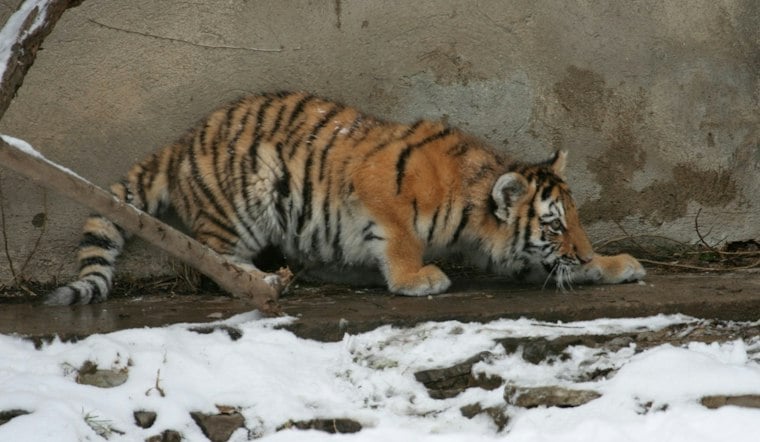
Three female Amur tiger cubs born at the Louisville Zoo have names now: Frankie, Masha, and Mira. The cubs, the zoo's first Amur tiger litter in 22 years, are still bonding with their mother and are not yet viewable to the public in person, according to zoo officials.
The cubs were born at 1:24 a.m. on May 27, 2026, to 4-year-old mother Viktoria and nearly 9-year-old father Timmy, who were paired under a managed species breeding program, according to the Louisville Zoo. As WLKY reports, the trio marks the first Amur tiger cubs born at the facility in 22 years.
Two of the names carry a fundraising story behind them. Frankie and Masha were chosen by major donors who acquired naming rights at a June 2026 fundraising gala, with Frankie honoring a late zoo board member and Masha honoring family members named Mary. Zookeepers themselves submitted and selected the third name, Mira, which derives from the Slavic word for peace or world, per the zoo's announcement.
Ending a Decades-Long Gap
Before this litter, the zoo hadn't welcomed Amur tiger cubs since female twins Irisa and Anya were born on October 1, 2004, bringing the facility's total to 29 Amur tigers born over its 57-year history, the zoo's release notes. That 22-year gap makes this year's birth a milestone for the Louisville institution, and for the species overall.
Veterinary and animal care teams confirmed all three cubs were female during their first comprehensive physical exam in late July, timing the gender reveal for International Tiger Day on July 29, according to WHAS11. Zookeepers briefly separated the cubs from Viktoria to perform the medical evaluations, the station reported.
When Visitors Can Finally See Them
Zoo officials project the cubs will make their physical outdoor habitat debut in early fall once they gain enough strength and coordination to navigate the terrain. Until then, the zoo is offering a live camera so the public can watch the cubs bond with Viktoria from home.
The tiger births arrived amid a broader baby boom at the zoo in May 2026, which also included a rare Colobus monkey born May 7 — only the second such birth in the zoo's history — and a female Masai giraffe calf born May 3, according to the zoo.
Two Tiger Subspecies, One Zoo
Beyond the Amur tigers in its Tiger Taiga exhibit, the Louisville Zoo also houses Sumatran tigers in its Islands exhibit, where female Jingga resides following the death of 16-year-old male Kami in August 2024. Kami sired six cubs during his life, including a male cub born alongside Jingga in July 2024, per the zoo.
Why Captive Breeding Matters
The Louisville births fit into a much larger conservation picture. Accredited North American zoos maintain a captive population of roughly 100 to 150 Amur tigers, managed through the Association of Zoos and Aquariums' Species Survival Plan to prevent inbreeding and sustain stable populations, according to the Oregon Zoo.
In the wild, Amur tigers are native to eastern Russia and northeastern China and remain classified as Endangered on the IUCN Red List, with a population estimated at roughly 500 to 600 individuals amid ongoing habitat fragmentation and poaching, according to the WildCats Conservation Alliance. Russia became the first nation to grant the species full legal protection and ban hunting in 1947, after wild populations had dropped to fewer than 50 individuals during the 1940s — restrictions on hunting prey species like boar and deer also helped the numbers rebuild.


