

























































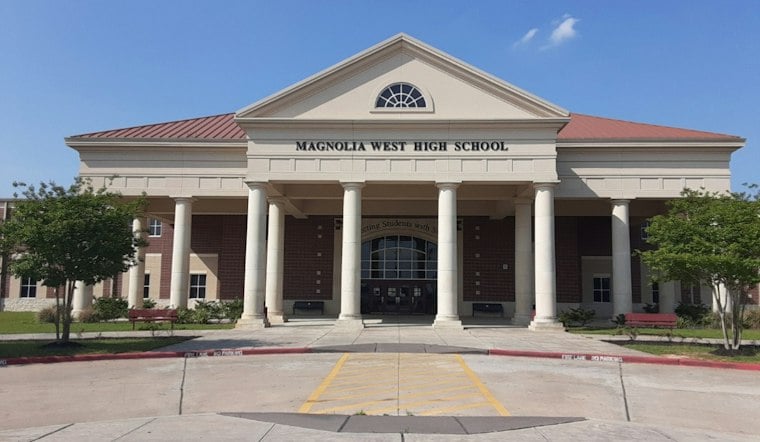
Magnolia West High School sent students home early Tuesday and canceled classes Wednesday after the campus well ran dry, knocking out both air conditioning and working bathrooms across the building. Parents say the trouble actually began Monday morning, when the school lost water and students were left to endure a full day without functioning restrooms or a working cooling system.
According to a parent who spoke with ABC13, the school lost water at about 9:30 a.m. Monday, and students spent the rest of the day on campus without working air conditioning or bathrooms. The outlet reported that parents described the building as unsanitary, unsafe and uncomfortably hot, saying it smelled like sewage and that multiple students vomited. Magnolia ISD had characterized the problem as a low-water situation, but one parent pushed back on that framing, telling the station bluntly, “There was no water.”
As reported by Click2Houston, the school's HVAC chillers rely on water pumped from the campus well, so when the well ran dry, the air conditioning stopped operating along with the plumbing. Students could not use the bathrooms or wash their hands, and the outage created unsanitary conditions throughout the building, per that report. A crew from KPRC 2 was spotted working on the water well at the campus as the district scrambled to fix the problem.
Classrooms Hit 80 Degrees as Indoor Temperatures Climbed
Tonya Berrueta measured 80 degrees in the school office as temperatures climbed indoors, according to Click2Houston's report. Parent Alisha Will said her son was covered in sweat when she picked him up, and added that teachers were experiencing the same heat as their students.
Tonya Berrueta also stressed the importance of running water at school. Maintenance crews were working on the water-well issue.
The well trouble did not resolve overnight. The well ran dry again by the time classes were set to begin Tuesday, prompting officials to send students home early that day. Maintenance crews continued working on the well into Tuesday evening. District officials ultimately said the school would remain closed Wednesday while the fix continued.
A City Already Straining Under Drought Restrictions
The school's well failure lands in the middle of a broader water crunch across the city of Magnolia. The city entered Stage 1 of its drought contingency plan and issued a voluntary water conservation notice in late August, according to ABC13's earlier coverage. The station reported that Magnolia pumped about 87 million gallons from its wells that month while residents consumed roughly 85 million to 86 million gallons, and that the city's wells were running 16 to 17 hours a day as of a September 8 City Council meeting.
City officials have warned that Magnolia could move into mandatory Stage 2 restrictions if demand stays high, a threshold triggered when daily water use exceeds 60% of the city's combined pumping capacity for five consecutive days. Stage 2 restrictions are designed to cut daily demand by 15%. The October 17, 2023, report said that on September 26, 2023, 100% of Montgomery County was classified in extreme drought status and 30.17% was in exceptional drought status, though exceptional drought coverage had fallen from 40.69% on September 12, per woodlandswater.org. That same report noted the Lone Star Groundwater Conservation District raised its temporary drought buffer to 15% on September 18, letting permitted wells pull more water beyond their normal annual allocation.
Magnolia's water-supply strain isn't new. The city sold between $20 million and $22 million in certificates of obligation to fund well projects and expand capacity, according to Community Impact, which also reported that the city council awarded a $2.89 million contract to Weisinger Inc. to build Well No. 8. That same reporting projected Magnolia's annual water use would climb to 1,949 acre-feet by 2050, up from 645 acre-feet in 2021, underscoring how tight the margins have become even before a single campus well breaks down.





