

























































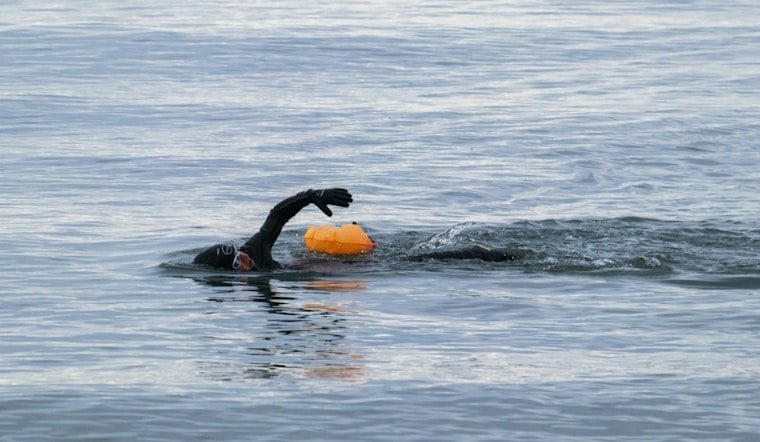
A 34-year-old man died Sunday morning after becoming distressed during the swim leg of the Mighty Hamptons Steve Tarpinian Memorial Olympic Triathlon in Southampton. Investigators believe the man may have suffered a medical episode while swimming in Noyac Bay, though the official cause of death has not been confirmed.
Southampton Town Police Detective Sgt. Gina Laferrera said the competitor became distressed in Noyac Bay off Long Beach shortly before 8 a.m. Sunday and was pronounced dead after being transported to Stony Brook Southampton Hospital, according to Newsday. Long Beach along Noyac Bay serves as the official open-water swim site for the race. Per DailyVoice, the man was competing in the Olympic-distance event, which includes a 0.9-mile swim, a 23.8-mile bike ride, and a 6.2-mile run, along with a shorter super sprint option for other participants. News 12 Long Island reported that the competitor was a 35-year-old man who died during the swim portion of the race.
A Race Named for a Long Island Triathlon Pioneer
The Mighty Hamptons Triathlon was first contested in 1982, making it one of the oldest Olympic-distance triathlons in the country, and it has historically drawn legendary champions including Hawaiian Ironman winners Dave Scott and Scott Tinley, according to The East Hampton Star. Steve Tarpinian directed and promoted the event through the 1990s before founding EventPower Long Island, the company that took over managing the race, Newsday reported in 2016.
The event was renamed in Tarpinian's memory in 2015. Tarpinian, an 18-time Ironman finisher and USA Triathlon coaching pioneer, died by suicide at age 54 on March 15, 2015, following a battle with severe depression, per a historical account from Tri-History. His legacy as a pivotal figure in Long Island triathlon culture continues to shape how the race is run and remembered each September. Hall of Fame triathlete Karen Smyers is a two-time ITU World Champion and won the 1995 Ironman World Championship.
What Research Shows About Swim-Leg Fatalities
Sunday's death fits a pattern documented in a landmark study published in the Annals of Internal Medicine, which analyzed U.S. triathlons from 1985 to 2016 and found the overall incidence of death or cardiac arrest among participants to be 1.74 per 100,000, drawing on more than 4.7 million USA Triathlon-sanctioned race entries, according to PubMed. That same 30-year study found that two-thirds of all sudden cardiac deaths and cardiac arrests in U.S. triathlons occurred specifically during the swim segment, as reported by CardioSmart. Researchers have linked the swim leg's outsized danger to rapid temperature changes and adrenaline surges during open-water starts, which create severe cardiovascular strain.
Male triathletes account for 85% of all sudden deaths and cardiac arrests in U.S. races, with risk climbing sharply to 18.6 per 100,000 for men aged 60 and older, per the PubMed-indexed research. Separately, autopsies of triathletes who died during open-water swim segments have revealed underlying cardiovascular disease or silent cardiomyopathy in 44% of cases, according to MDEdge, which noted that cold water immersion combined with high-intensity exertion can trigger fatal cardiac arrhythmias in athletes with pre-existing heart conditions. A separate discussion of triathlon fatality incidents appears in Triathlete.
Cause of Death Still Unconfirmed
As of Sunday's report, the cause of death had not been confirmed, and it remains unclear whether water temperature or other conditions played any role in the man's distress. Southampton authorities have not released further details about the man's identity beyond his age and hometown of Long Island City.



