

























































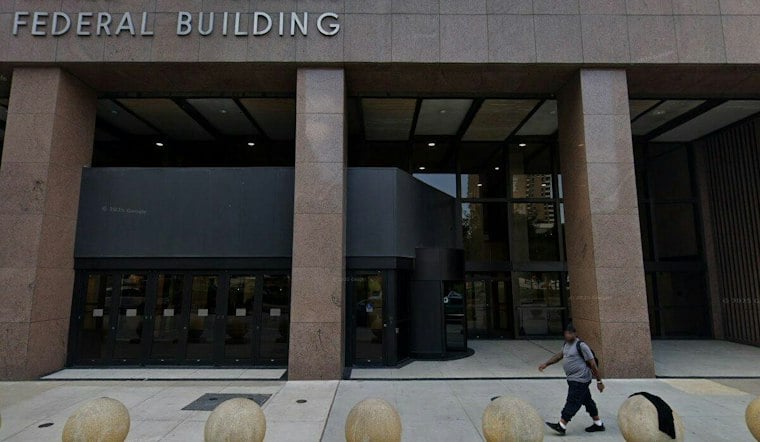
A man who threatened Immigration and Customs Enforcement agents was sentenced to 17 months in federal prison, followed by two years of supervised release. The defendant had pleaded guilty to transmitting an interstate threat. The U.S. Attorney’s Office for the Northern District of Texas said the defendant received the sentence.
The defendant pleaded guilty June 16, 2026. Prosecutors said the case concerned threats of violence rather than political disagreement.
What the federal charge covers
Section 875(c) carries a statutory maximum of five years in prison, according to the Justice Department’s description of the law. That ceiling is different from the sentence imposed in an individual case. King received 17 months, below the statute’s maximum.
The legal provision has also been used in cases outside social-media disputes. In 2011, Billy Counterman pleaded guilty in federal court in Syracuse, New York, to violating Section 875(c) through interstate telephone threats to injure his ex-wife, according to the U.S. Attorney’s Office for the Northern District of New York. That case involved a personal dispute and phone calls rather than online threats against federal officers, so it is a legal comparison, not a measure of the frequency of ICE-related threats.
Broader security context
The Department of Homeland Security reported 275 assaults against ICE law-enforcement personnel from Jan. 20 through Dec. 31, 2025, compared with 19 during the same period in 2024. Those figures come from a DHS release and describe reported assaults, not online threats specifically. The figures cannot establish how common online threats are or show that they caused any particular assault.
The case concerned online threats against ICE agents. The outcome was a 17-month prison sentence and two years of supervised release.





