

























































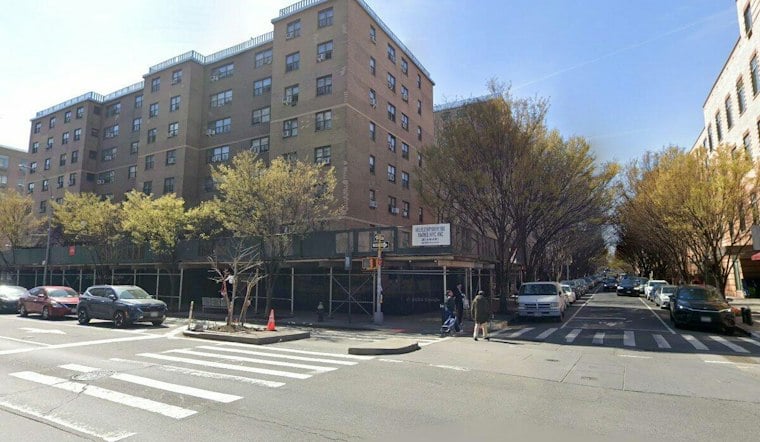
Manhattan Community Board 6 voted 42 to 1 on September 11 to demand that the city and the MTA designate First and Second Avenues as a rapid bus corridor, arguing that the M15 — the busiest bus route in the entire United States — deserves the same treatment officials are rolling out elsewhere in the five boroughs. The board represents the stretch of First and Second Avenues running from East 59th Street down to East 15th Street, a corridor its resolution says has been waiting too long for real upgrades.
The vote, first reported by Streetsblog New York City's Dave Colon, calls for both preliminary bus-first upgrades in the near term and an eventual full build-out into a proper Bus Rapid Transit corridor. Board member Barak Friedman put it plainly, saying the M15 deserves Bus Rapid Transit. Combined, the M15 local and Select Bus Service routes move roughly 57,000 riders a day and about 16 million a year, according to figures cited in the board's resolution.
Why Manhattan Feels Left Out
The frustration stems from where Mayor Zohran Mamdani and Governor Kathy Hochul chose to launch their new transit push first. The two officials unveiled the “Next Stop: Fast Buses, Better Service” plan in July 2026, an initiative aiming to lift bus speeds by 20 percent across 50 priority corridors citywide, according to the Metropolitan Transportation Authority. Within that plan, the Mamdani administration and the MTA identified five corridors for the deepest Bus Rapid Transit treatments — protected lanes, boarding stations, and limited cross-street access — but chose Northern Boulevard in Queens and Tremont Avenue in the Bronx as the initial pilots, leaving Manhattan and Staten Island out of the first wave entirely.
Construction is already underway on a one-mile busway along Tremont Avenue, a corridor serving 39,000 daily riders that officials broke ground on last month, per the city government's own announcement of the project. That single Bronx corridor, while a fraction of the M15's ridership, is getting the full infrastructure package Manhattan's board is now asking for on First and Second Avenues.
What the Resolution Actually Asks For
Community Board 6's resolution spells out a specific wish list: physically protected bus lanes, all-door boarding, traffic signal priority with retimed lights, safer pedestrian crossings, center-running lanes with boarding islands, and simply more frequent bus service. The board hopes its vote will spur neighboring community boards along the route to pass similar resolutions, building pressure for Bus Rapid Transit on the full corridor rather than just the stretch CB6 covers.
Part of the argument rests on how slow Manhattan buses already are. The M15 Select Bus Service crawls along at 8 miles per hour, while the local M15 route without Select Bus treatment moves at just 6.5 miles per hour, according to the resolution detailed by Streetsblog. Citywide, the New York City Comptroller found buses averaged 8.17 mph in 2024, with Manhattan posting the slowest borough-wide average at 6.29 mph — and nine of the city's ten slowest bus routes operate inside Manhattan's Congestion Relief Zone, per the New York City Comptroller.
A History of Incremental Fixes
The M15 corridor has not been ignored entirely. NYC DOT has upgraded existing bus lanes on First and Second Avenues over the years, converting a curbside lane on Second Avenue between 59th and Houston Streets into an offset lane in 2024, and doing the same for First Avenue between 61st and 79th Streets back in 2022. Those changes reportedly nudged bus speeds up by 5 percent on Second Avenue and 6 percent on First Avenue.
DOT also made the M15 the first city bus route to receive onboard automated enforcement cameras, which ticket motorists who drive or park in bus lanes. MTA transit monitoring shows corridors with Automated Camera Enforcement see average speed gains of 5 to 30 percent alongside a 20 percent drop in vehicle collisions, and agency data indicates only 9 to 10 percent of fined drivers commit a second violation — evidence the board's supporters point to as proof that enforcement, paired with real infrastructure, works. Fines under that program start at $50 and climb to $250 for repeat offenders. DOT has also added bus lanes on Allen and Pike Streets and constructed extended bus stops to speed up passenger boarding and drop-off, and it says it will review the Community Board 6 resolution; MTA spokespeople have deferred comment to DOT, with agency representative Mona Bruno confirming the resolution is under review.
Select Bus Service itself first launched on the M15 back in October 2010, introducing off-board fare payment and dedicated lanes that lifted speeds by 15 percent along First and Second Avenues, according to Transit Central. Sixteen years later, riders are still waiting for the next major leap.
Subway Relief Still Years Away
Part of what makes the M15 so essential is that subway service on Manhattan's East Side only reaches as far south as East 72nd Street, where the Second Avenue Subway currently starts. Major construction on Phase 2 of that subway's extension into East Harlem broke ground in June 2026, a $7 billion effort to push the Q train up to 125th Street with a targeted 2032 opening, according to Trains.com. The MTA also awarded a $1.02 billion contract that same month to a joint venture of Skanska, Traylor Bros., and Walsh Construction to build the tunnel and future 106th Street station.
That expansion, however, runs north from 72nd Street rather than south into the neighborhoods Community Board 6 represents, meaning First and Second Avenues will keep relying on surface bus service for years to come. Hoodline previously reported on an MTA lawsuit against an East Harlem landlord over access needed for pre-construction survey work tied to that same Phase 2 project.
A Rulebook Under Review
The timing of the board's vote lines up with a broader rewrite of the city's transit rulebook. NYC DOT's Streets Master Plan, created under Local Law 195 of 2019, originally mandated 150 miles of protected bus lanes and 250 miles of protected bike lanes over five years starting in 2022. DOT's next update to that plan is due in December 2026, and officials including Mike Flynn have signaled they want to move away from strict mileage targets toward performance measures like deaths, injuries, bus speeds, and rider travel time.
Transit advocacy groups have pushed for similarly outcome-focused benchmarks, proposing that DOT track ridership changes after new bus lanes go in, measure bus speed improvements project by project, and calculate time actually saved by riders on priority corridors. The Riders Alliance, Regional Plan Association, and Open Plans sent Flynn a letter on September 15 urging exactly that shift. Whether that new framework ends up favoring a corridor like First and Second Avenues, still without a Bus Rapid Transit designation despite carrying the nation's busiest bus line, remains to be seen.





