

























































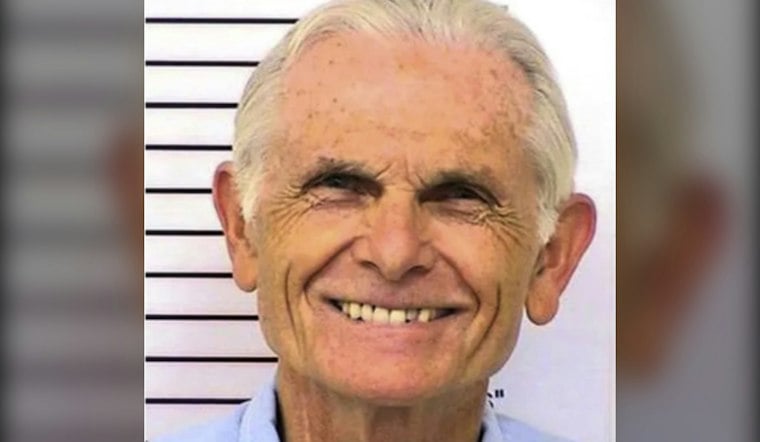
Bruce Davis, who once served as Charles Manson's chief lieutenant and was convicted in two of the Manson Family's 1969 killings, died at 83 on Friday night at the California Medical Facility in Vacaville. State corrections officials reported that a registered nurse pronounced him dead at 11:03 p.m., closing out a case that had bounced between parole boards and the governor's office for more than a decade.
According to details released by state corrections officials and reported by the Los Angeles Times, Davis died at the medical facility where he was serving a life sentence. Fox 10 Phoenix, citing TMZ and the Associated Press, noted that the Solano County Coroner's Office confirmed the death, though a cause was not immediately released, according to Fox 10 Phoenix. Davis was convicted in 1972 for his roles in the 1969 murders of musician Gary Hinman and Spahn Ranch hand Donald “Shorty” Shea, and was sentenced to life in prison with the possibility of parole, the outlet reported.
Davis was not present at the Tate-LaBianca killings that made the Manson Family infamous — the August 1969 slayings of Sharon Tate, the pregnant wife of film director Roman Polanski, along with four others, and of Leno and Rosemary LaBianca in Los Angeles. Instead, his convictions trace back to two separate, targeted killings tied directly to the group's internal violence and paranoia.
A Sword, a Gunpoint Hostage, and a Racial Motive
Official parole records cited by the Los Angeles Times describe Davis holding Hinman at gunpoint in July 1969 inside a Malibu home while Manson slashed Hinman's face from ear to chin with a sword. The group reportedly believed Hinman possessed money and property that could fund their planned move to the desert. Hinman ultimately died from his injuries, and Davis was convicted in connection with the killing.
The second murder for which Davis was convicted, that of Shea, a 35-year-old stuntman and ranch hand at Spahn Ranch, came a month later, in August 1969. Former Los Angeles County prosecutor Stephen Kay told the Knoxville News Sentinel that Manson's racial hostility toward Shea for marrying a Black woman was a primary motive behind the killing.
Rising Through the Ranks Before the Killings
Davis's path into Manson's orbit ran through the University of Tennessee, which he attended in the early 1960s before dropping out and heading west. The Los Angeles Times described him as Manson's right-hand man and an integral member of his inner circle.
In the months before the killings, Davis was overseas. He lived in London from November 1968 to April 1969, working at the Church of Scientology's headquarters, before returning to California. Manson reportedly picked him up from LAX upon his return in early 1969.
Eight Parole Recommendations, Three Vetoes
Davis's decades in prison were marked by a recurring pattern: parole panels found him suitable for release, and governors overturned it. The Los Angeles Times reports that California parole panels found Davis suitable for release eight times between 2010 and 2021, only for Governors Arnold Schwarzenegger, Jerry Brown, and Gavin Newsom to each exercise executive veto power to block his release. That authority stems from Proposition 89, passed by California voters in 1988, which gave governors the power to overturn murder parole decisions.
Fox 10 Phoenix's account of the case, drawing on reporting from TMZ and the Associated Press, states Davis was recommended for parole seven times, and that a California parole panel denied him parole again in 2022, with commissioners telling him to try again in three years. Davis received a life sentence after California abolished the death penalty in 1972.
A Doctorate, a Ministry, and a Sister's Prayer
Behind bars, Davis's record diverged sharply from the violence of his youth. New Times San Luis Obispo reported that during his more than five decades in prison, Davis earned a master's degree and a doctorate in the philosophy of religion, became a born-again Christian, and ministered to fellow inmates — credentials his defense repeatedly cited at parole hearings.
Debra Tate, Sharon Tate's sister, said she prays when Manson Family members die in prison, according to Fox 10 Phoenix's reporting. She said she prays for clarity and mercy for the family members who have died. Davis's death leaves his Hinman co-defendant, Bobby Beausoleil, still incarcerated; a California parole panel denied Beausoleil release two months ago and scheduled his next hearing for 2029, after he had originally been recommended for parole in January 2025 before that decision was reversed.
Davis died at a facility built for exactly this kind of case. The California Medical Facility in Vacaville opened in 1955 as the state prison system's primary medical and psychiatric institution and later established the nation's first licensed prison hospice unit, according to GeriPal. The facility relies on trained inmate volunteers to provide end-of-life care to aging, long-term prisoners.





