

























































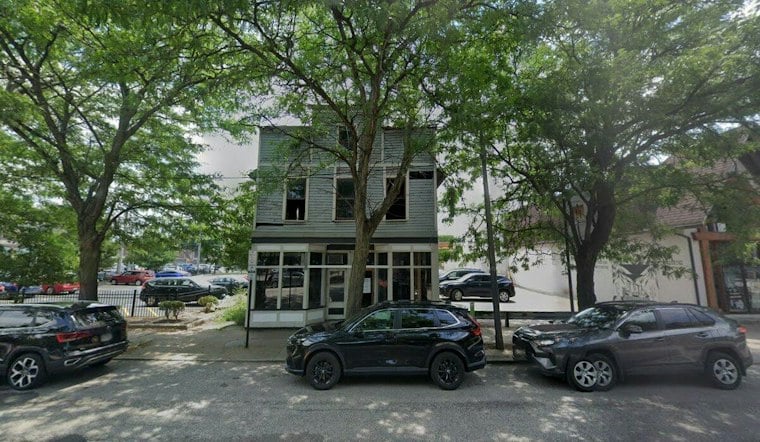
The proposed Market Square Historic District is moving forward in Cleveland, but its most immediate significance may be financial rather than regulatory: designation could help owners rehabilitate historic buildings while leaving separate questions about traffic, drive-through access and pedestrian safety to other city reviews.
The Cleveland Landmarks Commission unanimously endorsed the application, according to Cleveland.com. The proposal covers 46 contributing buildings with histories dating from 1864 to 1978. It would then go through Ohio’s historic-preservation review process and, if approved at the state level, to the National Park Service.
What designation could mean for the buildings
The application is tied in part to two redevelopment efforts. At 2621 Lorain Avenue, AHA Market House LLC plans to convert an 1868 building into apartments and ground-floor retail, with additional apartments planned above it. Cleveland.com reports that the project is valued at $3 million and that the developer is seeking federal historic-tax-credit assistance.
The federal Historic Tax Credit provides a 20% credit for substantial rehabilitation of historic buildings used for business or other income-producing purposes, provided the work preserves the building’s historic character, according to the National Park Service. Ohio’s program offers a separate credit, but its policies contain eligibility conditions. For example, the state says a rehabilitated building cannot function as a single-family residence or a multi-unit condominium property, according to Ohio Department of Development program policies.
That means designation could improve the financing prospects for qualifying rehabilitation work, but it would not guarantee that every renovation expense qualifies or that either project automatically receives the maximum available benefit. The credits apply to eligible rehabilitation costs and come with preservation and use requirements.
Why the Starbucks proposal remains a separate fight
The second project is planned on Gehring Street near the Ohio City-Lorain Red Line station and includes a Starbucks drive-through. The drive-through plan was approved by the Landmarks Commission in 2025 despite public objections focused on walkability and pedestrian safety, according to Cleveland Scene.
Council Member Austin Davis has argued that the drive-through is poorly suited to a heavily walked area. His objection was directed at the vehicle circulation created by the project, while commissioners emphasized that the historic-district question is supposed to be evaluated on architectural and historical grounds, according to Cleveland.com.
That distinction matters. Cleveland says the Landmarks Commission determines eligibility for landmark and historic-district designation and reviews exterior or environmental changes in designated areas. The city also cautions that a landmarks approval does not finish a project’s review: other department approvals and building-permit review are still required, according to Cleveland’s Landmarks Design Review guidance.
The city’s permitting materials call for scaled site plans showing details such as setbacks and the widths of structures and drives, issues that are more directly related to site layout and vehicle circulation than to whether the surrounding district merits historic recognition, according to the Department of Building and Housing.
A transit location raises the stakes
The Gehring Street site’s proximity to transit helps explain why the drive-through has become the focal point of the designation debate. GCRTA says the Red Line operates seven days a week, every 7 to 15 minutes for 20 hours a day, and serves 12% of RTA customers, according to the agency’s system overview.
That service information does not establish how many pedestrians would cross the proposed drive-through or whether the project would cause crashes. It does show why access design at the station is a broader transportation concern than the historic designation alone. GCRTA’s design guidelines encourage municipalities to involve the agency early in roadway and streetscape planning and promote transit-supportive treatment of sidewalks, rights-of-way and intersections, according to the agency’s transit and street-design guidelines.
The history behind the application
Market Square’s significance predates the West Side Market. Cleveland.com reports that the area served farmers and food vendors beginning in the 1840s and later contained the Pearl Street Market, an enclosed wood-framed market that opened in 1868 and was demolished in 1915. The square continued to host public events and was last used as a market in 1978.
The proposed district would recognize that commercial and civic history while potentially giving owners another financing tool for rehabilitation. It would not, by itself, decide whether the Starbucks drive-through can operate as proposed, eliminate the need for building and site approvals, or resolve the competing claims about pedestrian safety.
The next major question is whether the application advances through Ohio’s historic-preservation review and ultimately reaches the National Park Service. Until that process is complete, the tax-credit implications remain prospective—and the transportation questions surrounding the Gehring Street project remain separate.





