

























































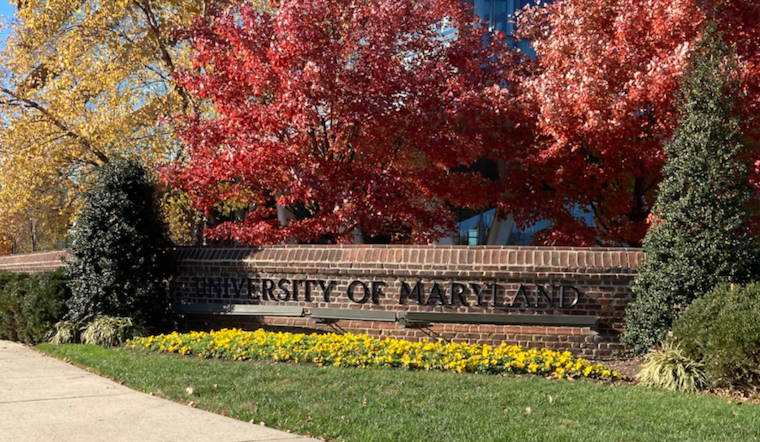
The University System of Maryland has agreed to give staff the pay raises it had been withholding for months, ending a standoff that pitted more than 6,000 non-faculty workers against university leadership and, ultimately, drew in Governor Wes Moore himself. University System of Maryland staff will receive a 2.5% merit increase dated back to July 1, 2026, and a $500 base pay increase set for January 1, 2027 — the raises that were spelled out in the union's contract but never paid out on schedule.
The resolution comes after University System of Maryland leaders faced pressure from AFSCME and Gov. Wes Moore, according to WMAR 2 News. The Moore administration instructed the university system to give the raises outlined in the union contract, a move that broke the months-long impasse. As part of the settlement, AFSCME agreed to drop the unfair labor practice charge and the lawsuit it had filed against USM leadership and the Moore administration in late July over the withheld raises, according to Maryland Matters.
AFSCME members did not back down when university system leaders treated the legally binding union contract as optional, per WMAR 2 News. The union, AFSCME Maryland Council 3, is now led by Sabeela Ally, who said the pay-raise victory benefits AFSCME members, students and campus communities alike.
How the Money Will Actually Get Paid
The financial mechanics behind the deal were hammered out at the state level. The University System of Maryland will fund the agreed-upon wage increases using $13.8 million pulled from its existing fund balance for fiscal year 2027, with Moore's administration committing to build that amount into the state's base budget starting in fiscal year 2028, Maryland Matters reports.
That arrangement settles a dispute over a fairly technical but consequential distinction. USM had already implemented a 1.5% cost-of-living adjustment for all 40,000 system employees in July, but it withheld the contractually negotiated 2.5% merit raise and $500 base increase for AFSCME workers, arguing the state budget did not explicitly allocate funds for merit increases, according to the same account. The union countered that the full raise structure was contractually binding regardless of how the state's line items were worded, per The Diamondback.
Maryland lawmakers had allocated nearly $36 million in the fiscal year 2027 budget for public employee salary increases during the legislative session that ended in April, and Senate President Bill Ferguson stated publicly that funding for the raises was provided, the Diamondback reported. That left USM's position — that the appropriation wasn't specific enough to cover the merit raises — at odds with the General Assembly's own account of what it had funded.
Job Cuts Still Loom Over Two Campuses
The wage dispute unfolded against a backdrop of campus workforce reductions that have not been resolved by this settlement. AFSCME continues efforts to reinstate positions eliminated by the University System, with the University of Maryland, College Park and Bowie State University both remaining a focus of that push, per WMAR 2 News.
The scale of those cuts is significant: 73 AFSCME-represented jobs were eliminated at UMD College Park, and 21 more at Bowie State, where administrators faced an estimated $18 million budget deficit, according to Maryland Matters. Workers held rallies outside Board of Regents meetings throughout the summer demanding both job reinstatements and full compensation, the outlet reports.
AFSCME Maryland Council 3 represents more than 6,000 non-faculty campus workers — including administrative staff, groundskeepers, academic advisors, and maintenance workers — within the broader 40,000-employee University System of Maryland workforce, according to The Baltimore Sun. Those are the workers who kept campuses running even as leadership disputed whether their raises were owed.
A Union Leader's Rise to the National Stage
The dispute also marked a turning point for the union's leadership. Patrick Moran, who served as president of AFSCME Maryland Council 3 during the summer's rallies and legal filings against USM, was elected International President of AFSCME at the union's national convention in Chicago last month, according to the Maryland Daily Record. Ally took over executive leadership of Council 3 as Moran assumed his new national role.
The settlement also lands amid a broader statutory shift in Maryland higher education labor law. The state modernized its public sector labor rules in 2021 to permit consolidated collective bargaining across the University System of Maryland, which allowed AFSCME to ratify its first single, system-wide contract with USM in August 2024, according to United Academics of Maryland. In April, the Maryland General Assembly passed Senate Bill 6/House Bill 106, expanding collective bargaining rights to thousands of non-tenure-track faculty across four-year public universities effective July 1, according to the AAUP.
An August report from AFSCME Maryland documented widespread staffing shortages and heavy workloads across state agencies and higher education institutions, alleging that agencies eliminated vacant positions to artificially lower vacancy metrics, the Daily Record reported separately. Moore pledged in 2023 to fill 10,000 vacant state positions, but the union's report points to lingering operational strains across the system.
The settlement follows a familiar pattern in Maryland's public sector this year, where sustained union pressure has repeatedly forced reversals on pay and staffing decisions — Howard County reinstated 55 library workers earlier this year after similar backlash, and AFSCME-represented faculty at Baltimore City Community College packed campus meetings this spring over a related pay stalemate. For now, the University System of Maryland has agreed to give pay raises to staff, but the fight over the eliminated jobs at College Park and Bowie State remains unresolved.





