

























































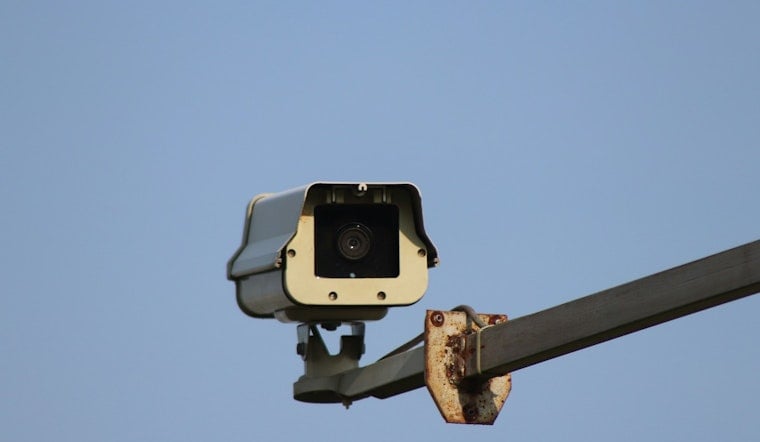
A Maui County Council committee voted 7-1 Thursday to advance a bill setting new rules for the county's license plate reader cameras, while putting a separate measure on facial recognition technology on indefinite hold after residents spent two and a half hours testifying against both proposals as written.
The Disaster Recovery, International Affairs and Planning Committee's action split two bills introduced by Council Member Tamara Paltin: Bill 112, which would govern facial recognition use, and Bill 113, which addresses license plate reader data. According to Maui Now, Council Member Gabe Johnson was the sole dissenting vote, while Council Member Yuki Lei Sugimura was absent and excused. Bill 113 now moves to the full council for first reading, while Bill 112 remains on hold indefinitely, with Council Chair Alice Lee suggesting the facial recognition measure could be taken up in 2027.
What the License Plate Reader Bill Would Do
Bill 113 would prohibit the sale of automated license plate reader data and require county camera-system contracts to bar vendors from using that data outside the terms of the contract, per the same report. The committee amended the bill to include a proposed exigent-circumstances change, referring to urgent situations that allow law enforcement to act without first obtaining a warrant. The Maui Police Department reported no pending surveillance technology contracts and said it does not sell automated license plate reader data.
Maui Police currently operates 32 license plate reader cameras, an increase from the 27 cameras included in a 2025 Motorola contract that also covered 400 radios, the outlet reports. Those cameras are posted at major, highly traveled intersections around the county and capture plate characters, a vehicle image, and the time and location — but they do not identify drivers. The department's infrastructure relies primarily on Motorola hardware, including L6Q quick-deploy and L5F fixed camera units, integrated with Vigilant VehicleManager software that uses artificial intelligence to analyze vehicle characteristics and travel patterns.
License plate reader data can show where and when a possibly stolen vehicle was last seen and its direction of travel, and alerts are generated when plates match hot lists for stolen vehicles, Amber Alerts, or custodial-interference cases. Those alerts are treated as leads requiring in-person verification rather than automatic stops, and queries require a case number and a written reason logged before any search is run. An automated license plate reader subscription costs about $150 to $200 per camera per year, and the data itself is stored on SD cards, according to Maui Now's reporting.
Facial Recognition Bill Stalls Amid Sharp Disagreement
Bill 112 would have required facial recognition use only in connection with a documented criminal investigation, while allowing use without prior documentation during an imminent threat of death or serious bodily injury — with documentation required within 24 hours after any such emergency use. The bill would have barred facial recognition for immigration enforcement, civil traffic infractions, and protected activities, and it would have classified any facial recognition match as an investigative lead rather than proof of identity, limiting access to designated and trained personnel.
Lt. Taylor Kamakawiwoʻole said the Maui Police Department does not currently use facial recognition technology, and that under the proposed framework, a trained person would need to confirm identity while an independent investigation corroborates any facial recognition lead. A facial recognition software match could not establish probable cause or grounds for arrest by itself. Officer Aaron Mark told the committee that optical character recognition can also misread license plates, underscoring the limits of the technology even on the license-plate side.
Public testimony opposed both bills as written, with residents and council members split over whether regulation goes far enough. Council Member Keani Rawlins-Fernandez said she preferred prohibiting Maui County's use of facial recognition technology outright rather than merely regulating it, while Johnson said he preferred an outright ban or moratorium on camera and artificial intelligence use in traffic enforcement or public spaces. Johnson also cited a 14% reduction in crime he attributed to Maui police. Council Member Nohelani Uʻu-Hodgins said more time is needed to understand how the technology applies to Maui County, and Paltin said a third bill addressing data retention still needs work before it can be introduced, adding that the county needs to balance police accountability with police access to information.
Residents Cite Surveillance Costs and Camera Counts
Resident Livit Callentine told the committee that Maui residents were spending $1.7 million on what he called an invasive mass-surveillance network. Stacey Alapai reported that a public camera-mapping website identified 37 Flock Safety or Motorola cameras on Maui — more than the 32 cameras the police department says it currently operates. Maui County has no contract with Flock Safety and does not use Flock cameras, according to the department. Maui Police Chief John Pelletier said people who are not police should not overtake police capabilities.
The debate echoes concerns raised elsewhere in the country. In Monroe County, Michigan, officials voted to end the sheriff's use of 40 Flock Safety license plate cameras, and an American Civil Liberties Union study cited during testimony found facial recognition error rates below 1% for white men but nearly 35% for women with darker skin. The ACLU of Hawaii advocates for a complete ban on government use of facial recognition technology and maintains that county councils must establish strict oversight to prevent police surveillance abuse — a stance that reflects the tension between regulating the technology and banning it outright.
A Regulatory Gap at the State Level
Maui's debate is unfolding against a backdrop in which Hawaii has no comprehensive statewide statute regulating how law enforcement agencies collect, retain, or share automated license plate reader data, according to The Policing Project, leaving those privacy rules entirely to county ordinances like Maui's. Separately, Hawaii state law under HRS § 291L-4.5 already prohibits automated speed enforcement systems from using facial recognition or biometric identification technology, while specifically exempting license plate reader systems from that restriction.
The scrutiny isn't confined to Hawaii. The Florida Department of Transportation issued a directive this month revoking permits for law enforcement agencies to operate automated license plate readers on state highway rights-of-way, citing privacy concerns and reports of misuse. At the federal level, U.S. Representative Thomas Massie introduced the “Flock-Off Act” this month to prohibit local law enforcement agencies from using federal funds to purchase or operate automated license plate readers and biometric surveillance cameras.
Maui Police's camera network has expanded well beyond roadside intersections in recent years. Hoodline previously reported that the department deployed a $1.3 million night-vision helicopter named Hekili in 2025, equipped with an automated license plate reader capable of scanning plates from over a kilometer away. Maui County has also put license plate recognition to non-police use, launching a ticketless pay-by-plate parking pilot in Kīhei that grants free access to local residents.
For now, Bill 113's advancement means Maui's council will debate license plate reader safeguards at the full council level, while the more contentious question of facial recognition rules — ban, regulate, or wait — remains unresolved until at least next year.


