

























































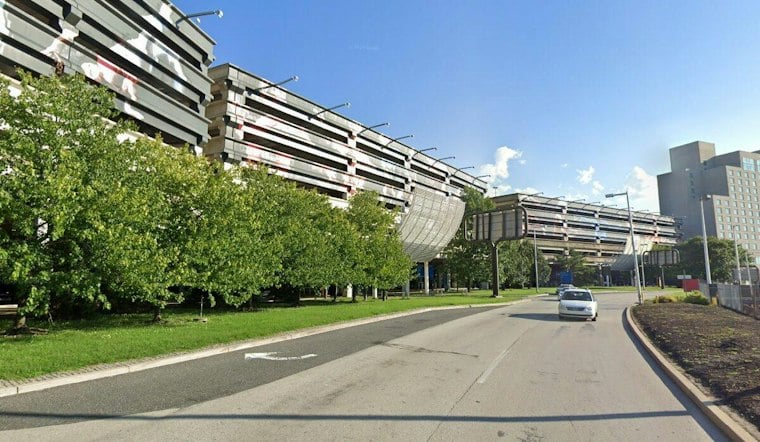
A traveler infected with measles moved through five terminals at Philadelphia International Airport overnight, spending nearly five hours inside the secure zone and potentially exposing people in the airport to a highly contagious virus. The infected person was inside PHL from 7:25 p.m. on Sunday, September 13, until 12:05 a.m. the following Monday, passing through Terminal B, Terminal F, and connecting areas in Terminals C, D and E.
The Philadelphia Department of Public Health announced the possible exposure, and as reported by NBC10 Philadelphia, the person did not leave the airport property during that stretch of the night. That detail matters for contact tracing: travelers moving through connecting flights and terminal transfers could have been in proximity to the virus. Anyone who passed through PHL during that window and develops symptoms through October 5 is urged to contact a doctor immediately, according to the same report.
The airport case lands just two days after Philadelphia's health department flagged a separate, unrelated probable measles exposure at Children's Hospital of Philadelphia's main campus, tied to a September 11 visit that spanned the NICU West unit, the atrium, and the main cafeteria, according to a City of Philadelphia press release. That exposure prompted preventive antibody treatments for infants in the neonatal intensive care unit. Health officials have not connected the CHOP incident to the PHL exposure.
A Pattern of Airport Warnings
This is at least the third measles exposure alert tied to PHL in 2026 alone, following an earlier warning for Terminal E in February and a July notice covering Terminals A, B and C, per the city's press release. Hoodline previously reported on the February scare. PHL served more than 30.1 million passengers in 2025, with nearly 500 daily departures, according to Philadelphia International Airport, underscoring how far a single exposure can theoretically ripple outward.
Measles is airborne and can linger in an enclosed space for up to two hours after an infected person leaves, the city's health department has said, which is why nearby travelers can be exposed without ever making direct contact. Early symptoms include cough, fever, rash, and red, watery eyes, and the disease can progress to pneumonia, brain infection, or death in severe cases, per NBC10 Philadelphia's report.
Statewide Outbreak Reaches Historic Scale
The airport exposure unfolds against Pennsylvania's largest measles outbreak in decades. State health officials confirmed 767 measles cases across 38 counties as of September 18, with 150 hospitalizations and four deaths, according to the Pennsylvania Department of Health. Less than 1% of confirmed cases statewide occurred among fully vaccinated individuals, the department noted.
Those four deaths mark the state's highest annual measles mortality total since 1992, according to The Guardian, which reported that one of the victims, an 18-year-old Mifflin County resident, died after being diagnosed with encephalomyelitis.
The scale of the crisis prompted Pennsylvania's health department to formally request an Epi-Aid from the Centers for Disease Control and Prevention on September 16, with discussions ongoing to determine the appropriate assistance. The state has administered more than 40,000 MMR vaccine doses in the past month alone, per NBC10 Philadelphia's report.
What Exposed Travelers Should Do
Federal guidelines say susceptible individuals exposed to measles may receive an MMR vaccine within 72 hours, or human immune globulin antibody therapy within six days, to prevent infection or lessen its severity, according to the Centers for Disease Control and Prevention. Immune globulin is generally prioritized for infants, pregnant women, and immunocompromised individuals who cannot receive the vaccine.
People born before 1957 without vaccination records are generally considered immune, as are those who have already had measles, per NBC10 Philadelphia. The MMR vaccine is given in two doses and provides 97% lifetime protection, though babies under 1 year old typically cannot be vaccinated — making it especially important for people around infants to stay current on their own shots.
“Everyone who is not up to date on their MMR vaccine should get vaccinated as soon as possible,” Dr. Palak Raval-Nelson said, according to NBC10 Philadelphia's report. Anyone who believes they were exposed or who develops symptoms is urged to contact their health care provider immediately, or reach the Philadelphia Department of Public Health's toll-free measles hotline at 877-724-3258.
Measles genetic material was detected in untreated wastewater at a Delaware County sewage treatment plant on June 9 and 11, 2026, according to a Hoodline report on the county's mobile vaccination response.





