

























































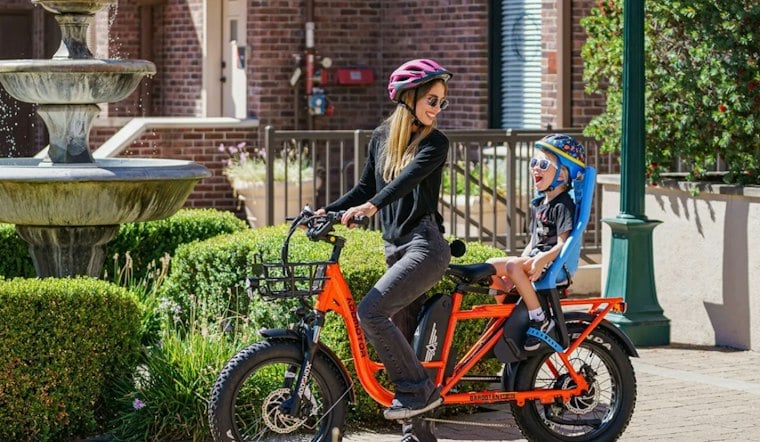
Mentor City Council has approved three e-bike safety ordinances that expand helmet requirements, limit when a second person may ride and require audible warnings when riders pass pedestrians. The measures were reported by cleveland.com.
What the rules require
The helmet provision applies to every e-bike rider and passenger, regardless of age or e-bike class, according to the report. That goes beyond Ohio's statewide rule. Under Ohio Revised Code Section 4511.522, operators and passengers on Class 3 electric bicycles must wear qualifying protective helmets, and people younger than 16 may not operate a Class 3 e-bike.
The passenger ordinance permits a second rider only when the bicycle or e-bike was designed and equipped by its manufacturer to carry a passenger. The vehicle must have a permanently attached seat or another designated seating position; makeshift seats and other improvised modifications do not qualify, cleveland.com reported.
The third measure requires riders to give an audible warning before overtaking and passing pedestrians on sidewalks or shared-use paths. A spoken warning such as “on your left,” or another signal that provides adequate notice, can satisfy the requirement, according to the report.
How Mentor's rules fit Ohio law
Ohio law generally permits Class 1 and Class 2 e-bikes on bicycle-only and shared-use paths, although the authority controlling a path may prohibit them, according to the state statute. The City of Mentor separately says Class 3 e-bikes are restricted to roadways and that e-bikes are not allowed on hiking trails or natural-surface paths. Class 1 and Class 2 e-bikes are permitted on bike paths and shared-use paths, the city says.
For sidewalk riding, the City of Mentor says the motor must be turned completely off, allowing the e-bike to operate like a regular bicycle. That guidance is separate from the newly approved helmet, passenger and passing-warning ordinances.
A local policy mix, not a single regional template
Nearby communities have taken different approaches. In May 2026, Twinsburg adopted emergency laws requiring residents to register e-bikes and holding parents responsible for their children's riding-related actions, according to cleveland.com. Those provisions differ from Mentor's focus on helmets, passenger seating and warnings when passing pedestrians.
The comparison shows that municipalities are addressing different aspects of e-bike use rather than following one uniform regional rule. Twinsburg's registration and parental-responsibility measures cannot be treated as evidence that Mentor adopted the same enforcement model.
What the injury data can—and cannot—show
MetroHealth treated 43 e-bike-related injuries during June, July and the first part of August 2026, compared with 29 during the same period in 2025, cleveland.com reported. Those figures cover one health system and matched portions of two years; they do not by themselves establish a regionwide trend or explain the reasons for Mentor's ordinances.
Nationally, the U.S. Consumer Product Safety Commission cautions that its reported micromobility fatality data are anecdotal, not nationally representative and incomplete for some later years. The agency also revised its injury-estimate methodology in 2024 and adjusted 2017–2023 weights for comparability, so figures may differ from earlier reports. The federal data provide background, but they do not establish that Mentor's rules were caused by a particular national or regional increase.
The immediate change for Mentor riders is therefore straightforward: helmets are required for all e-bike riders and passengers under the new local rule, passengers must use manufacturer-designated seating, and riders must audibly warn pedestrians before passing. The available material identifies the ordinances as approved but does not establish additional details about their implementation.





