

























































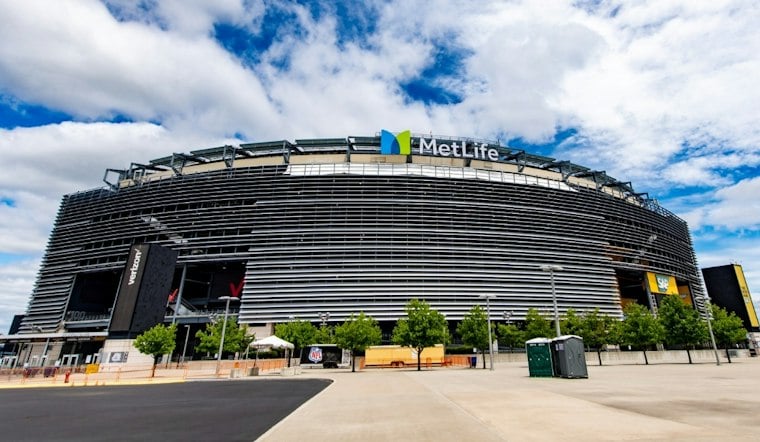
Drivers heading to MetLife Stadium on gamedays already know the drill: creeping bumper-to-bumper traffic, jammed exits, and a slog back onto the highway that can eat up half an hour just to cover six miles. Now a new national ranking has put hard numbers behind that frustration, naming the East Rutherford venue the sixth-most congested stadium in the NFL for gameday traffic.
The Numbers Behind the Ranking
According to a study from Betpack, cited by the New York Post, researchers analyzed gridlock data around all 30 NFL stadiums by evaluating traffic within a one-kilometer radius of each venue. The study used congestion level, average speed, and travel time per 6.2 miles to produce an overall congestion score for each stadium, and MetLife Stadium came out with a score of 72.4 out of 100. That is enough to place it sixth on the list of the league's most gridlocked game-day environments.
The report found that traffic near MetLife Stadium runs 212.7% above baseline conditions once a game lets out, with speeds slowing to an average of just 13.4 mph. Per the same Post report, drivers in the area needed roughly 27.7 minutes on average just to travel six miles on gamedays. Congestion level, the study noted, measures how much longer those journeys take compared with free-flow conditions, and calculated the figure by comparing observed traffic speeds against standard clear-road speeds.
Not a New Problem for the Meadowlands
This is far from the first time MetLife Stadium's traffic has drawn national scrutiny. A separate study from Pickswise ranked the venue the second-worst stadium for gameday traffic in fall 2025, giving it a traffic score of 30.3 out of 100 at the time. That same study found East Rutherford posted the longest peak travel times in the country, requiring 38 minutes and 56 seconds to drive just 10 kilometers during peak hours — a mark that exceeded every other NFL stadium by nearly 10 minutes, per the Post.
The problems aren't limited to football. The Post report noted that a soccer fan once described MetLife Stadium as the worst stadium they had ever visited, while a Tripadvisor reviewer called it the worst stadium to get in or out of. Traffic alerts have repeatedly been put in place to manage severe delays near the venue, and major event-goers and World Cup fans have been urged to lean on transit options such as NJ Transit rather than drive.
How MetLife Stacks Up Nationally
MetLife's sixth-place finish puts it in rough company. The Betpack study found Nissan Stadium in Nashville posted the league's worst overall traffic score at 95.8, with congestion 215% above baseline and average speeds of 6.2 mph, requiring drivers a staggering 60.5 minutes to travel six miles through gameday congestion, according to 102.9 The Buzz. Soldier Field, Empower Field at Mile High, Huntington Bank Field, and Bank of America Stadium rounded out the five worst stadiums for traffic overall. At the opposite end of the spectrum, Arrowhead Stadium in Kansas City posted the lowest overall traffic score in the league at just 2.0 out of 100.
The Meadowlands' congestion is rooted in geography as much as attendance. MetLife Stadium seats 82,500 fans for football and soccer, according to MetLife Stadium. It sits in the Meadowlands.
Public Transit Efforts to Ease the Squeeze
Regional transit officials have been working for years to chip away at the bottleneck, with mixed results. The Meadowlands Rail Line, which connects Secaucus Junction to the stadium, runs only for major events rather than daily commuter service, according to Wikipedia — meaning train sets must be specially staged for the surge of riders before and after games. During Super Bowl XLVIII in February 2014, severe overcrowding on the line led to hours-long delays, as reported by Sports Illustrated at the time.
More recent moves aim to prevent a repeat. In June, NJ Transit rebranded the route as the DoorDash Meadowlands Rail Line after securing $1.7 million in corporate sponsorship to help subsidize matchday fares for major sporting events, as reported by News 12 New Jersey. The sponsorship and other sponsors reduced FIFA World Cup train ticket costs from $150 to $98. Ahead of major international matches in 2026, fans have been urged to use public transit.
For now, the congestion remains a fact of life for fans heading to East Rutherford, where the Giants and Jets share the same home field. Both teams opened the 2026 season with 1-0 records, and per the Post's report, traffic near MetLife Stadium may only get tighter as the season continues.





