

























































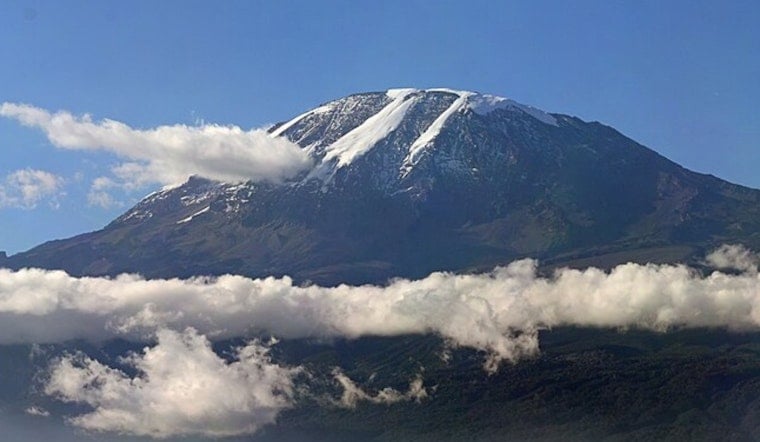
Carol Romej was sprinting up a Lake Michigan sand dune carrying nearly 40 pounds on her back when she felt her left leg go numb. She knew instantly something was seriously wrong. Less than nine months later, the 71-year-old retired attorney stood atop Mount Kilimanjaro, the tallest free-standing mountain in the world.
Romej, a self-described gym rat who hikes and bikes to stay in shape, had been training for a Kilimanjaro climb she once planned as a 70th-birthday trip before that plan was canceled. According to KAKE, a Henry Ford sports surgeon recognized she had a spine problem and referred her to Kevin Taliaferro, who is division head of orthopedic spine surgery at Henry Ford Health. Romej recalled the moment on the dune bluntly: “The left leg went numb right away. So I knew it was bad.”
Taliaferro performed surgery on Romej on October 6, 2025, removing a herniated fragment through a small incision after determining it was pressing on the nerve serving her left leg. He said the herniation was in the exact wrong spot and sitting on one of her nerves. The same report notes she walked without leg pain within an hour of the operation, and she began training again that January.
A Fast Return to Physical Training
Standard clinical protocols for lumbar microdiscectomy typically allow patients to walk the day of surgery and begin light core strengthening by weeks four to six, but they generally restrict high-impact or strenuous athletic activity until three to six months post-operation, according to The Advanced Spine Center. Romej's return to serious mountain training within months of surgery pushed toward the faster end of what recovery science considers possible. A systematic review of athletes recovering from lumbar discectomy published on PubMed Central found that 75% to 100% returned to high-level competition, with average recovery periods ranging from 2.8 to 8.7 months.
Physical therapists rebuilt Romej's training plan from the ground up after her surgery, per the KAKE report. It wasn't her first comeback: Henry Ford Health notes that Romej had previously undergone minimally invasive knee surgery in 2022, performed by Dr. Patricia Kolowich, which had allowed her to hike in Amazonia, Scotland, and Ecuador before her 2025 back injury sidelined her again.
Preparing Body and Mind for Kilimanjaro's Thin Air
Rising more than 19,000 feet above sea level, Mount Kilimanjaro poses a physiological challenge separate from spinal recovery entirely. To prepare for her June 2026 trek, Romej consulted the Henry Ford International Travel Clinic for immunizations and preventive medication against altitude sickness, according to Henry Ford Health. That preparation matters: high-altitude research cited in the CDC Yellow Book indicates that more than 77% of Kilimanjaro climbers experience acute mountain sickness, and that preventive acetazolamide, commonly known as Diamox, can accelerate ventilatory acclimatization from three to five days down to a single day.
The mountain draws roughly 50,000 summit attempts annually with an overall success rate of around 65%, according to Zara Tanzania Adventures. Romej's age put her in especially rare territory. Guide-service demographic data compiled by Ultimate Kilimanjaro shows the average successful summit climber is 37 years old, trekkers aged 61 to 70 make up only about 4% of climbers, and those over 70 account for 1% or less. The same guide records suggest older climbers often post higher success rates than younger ones because they naturally adopt the disciplined “pole pole,” or slow-and-steady, pacing strategy that helps stave off overexertion and altitude sickness.
Two Minutes at the Top of Africa
Romej reached Kilimanjaro's summit on June 22, spending two minutes at the top before beginning her descent. She credits Taliaferro and the Henry Ford Health team with giving her the confidence to attempt the climb at all, and staff at Henry Ford have taken to calling her the mountain woman, per KAKE's report.
Romej isn't done. With grandparents who came from Poland, she plans to travel next week to the Tatra Mountains to continue trekking there. Asked about how long she intends to keep pushing her body to these extremes, Romej said simply that she is going until she cannot anymore, adding that she feels blessed.



