

























































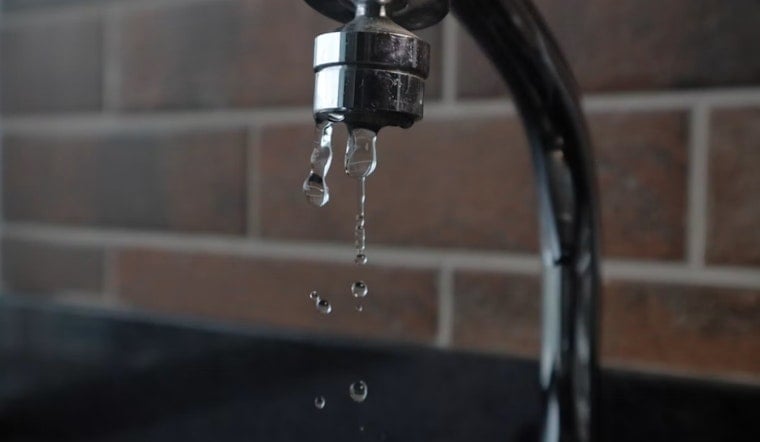
Donald Owens spent a full week without running water in his Selden Street home this month, relying on bottled water from friends and family while his landlord and Detroit's water department pointed fingers over who let his taps run dry. Owens says he pays his rent on time every month, and that his water service is supposed to be included in that payment — yet he found himself caught in the middle of a billing dispute he had nothing to do with.
The shutoff, Owens says, traced back to an unpaid water bill of $5,352, according to WDIV ClickOnDetroit. He said he contacted the Detroit Water and Sewerage Department himself and was told the water had been shut off because the bill had gone unpaid. His property manager, Mutual Property Management, offered a different explanation, telling the station that DWSD had actually shut off water to make a repair at a vacant unit elsewhere on Owens' row.
Mutual Property Management said it was unaware money was owed until after service had already been restored, and that payment plans were already in place for the property when the company took it over. The company declined to provide further details about that arrangement. DWSD, for its part, said the landlord entered into a payment plan six days after the water was shut off, and that the utility had trouble reaching the landlord both before the shutoff and after the plan was established.
A Week Without a Drop, Then Only Half Service
Owens said he went without any running water for seven straight days before crews partially restored service on Saturday. Even then, he described what came out of the tap as half service — kitchen and bathroom sinks ran with noticeably low pressure, and his laundry room had no running water at all after the partial fix. DWSD attributed the weak flow to clogged faucet aerators, a separate issue the utility characterized as a private plumbing problem rather than a service failure on its end.
By Sunday morning, Owens said he had gone to bed the night before after showering with no water and woke up to find the faucets still running dry before pressure was eventually restored. A DWSD worker visited his home to assess the situation, and the utility later confirmed that water pressure had been fully restored. Owens said he was left feeling caught between two conflicting accounts — his landlord's version of events and the water department's — with no clear answer about who was actually responsible.
Not Owens' First Time Without Water
This was not the first time Owens went without water at the property. He says he previously went 14 to 15 days without running water in February, an earlier outage that predates this month's shutoff. Frustrated by the repeat problem, Owens said he contacted his landlord repeatedly and, on the morning WDIV's story aired, reached out to his city council representative for help — something DWSD advises tenants in similar situations to do.
How Michigan Law Treats These Shutoffs
Michigan's Anti-Lockout Statute, MCL 600.2918, treats a landlord's failure to pay a water bill as a form of unlawful interference with a tenant's possessory interest when it causes essential services like running water to be cut off, potentially entitling affected tenants to actual damages or $200 per occurrence under the Michigan Legislature. Separately, MCL 554.139 and the state's Housing Law establish a non-waivable duty for property owners to keep running water flowing throughout a tenancy. Tenants facing unresolved habitability problems can also legally withhold rent into an escrow account while filing complaints with code inspectors or housing courts, according to guidance from Michigan Legal Help.
DWSD does offer tenants a path around exactly this kind of dispute: renters can put water accounts directly in their own name, shielding themselves from a landlord's unpaid balance, as long as they submit government identification and a lease showing they are responsible for utilities, per the City of Detroit. State law also requires utilities to notify tenants directly when a landlord is behind on a water bill, and it restricts disconnections for accounts already enrolled in a payment plan.
Detroit's situation isn't unique to Owens' block. The city resumed residential water shutoffs in early 2023 after a three-year pandemic-era pause, at a point when local accounts had racked up roughly $85 million in delinquent debt, according to Michigan Public. The city's Water Lifeline Plan can cap bills for low-income residents as low as $18 a month and help with past-due balances, though enrollment caps have created waiting lists for people trying to get in.
Owens' case also isn't the first time a Detroit landlord's unpaid bill has left tenants without service while the property owner stayed unreachable. In January 2024, FOX 2 Detroit reported a west-side duplex went six weeks without water over a landlord's $7,000 delinquent bill before DWSD restored service after learning tenants lived there. Hoodline has also tracked similar gas cutoffs tied to landlord debt disputes, and previously reported on council scrutiny of a major landlord facing similar compliance issues across hundreds of rentals.
Owens' home sits within Midtown Detroit's Willis-Selden Historic District, a corridor that has seen substantial residential rehabilitation and commercial development in recent years. For now, Owens says he's still trying to get straight answers about why his water was shut off in the first place, and whether it will happen again.



