

























































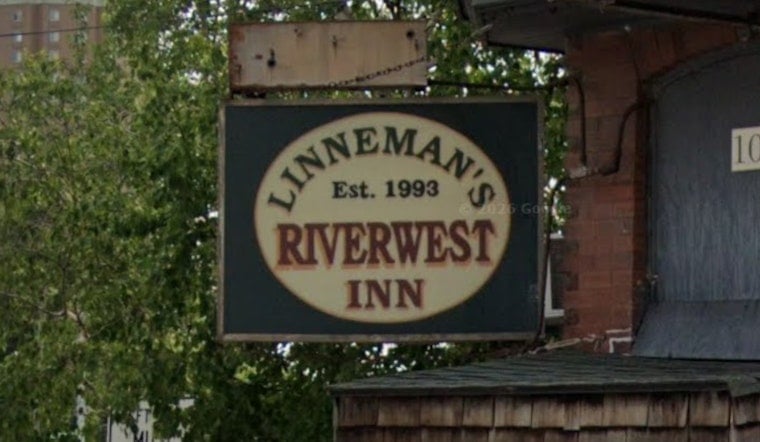
Weil Street in Riverwest goes car-free Saturday, September 5, as the Milwaukee Polka Riot takes over the block starting around 2 p.m. before the party moves indoors to Linneman's Riverwest Inn for a night that runs until roughly 10 p.m. Now in its ninth year, the free festival mixes traditional squeezebox sounds with hip-hop, punk, and klezmer, drawing a crowd that co-founder Keith Gaustad says isn't your grandmother's polka social.
The event, first reported by OnMilwaukee, brings back Linneman's outdoor stage after a three-year absence, a return Gaustad confirmed to the outlet. Weil Street itself will be closed for the day to accommodate the outdoor programming, according to the same report. Gaustad, who also plays in the polka hip-hop act November Criminals, told OnMilwaukee that people should come out in the afternoon and stick around for as many bands as they can catch.
Admission is free, with the festival's t-shirt sales helping offset organizer costs, per OnMilwaukee's reporting. The Milwaukee Polka Riot was created in October 2017 by Gaustad along with Tahrim Tatum and Evan Maruszewski as what organizers describe as America's first dedicated alternative polka festival, according to Milwaukee Polka Riot. Community partners including 91.7 WMSE, Lakefront Brewery, WXRW Riverwest Radio, and the Milwaukee Tool Library help sustain the festival's free admission, the festival's own materials note.
A Lineup Built on Genre Collision
Saturday's outdoor slate on Weil Street features Forró Fo Sho and November Criminals, before the action shifts indoors to Linneman's at 7 p.m. for Good Friends Klezmer Band, headliner The Polkaholics, and The Frantastic Sound System, according to a schedule posted by Linneman's Riverwest Inn. DJ Shotski, DJ Brümeister, DJ Stashu, and Bluesy Floozy round out the day's performers, per OnMilwaukee's rundown of the bill.
November Criminals, the Milwaukee-based act co-founded by Gaustad, plays polka music laced with hip-hop beats and three MCs, a sound the group describes as non-ironic and anti-fascist, according to TMJ4 News. The band formed in Milwaukee in 2011, originally coming together just to record a single collaboration track before building out a full repertoire blending traditional melodeon melodies with hip-hop, per the same report. Melodeon player Evan Maruszewski, one of the festival's founders, remains part of the group.
Headliner The Polkaholics bring a different pedigree to the bill. The Chicago trio was founded in 1997 by University of Illinois biostatistics professor Don “Dandy Don” Hedeker, who built the band's sound around traditional Central European polka standards fused with 1970s punk rock, according to the Mystery Street Recording Company. Hedeker reportedly assembled the power trio after amassing hundreds of vintage polka records and pairing them with loud guitar work.
Inside a Restored 1902 Riverwest Tavern
The festival's home base, Linneman's Riverwest Inn at 1001 E. Locust St., opened in the summer of 1993 after owner Jim Linneman renovated a tavern building dating to 1902, restoring much of its turn-of-the-century character, according to Urban Milwaukee. The 160-capacity venue has since become a fixture of Milwaukee's independent music scene, hosting acoustic and experimental acts for more than three decades, per the outlet's reporting.
Special guest Mario The Poet is set to perform alongside November Criminals at the festival, a pairing that fits with Linneman's long-running tradition of weekly spoken-word nights known as Poet's Monday, according to the Milwaukee Record. The venue's mix of music and poetry programming has helped it build a reputation beyond a typical neighborhood bar.
Why Polka Still Matters in Wisconsin
Gaustad has said the Polka Riot suits people who love music outside the mainstream, and that framing sits atop a much older piece of state history. Polka became Wisconsin's official state dance under 1993 Wisconsin Act 411, enacted April 21, 1994, and signed by Governor Tommy Thompson on April 29, 1994, in Pulaski, Wisconsin, according to the Wisconsin State Legislature's record of the law, cited by Authentic Wisconsin. The push for the designation reportedly began with a proposal from a second-grade class at Charles Lindbergh Elementary School in Madison, backed by state polka associations.
Wisconsin's choice stands out nationally: most states that adopted an official folk dance picked square dancing, while Wisconsin selected polka specifically to reflect the cultural heritage of its German, Polish, and Czech immigrant populations, according to the Smithsonian Institution. Those immigrants brought the dance and handmade squeezebox instruments to the state in the 1840s, before Wisconsin even achieved statehood, per the Smithsonian's account. Governor Tony Evers marked the tradition further in 2024, proclaiming April 21 of that year Wisconsin Polka Day to honor the 30th anniversary of the state dance designation and its ongoing cultural significance across generations, according to the Office of Governor Tony Evers.
That deep well of heritage is part of what makes Riverwest's remix of the genre notable. Where the state's polka tradition grew out of Friday night fish fries and old-world festivals, Milwaukee Polka Riot bends the same accordion-driven sound toward hip-hop, punk, klezmer, and Cajun influences for a new generation of listeners. Saturday's free lineup on Weil Street and inside Linneman's offers a snapshot of just how far that reinvention has traveled since the festival's 2017 founding.




