

























































For ten years, Gail Briceño couldn't tolerate the sound of her own piano. The 75-year-old Montana woman, who had performed and taught music for five decades, developed headaches and ringing in her ears around 2015 that made any sound louder than normal conversation painful. She stopped playing entirely, unaware that the real culprit was an oversized bone pressing into a nerve near her ear.
Briceño's ordeal is detailed in a report from the Houston Chronicle, which traced her decade-long search for answers. Doctors first diagnosed her with occipital neuralgia and gave her Botox injections that offered only temporary relief, according to the newspaper's reporting. A later diagnosis of trigeminal neuralgia led to chiropractic neck adjustments and physical therapy with dry needling, but those treatments brought no lasting improvement, and some emergency-room visits ended with doctors giving her morphine for the pain.
A Family Already Tested by Crisis
The pain arrived during an already difficult stretch for Briceño's family. Her husband, Alex Briceño, was diagnosed with colorectal and metastatic lung cancer in 2015 and is now in remission, the Houston Chronicle reported. The couple has 10 children, 29 grandchildren and 15 great-grandchildren, and it was a visit to Houston to see family that ultimately put Gail Briceño in front of the specialist who would solve the mystery.
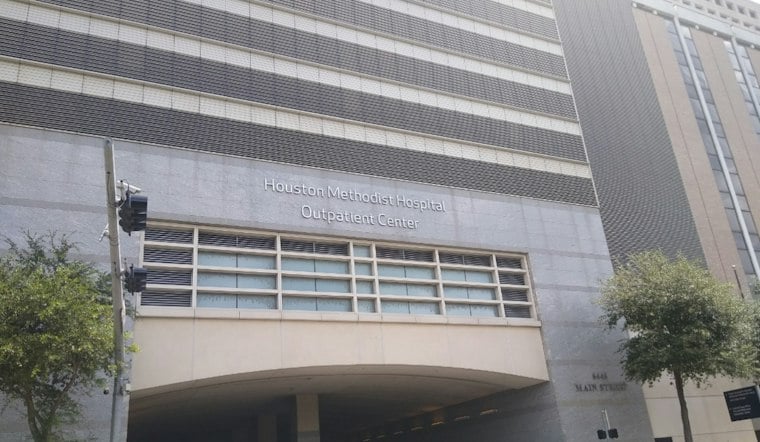
While in the city, she scheduled an appointment with Dr. Damiano Barone at Houston Methodist. Barone is an assistant professor of neurosurgery who specializes in complex functional and peripheral nerve disorders, including trigeminal neuralgia and neuropathic pain, and leads a neurorestoration laboratory focused on nerve and pain conditions, according to his professional biography. He diagnosed Briceño with Eagle syndrome, a condition caused by an abnormally long styloid process, the thin bone that extends downward near the ear.
A Bone Three Times Its Normal Length
A typical styloid process measures 2 to 3 centimeters, but Briceño's was roughly three times that length, per the Houston Chronicle's account. The overgrown bone was pressing on her glossopharyngeal nerve, which provides sensation to the mouth and throat. Barone told the newspaper that the specific pattern of her pain helped reveal the diagnosis.
Eagle syndrome is notoriously difficult to catch. Research published in PMC shows the condition is frequently misdiagnosed for years because its pain patterns closely mimic TMJ disorders, trigeminal neuralgia, occipital neuralgia and chronic ear infections — exactly the string of diagnoses Briceño had already cycled through before reaching Barone. Nerve pressure from the elongated bone can create abnormal signals and poorly localized pain that make clinical diagnosis challenging without specialized imaging, the same research notes.
The condition also skews heavily toward one demographic. Eagle syndrome is diagnosed roughly three times more frequently in women than in men, with most cases presenting in adults over 30, according to research published in PMC. Briceño, diagnosed in her 70s, fits within the broader range of adulthood onset the Houston Chronicle described as typically striking patients in their 30s, 40s or 50s.
Two Hours in the Operating Room
Briceño underwent surgery in December 2025 at Houston Methodist, where Barone and Dr. Laura Kim removed part of her elongated styloid process. Kim is an ear, nose and throat surgeon at Houston Methodist ENT Specialists who routinely performs advanced head and neck reconstructive procedures, according to her professional profile. The operation took two hours.
The results were immediate. Briceño's headaches and other symptoms disappeared right after surgery, and she stopped using pain medication altogether, the Houston Chronicle reported. She's now among an estimated 80% of Eagle syndrome patients who no longer experience symptoms following surgery — a success rate that lines up with broader research. A study in the Journal of Craniofacial Surgery found that styloidectomy — the surgical shortening of the elongated bone — yields complete long-term symptom relief in roughly 80% to 90% of treated patients.
Back to the Keys
Briceño has returned to playing piano. It's a modest coda to a medical journey that stretched across a decade and several wrong diagnoses before landing on the right one.
Beyond the pain Briceño experienced, doctors note the condition can carry more serious risks in some patients. A vascular variant known as stylo-carotid artery syndrome occurs when an elongated styloid process compresses or irritates the internal carotid artery, increasing the risk of transient ischemic attacks or stroke, according to research in Archives of Medical Science. That vascular complication wasn't described in Briceño's case, but it illustrates why specialists treat the condition as more than a nuisance once it's identified.





