

























































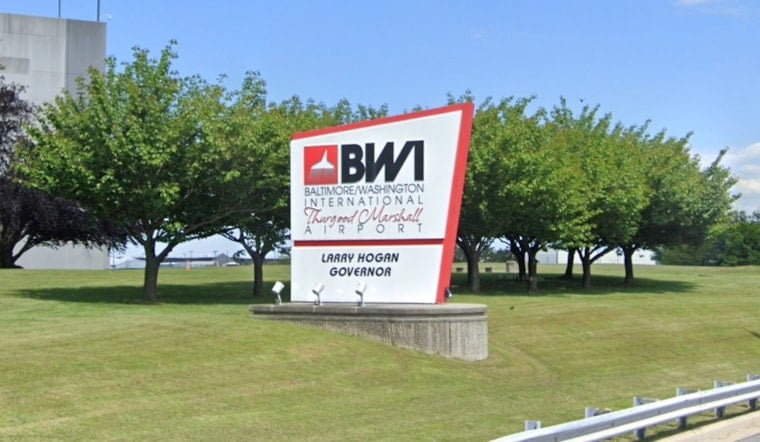
Governor Wes Moore ordered the Maryland Department of Transportation to establish an $18-an-hour floor for direct Maryland Aviation Administration contract workers at BWI Thurgood Marshall Airport, announcing the move at a Labor Day event alongside union leadership and the state's transportation secretary. He also pledged to introduce emergency legislation early in the 2027 legislative session aimed at extending similar protections to hundreds of airport workers who remain outside the current wage law.
Moore made the announcement at a Labor Day rally with leadership from 32BJ SEIU and Maryland Transportation Secretary Katie Thomson, according to WBFF. The governor directed that the Maryland Department of Transportation must ensure no airport worker under a direct MAA contract is paid less than $18 per hour. Thomson attended the event, per the station's report.
Closing the Gap Left by the 2021 Wage Law
The directive builds on the Secure Maryland Wage Act, passed in 2021, which raised pay for MAA contract workers at heightened-security transportation facilities. That law, covered at the time by The Washington Informer, mandated wage increases reaching $16.00 per hour plus a $1.00 hourly supplemental benefit, or $17.00 total, by 2026 for workers like non-TSA security officers, janitors, wheelchair attendants, cabin cleaners, and baggage handlers at BWI and Baltimore's Penn Station.
But the 2021 law left approximately 700 to 800 workers outside its coverage because they were not directly contracted by MAA, the Informer reported. Because the Secure Maryland Wage Act expires in 2026, Moore said he will introduce emergency legislation at the start of the 2027 legislative session to create a pathway toward raising pay for those indirect contract workers, whose proposed coverage would extend to all workers supporting BWI.
Union Leaders Call the Raise Overdue
32BJ SEIU's Manny Pastreich said the wage increase is sorely needed for some BWI airport workers, adding that fair wages, quality health insurance, and paid time off help the airport retain the skilled workforce needed to keep operations safe. Moore said employers must offer covered airport workers a health and welfare supplement supporting access to quality employer-paid health insurance.
Research from the UC Berkeley Institute for Research on Labor and Employment found that living wage policies at commercial airports reduced low-wage worker turnover by an average of 34 percent, a finding Baltimore Fishbowl has cited as evidence for union arguments that higher pay improves both retention and airport security. The UC Berkeley Labor Center notes that Maryland's approach mirrors sectoral airport wage rules already in place at major hubs including LAX, JFK, Newark Liberty, and Chicago O'Hare.
How BWI's New Floor Stacks Up Regionally
The new $18 rate for direct BWI contractors sits well above Maryland's statewide minimum wage of $15.00 per hour, a floor reached after a 2019 amendment accelerated the scheduled increase to finish on January 1, 2024, according to Employer Pass. It also matches Montgomery County's $18.00 per hour minimum for large employers, which took effect July 1, 2026, and exceeds Howard County's $16.00 requirement, per the Maryland Department of Labor.
An Airport at the Center of Maryland's Economy
BWI Thurgood Marshall Airport handled more than 25 million passengers in 2025, generating an estimated $11.3 billion in annual local economic impact and supporting more than 107,000 jobs statewide, according to figures published by the airport. The wage announcement also arrives months after BWI opened its $520 million Concourse A/B Connector and Baggage Handling System in January, the largest capital project in the airport's history, adding 142,000 square feet of space and boosting baggage screening capacity to nearly 3,500 bags per hour.
Southwest Airlines and other airlines serve BWI. The proposed legislation is intended to reach indirect airport workers, including wheelchair attendants, ramp staff, and cabin cleaners.
Whether the proposed legislative fix survives the 2027 session, and how airline vendors respond to the prospect of new mandated costs, remains to be seen. For now, the immediate change applies only to workers under direct Maryland Aviation Administration contracts, while the hundreds of indirect airport employees excluded since 2021 continue waiting for lawmakers to act.





