

























































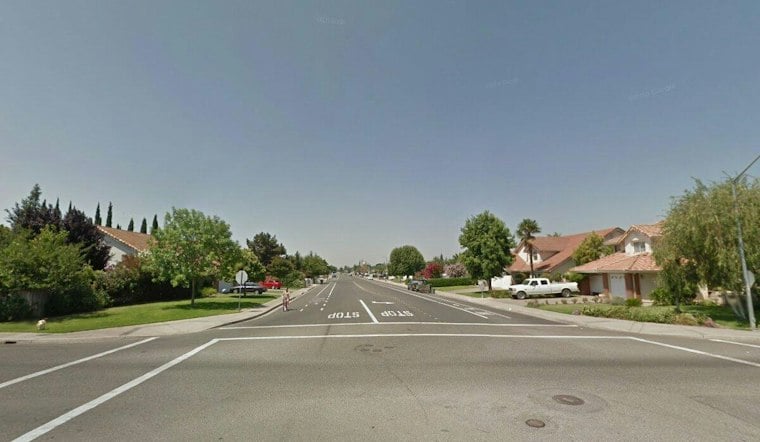
A mountain lion was caught on camera in Oakdale Heights near Maag Avenue and East D Street around 1 a.m. Monday. Police reviewed the footage and determined the animal was moving normally, with no signs of sickness, injury, or aggression.
According to the Oakdale Police Department, mountain lions are regularly seen near the Stanislaus River and in other rural pockets of Stanislaus County, making this kind of sighting far from unprecedented. Officers emphasized that an animal simply passing through a neighborhood does not indicate aggressive behavior, and the department is treating this as routine wildlife movement rather than an emergency.
That framing lines up with state guidance. California Department of Fish and Wildlife protocols hold that a mountain lion transiting a residential area does not constitute an aggressive threat. The department of fish and game was contacted about the Oakdale sighting and confirmed it is aware of the incident.
Why the Cats Keep Showing Up Near the River
Oakdale's geography helps explain the encounter. The city borders the Stanislaus River corridor, a Great Valley riparian ecosystem that environmental and transportation planning documents from Caltrans and local authorities describe as a vital habitat and movement corridor for migratory wildlife, the kind of vegetated waterway that draws deer, and the predators that follow them, right up against residential streets.
This isn't the first time a big cat has turned up near Oakdale. In October 2014, state game wardens confirmed a mountain lion presence in East Oakdale after nocturnal camera footage caught one feeding on a goat carcass near Dillwood Avenue, about two miles outside city limits, according to the Oakdale Leader. Farther south in the county, Fish and Wildlife trappers investigated a confirmed livestock attack in September 2014 after a 600-pound yearling horse was killed on a Hilmar ranch adjacent to the Merced River corridor, the Ceres Courier reported at the time.
Suburban sightings aren't limited to Oakdale, either. In June 2020, wildlife officers and Modesto police searched a neighborhood after Ring doorbell video captured a mountain lion roaming near Sonoma Park and Harvest Road, according to KCRA 3, illustrating how often home security cameras catch these animals before they slip back into wildlands.
Expanding Suburbs, Shrinking Buffers
Encounters like Monday's may become more common as Oakdale grows. The Stanislaus Local Agency Formation Commission approved the annexation of 304 acres into southeast Oakdale in August 2025 for future residential and commercial development, expanding the city's urban boundary along rural greenbelts that once buffered homes from wildlife corridors.
State law leaves little room for lethal responses to sightings like this one. Under California's Proposition 117, passed by voters in 1990, mountain lions are classified as a specially protected mammal, which bars sport hunting. In February 2026, the California Fish and Game Commission voted to list mountain lion populations in the Central Coast and Southern California regions as threatened under the California Endangered Species Act; the listing tilts official responses toward non-lethal capture and relocation when feasible, as Hoodline reported in its coverage of a similar sighting near San Francisco's Outer Sunset.
Attacks on humans remain exceptionally rare statewide. California Department of Fish and Wildlife records updated in August 2025 show fewer than 50 verified mountain lion attacks and six fatal incidents recorded since 1890, even as the state's mountain lion population is estimated at between 4,000 and 6,000 animals, according to KQED.
What Oakdale Police Are Telling Residents
Oakdale police asked residents to stay aware of their surroundings, particularly in the evening and early morning hours, and not to approach, follow, corner, or feed any mountain lion they encounter. Officers also urged residents to keep pets indoors, keep dogs leashed and close, and avoid leaving pet food or other potential food sources outside where it might attract wildlife.
Parents were told to closely supervise children when they're outdoors, and residents were warned never to approach or attempt to photograph a mountain lion at close range. If a mountain lion is actually encountered, police said people should not run, but instead face the animal, try to appear larger, make noise, and slowly create distance while giving the animal a clear escape route.



