

























































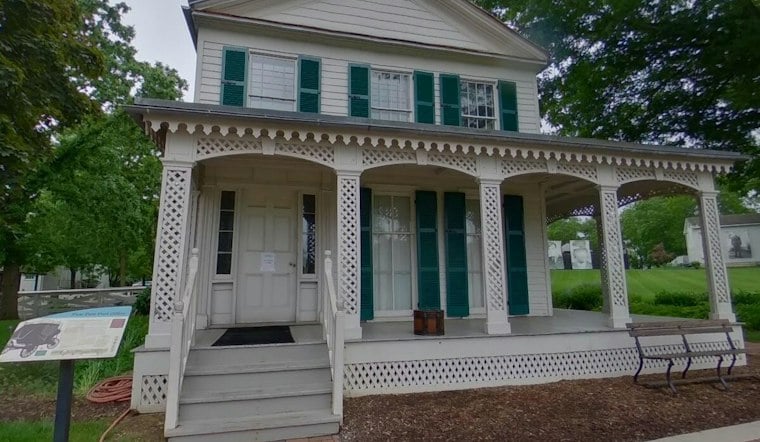
Naper Settlement wants Naperville taxpayers to help pay for a $145,000 feasibility study on the 30 historic structures scattered across its 13-acre campus, an assessment museum leaders say is overdue after more than two decades without one. The request comes as the blacksmith shop takes on water during heavy rains and the firehouse holds the city's oldest fire truck without anyone having formally checked whether the building itself can hold up much longer.
A Campus Overdue For A Checkup
The $145,000 ask is tucked inside Naperville's proposed $210.7 million Capital Improvement Program for 2027, presented to the City Council this month, according to NCTV17. Naper Settlement's request is far from the only big-ticket item in that budget: the city is also weighing $7.6 million for Riverwalk expansion projects and $37.5 million total for the Nichols parking deck, per the same report. No feasibility study of this kind has ever been conducted on Naper Settlement's buildings, according to the Chicago Tribune.
Rena Tamayo-Calabrese, president and CEO of Naper Settlement, told the Chicago Tribune the museum needs to know each structure's current condition before it can plan for the future. She said the museum's previous master plan is more than 20 years old and was built around a settlement-style village telling the story of the 1800s — a vision she said no longer aligns with present-day Naperville. The nonprofit museum now aims to tell Naperville's story from before settlement through the 21st century, using programming and the rotating exhibit space at the Pre-Emption House to cover more recent history in the meantime.
Which Buildings Might Move
Most of the structures on Naper Settlement's campus are replicas or buildings relocated from elsewhere, with only two — the Martin Mitchell Mansion and its carriage house — original to the site itself. The museum is now considering relocating four other structures within the campus: the blacksmith shop, the firehouse, the stone carver shop, and the print shop. The stone carver building itself was moved to Naper Settlement back in 1969, according to the Chicago Tribune's report.
The feasibility study is intended to determine the condition and status of each structure, the museum told the Chicago Tribune, and it will specifically look at whether the firehouse — which houses Naperville's oldest fire truck — can last another 20 years. The blacksmith shop's wooden floor takes on water during very heavy rains, an issue Naper Settlement wants the study to help address as it maps out repairs or relocation.
What Comes After The Study
If approved, the study would run in 2027, with Naper Settlement using its findings to determine what design work is needed next. A subsequent design phase, budgeted at roughly $223,000, would be requested as part of the 2028 budget, though the museum noted that figure could shift before that request is formally made. Even without approval of the design phase, Naper Settlement said the initial study would remain useful on its own, since the museum described itself as responsible for the long-term longevity of each structure on its campus.
A History Rooted In Preservation
Naper Settlement's identity has been tied to saving old buildings since its founding. The Naperville Heritage Society formed in 1969 to save Naperville's history and historic buildings. St. John's Episcopal Church, built in 1864, was the first building the group moved; it was relocated to the site in 1970 and restored as the Century Memorial Chapel, according to Patch. The museum today maintains a curated collection of more than 60,000 historical objects with the help of roughly 1,200 community volunteers, the outlet reports.
The 13-acre grounds include the 1883 Victorian mansion. That mansion, originally built as “Pine Craig,” earned a spot on the U.S. National Register of Historic Places in 1975, per Kiddle. Because Naper Settlement sits on city-owned land, its capital projects fall under the joint oversight of the Naper Settlement Museum Board, which includes City Council members, community representatives, and Naperville Heritage Society directors, according to the City of Naperville.
The city and the nonprofit heritage society have shared these costs before. In October 2021, the Naperville City Council unanimously reaffirmed a funding commitment of up to $1.2 million to the Naperville Heritage Society to co-fund capital improvements at the museum, as reported by Positively Naperville. That partnership has already produced visible results: in April 2023, Naper Settlement opened the 4,000-square-foot Mary and Richard Benck Family Agriculture Center, featuring a STEM learning lab developed with the Illinois Soybean Association, part of the museum's broader push to connect Naperville's agricultural past to its present.



