

























































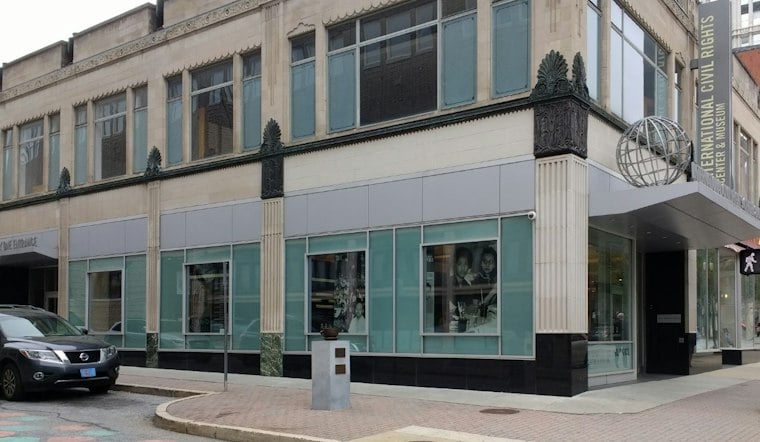
North Carolina lawmakers eliminated the state's Office for Historically Underutilized Businesses in the new state budget, cutting off an office that had connected women-, minority- and veteran-owned firms to state contracts since 1999. Now the North Carolina Department of Administration is holding a series of forums across the state to figure out what should take its place, starting with one at the International Civil Rights Center & Museum in Greensboro.
The office, known as HUB, had worked with more than 6,000 businesses, according to NCDOA, providing training, development resources and an easy-to-access vendor database, as WUNC News reports. Its closure came through Session Law 2026-41, also known as Senate Bill 257, which Governor signed on July 7, 2026, eliminating the office and repealing state statutes that had mandated minority business participation goals on public building projects, according to the UNC School of Government. The office had operated for 27 years after being established by executive order in 1999.
What the Numbers Show
The financial stakes are substantial. In fiscal year 2025, North Carolina state agencies spent nearly $13 billion on goods, services and construction, awarding over $928 million — or 7.22% — to HUB-certified businesses, per data compiled by Carolinas AGC. More than 6,000 businesses held active HUB certifications before lawmakers acted.
Small businesses represent 99.6% of all employers in North Carolina and generated 89.9% of the state's net new jobs in recent SBA statistics, with small firms accounting for 99.3% of construction businesses, according to The Charlotte Post. Construction was one of the primary industries governed by the repealed statutory participation goals.
A Race-Neutral Replacement Takes Shape
In place of HUB, the North Carolina Small Business Enterprise Program now sits within the Division of Purchase and Contract inside NCDOA, according to the seed story's reporting. Unlike its predecessor, the program is race- and gender-neutral, open only to for-profit businesses headquartered in the state with 100 or fewer employees and $1.5 million or less in net annual income after deducting cost of goods sold, per the UNC School of Government's analysis of the budget bill.
NCDOA Secretary Gabe Esparza said small businesses are vital to the economy and should be connected to opportunities, adding that he wants to continue supporting them through the Small Business Enterprise Program. Esparza has asked business owners to identify their needs and desired direction for the program directly. He was confirmed by the state Senate in April 2025 as the first Latino member of the Governor's Cabinet, according to a post from the North Carolina Department of Administration.
Forums Roll Across the State
NCDOA held its first forum for minority small business owners at the International Civil Rights Center & Museum in Greensboro to gather feedback. The department will hold another forum in October at reCity, located at 112 Broadway Street in Durham, with two more forums scheduled across the state in September. Secretary Esparza had originally scheduled four community forums for September across Greensboro, Durham, Charlotte and Greenville to solicit direct feedback from small business owners, according to NCDOA.
The department is gathering that public and expert feedback throughout the fall, with plans to officially launch a redesigned Small Business Enterprise Program by early 2027, per NC Political News. State officials are using online portals and expert roundtables alongside the in-person public forums to shape the new framework.
Political Pushback and a Narrow Legal Carve-Out
The elimination did not pass without a fight. State Representative Rodney Pierce introduced an amendment during House budget subcommittee discussions attempting to restore funding for the HUB office, but the budget ultimately passed without it under Republican legislative leadership, as reported by WRAL TV on Facebook.
One legal exception survived the repeal. Although the 2026 budget wiped out general minority participation goals, it left intact a provision in G.S. 143-64.31 — the Mini-Brooks Act — requiring public entities to make good faith efforts to notify minority firms when procuring architectural, engineering and design services, according to the UNC School of Government. Local governments and state agencies must still comply with those professional service notification rules even as the broader HUB framework disappears.
Small Contractors Left to Navigate Alone
With dedicated HUB outreach staff gone, small contractors seeking public contracts must now independently navigate multiple portals, including the state's electronic Vendor Portal as well as municipal and school district bid boards, according to Greater Diversity News. That fragmented landscape has pushed advocacy groups to step in where the state pulled back.
Minority business advocacy groups, including the Greensboro Business League, organized an independent statewide town hall titled “Gone… Now What?” on September 10, 2026, to mobilize HUB-certified contractors and build new private-public networks, The Charlotte Post reported. Many business owners said they learned about the HUB office's closure only after the budget had already become law.
Durham's own procurement pressures illustrate what is at stake locally. Boiler bidding at three Durham schools already required navigating minority business enterprise policies under North Carolina statutes, underscoring how public school procurement across the state now intersects with the same shifting rules NCDOA is trying to redesign before its early 2027 target.





