

























































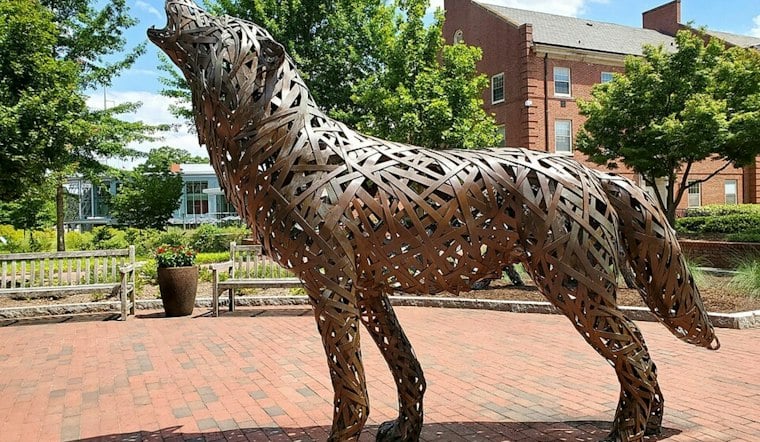
Students walking across Wolf Plaza this fall have been met with a familiar sight minus its usual companions: no wagging tails, no eager pups nuzzling up for a scratch between classes. NC State has restricted campus events to just one officially certified therapy dog, effectively sidelining the volunteer-run Free Moms group that had been bringing four to eight dogs to campus at a time for years.
The change means NC State has approved a single dog for 14 campus events since Aug. 18, according to the News & Observer, which first reported the policy shift. That approved dog is Olaf, a certified therapy dog who now handles roughly an hour of student attention at each appearance he makes on campus, per the same report. Free Moms, the nonprofit founded by Nancy Nelson in 2019, had previously brought multiple uncertified pet dogs to campus each week without incident, keeping them five feet apart and up to date on vaccinations and medicines under its own protocols.
Cecilia Dean, Free Moms' dog coordinator and an Apex resident, has watched the fallout firsthand. “Students are coming by looking for dogs, and there's no dogs,” Dean said, according to the newspaper's report. NC State notified Free Moms about the new policy just over a week before the fall semester began, leaving little time for the volunteer group to adjust.
Why the University Tightened the Rules
Before this policy, NC State had no formal dog rules on campus at all, the outlet reported. Now the university requires a canine request form submitted at least two weeks before an event, along with conditional permission from the responsible administrator, and only a certified therapy dog registered through the university can participate with approval. NC State has said it adopted the new policy to enhance safety for students and dogs, while still saying it values the companionship and stress relief dogs bring to students, faculty and staff.
The financial reality behind that requirement is steep. National therapy-dog registering organization Pet Partners requires handlers to complete an 8-to-10-hour education course for an $80 online fee, pass a hands-on team evaluation costing $15 to $30, and pay a $95 initial registration fee, with mandatory re-evaluations every two years. Altogether, per the News & Observer's reporting, certifying a single dog can cost over $1,000 — a steep barrier for a volunteer group that had been operating dozens of untrained pets at once.
NC State's move isn't happening in a vacuum. University Regulation REG 04.20.05 explicitly excludes pets and therapy animals from the legal definition of service animals, while Rule RUL 11.30.07 restricts approved emotional support animals strictly to residential facilities, barring them from classrooms and other non-residential buildings. Separate guidelines from NC State Student Centers, issued in 2018, require any animals at hosted events to be in good physical health, not overworked, and kept on leashes or in secure enclosures — standards distinct from the rules governing certified service animals.
How NC State Compares to Other Campuses
NC State's tightened approach isn't unique among North Carolina's public universities. At the University of North Carolina at Chapel Hill, flagship policies ban all personal pets inside university buildings and restrict non-service support animals strictly to student housing, permitting animals outdoors only under continuous leash control per local ordinance. NC State already runs an officially sanctioned pet therapy initiative of its own, called Pause for Paws, hosted by NC State Libraries at Hunt Library and D.H. Hill Jr. Library in partnership with the regional nonprofit Canines for Service.
Free Moms had grown well beyond a simple dog program by the time the new rules landed. What began with Nelson in 2019 expanded into a 501(c)(3) nonprofit with more than 400 volunteers who, according to WALTER Magazine, served an estimated 2,500 students each Thursday across two campus spots — Centennial Campus and Wolf Plaza — before expanding to four other Southern universities. Alongside the dogs, the group has offered baked goods, hugs, birthday celebrations and flowers.
Students Push Back With a Petition
A student-organized online petition has drawn more than 1,450 signatures, arguing that Free Moms has positively affected students' mental wellbeing. Nelson has described Free Moms as a blessing and a gift to the school, and she has said she wants Free Moms volunteers to remain positive even as the group navigates the new restrictions. Dean, for her part, said she hopes Free Moms dogs will return to campus someday.
There's research behind the students' push. A 2019 study led by Washington State University researchers and published in AERA Open found that just 10 minutes of hands-on interaction with dogs and cats on a college campus produced significant reductions in salivary cortisol, a primary stress hormone, according to Washington State University. A follow-up study published in Pets in February 2025 found that college students who took part in regular, unstructured drop-in sessions with therapy dogs over a full semester reported sustained reductions in stress and depression along with higher self-compassion.
That research lands against a backdrop of persistent student distress nationally. The 2024–2025 Healthy Minds Study, which surveyed more than 84,000 college students across 135 U.S. institutions, found that 32% screened positive for moderate or severe anxiety and 18% experienced severe depressive symptoms, according to the Healthy Minds Network. NC State directs students seeking additional support to its Counseling Center and to Wellness and Recreation, which together offer short-term individual counseling, group sessions and 24/7 crisis response through the university's Division of Academic and Student Affairs.
For now, the plaza where dozens of dogs once roamed each week is quieter, with Olaf carrying the load largely on his own. Whether Free Moms can clear the certification hurdle for even a handful of its dogs remains an open question, one that students, Dean and Nelson are all watching closely as the semester continues.





