

























































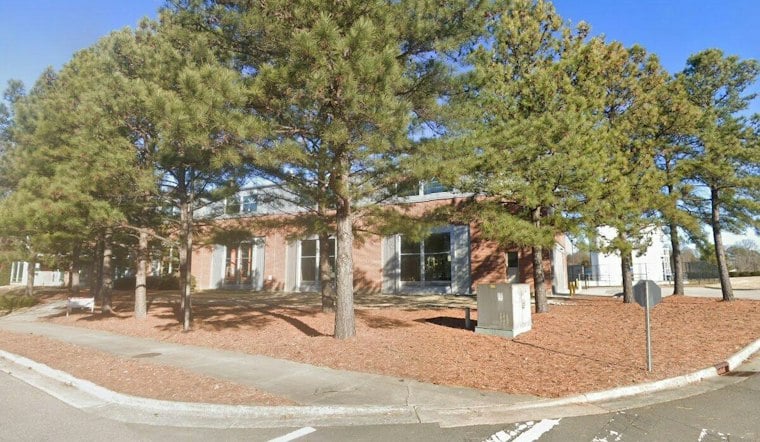
NC State University has opened a new battery makerspace on its Centennial Campus in Raleigh, giving students hands-on space to design, test, and improve battery technologies as North Carolina races to fill thousands of energy-storage jobs. The Battery and Energy Storage Technology Makerspace officially opened last week, according to the university, and is meant to bridge classroom learning with the real-world demands of an industry expanding fast across the state.
The timing lines up with the region's biggest battery bet yet. As reported by ABC11, Toyota operates a nearly 7 million-square-foot battery manufacturing facility in Randolph County and plans to use the new NC State makerspace for training and research. That plant traces back to a $13.9 billion investment that North Carolina officials celebrated at its grand opening in November 2025, a project projected to employ more than 5,100 workers, according to the North Carolina Office of the Governor. The Liberty facility produces battery packs for hybrid, plug-in hybrid, and battery-electric vehicles, according to Toyota's own careers site.
NC State Executive Vice Chancellor and Provost Jim Pfaendtner framed the stakes in blunt terms, per ABC11's reporting, saying the United States needs a pipeline of new engineers able to participate in new factories. The makerspace is designed to be more than a traditional teaching laboratory, according to the same account, giving students room to solve real-world problems and refine their own work rather than simply following a set curriculum. One student project already improved battery performance through that hands-on process, the outlet reported.
Students and Faculty See a Different Kind of Lab
NC State student Jonah Bridges said the makerspace will be a useful addition to his department and that it enables connections with companies and professors from different backgrounds, according to ABC11's report. Faculty member Shelby Pillai, who is involved with the project, said the space supports both education and innovation by combining established fundamentals with opportunities for researchers to explore and innovate, per the same account.
That framing fits into a much larger institutional push. NC State formally established a campus-wide Battery and Energy Storage Systems Initiative in May 2025 to align research and faculty recruitment across 12 academic departments, according to the NC State University Department of Materials Science and Engineering. That initiative connects faculty across materials science, electrical engineering, textiles, and mechanical engineering. Reporting by Axios Raleigh in September described the makerspace as designed to channel students from diverse technical majors into energy storage studies to meet the state's surging labor demands across electric vehicles, grid storage, and artificial intelligence.
State Funding and Federal Research Dollars
The North Carolina General Assembly funded part of the makerspace effort as part of expanding the state's engineering and technology capabilities, according to ABC11. That funding traces to the legislature's Engineering North Carolina's Future initiative, a program aimed at expanding engineering enrollment and recruiting faculty to support high-tech industries, according to NC State's College of Engineering. The state investment aims to grow the College of Engineering's enrollment to more than 14,000 students.
NC State's battery research already has federal backing beyond the new makerspace. In September 2024, the U.S. Department of Energy awarded $62.5 million to establish the national Aqueous Battery Consortium, with NC State serving as one of 15 research institutions advancing water-based, non-toxic grid energy storage, per the university's College of Engineering. That consortium is led by Stanford University and the SLAC National Accelerator Laboratory. On Centennial Campus, NC State's FREEDM Systems Center also partnered in September 2025 with EV charging manufacturer Kempower to research energy management and heavy-duty multi-megawatt charging systems, according to the FREEDM Systems Center. Kempower established its North American headquarters in Durham specifically to collaborate with local research universities.
A Growing but Volatile Battery Corridor
Toyota isn't the only battery manufacturer expanding nearby. Forge Nano broke ground in August on an expanded 315,000-square-foot gigafactory in Morrisville, supported by a $100 million U.S. Department of Energy award to produce up to 3 gigawatt-hours of lithium-ion cells annually, according to AZoCleantech. That facility operates under Forge Nano's subsidiary Forge Battery to supply commercial and defense clients.
Not every battery bet in North Carolina has paid off, though. Sodium-ion battery maker Natron Energy halted operations in September 2025, abandoning plans for a $1.4 billion gigafactory in Rocky Mount that had promised 1,000 jobs before capital shortages forced its shutdown, according to Utility Dive. The collapse stands as a reminder that the state's clean-tech boom carries real financial risk even as universities and megaprojects race to build out the workforce pipeline.
The new battery space also fits into a broader network of student fabrication facilities NC State has been building. It complements the Maker Studio at Hunt Library, which opened in March 2025 with 3D printing and electronics prototyping equipment, according to NC State University Libraries, whose campus survey found high student demand for hands-on fabrication space near Centennial Campus. NC State's research and technology commercialization efforts, more broadly, have already launched more than 190 spin-off companies generating an estimated $6.5 billion in annual income for the state, per Business North Carolina, with the university's College of Engineering ranking among the top public engineering programs nationwide.



