

























































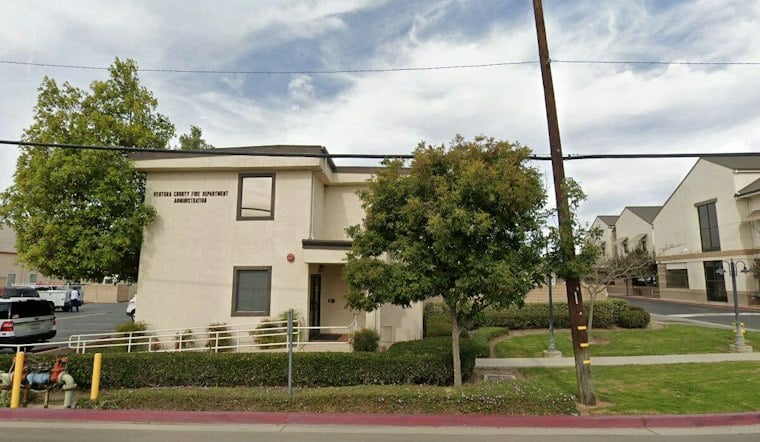
A new wildfire broke out on private land in Ventura County on Wednesday, according to a report from the National Interagency Fire Center, with no containment update and no determined cause as of Wednesday afternoon. The fire, tracked under the incident name LAC-333621, was first flagged through federal wildfire tracking data.
The report was first published by the Sacramento Bee, whose account was generated using AI based on newsroom templates that are reviewed and edited by journalists. As of the initial report, fire officials had not released details on the blaze's size, its exact parcel location, or whether any structures were threatened.
Early Wildfire Reports Carry a Track Record of Errors in Ventura County
Ventura County residents have reason to treat brand-new fire alerts with some caution. CAL FIRE officials warned in March that initial wildfire dispatches generated by automated bots should be treated with skepticism and verified by humans, a caution issued after an automated bot brief falsely reported a 500-acre “Santa Fire” in Ventura County that turned out to be a mislocalized incident from Santa Fe, New Mexico, as Hoodline reported in a prior correction. A similar early-stage, unverified report surfaced again earlier this month with the New Vedder Fire on federal land in the county, where the cause likewise remained unknown at first report.
Whether LAC-333621 will follow that same pattern of early ambiguity resolving into a verified, smaller-scale incident, or grow into something more serious, remains to be seen. For now, the fire's containment status and cause both remain unreported.
Autumn Brings Ventura County's Highest Wildfire Risk
The timing of the new fire lands squarely within the season California fire officials consider most dangerous. Historical statewide incident data shows that September and October are California's most destructive wildfire months, as high-velocity Santa Ana offshore winds arrive alongside peak dry vegetation, according to Frontline Wildfire Defense. Autumn blazes can pose serious risks.
Ventura County has firsthand experience with that autumn danger. The 2017 Thomas Fire, which tore through Ventura and Santa Barbara counties, destroyed more than 1,000 structures, making it one of the largest and most destructive wildfires in modern California history, per CAL FIRE. The cited sources do not detail the cause of that fire. More recently, the November 2024 Mountain Fire destroyed more than 100 structures. The cited sources do not detail the cause of that blaze. CAL FIRE opened an independent operational review of the Ventura County Fire Department regarding that incident in February.
Infrastructure Fixes Followed Past Fires
Those two major fires have prompted discussion of local infrastructure fixes. Power-related pump failures and water-supply problems were reported during the blazes. Proposals followed to provide backup power for pumps and fill storage tanks after dangerous-weather notifications.
The underlying hydrant problem is not unique to Ventura County. A 2026 study from the UCLA Luskin Center for Innovation found that hydrants losing pressure during major wildland-urban interface fires reflects a structural issue across western states, since municipal water networks are engineered for localized building fires rather than multi-neighborhood wildland conflagrations, the Los Angeles Times reported. The same research noted that water agencies often face legal and financial constraints under Proposition 218 when trying to fund dedicated wildfire water infrastructure.
Revised California Fire Hazard Severity Zone maps were released in March 2025.
The Ventura County Fire Protection District is a local emergency-response agency in the county. No containment percentage, acreage estimate, or cause determination for LAC-333621 had been released as of Wednesday, and Hoodline will update this report as verified details emerge.





