

























































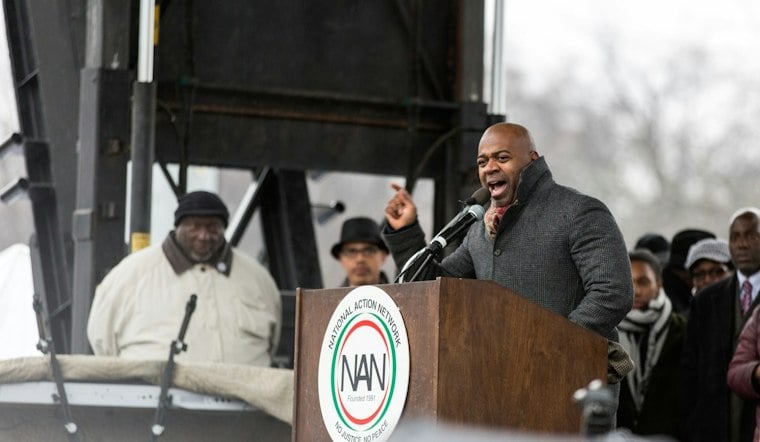
Newark homeowners are bracing for a sharp jump in their county tax bill, and the city's mayor and Essex County's longtime executive can't agree on who deserves the blame. Newark Mayor Ras Baraka says the average Newark homeowner will see county taxes climb from $991 to $1,551, while Essex County Executive Joseph DiVincenzo Jr. insists Baraka is pointing fingers in the wrong direction entirely.
The dispute, first detailed by Gothamist, centers on 55 county-owned properties inside Newark with a combined assessed value of $717 million. Because New Jersey law exempts state, county and municipal property used for public purposes from local property taxes, Essex County pays no city tax on that land — the same exemption category that covers state-owned properties, religious facilities and hospitals statewide, according to the statute underlying the arrangement. Baraka argues that if the county paid regular city taxes on those parcels, it could provide Newark roughly $30 million a year; he says that money instead flows from Newark taxpayers to the county rather than staying in the city.
A $37 Million Estimate, Disputed
Baraka says the tax increase itself is what pushed him to raise the issue, estimating that taxes collected by Essex County from Newark taxpayers will grow by roughly $37 million. DiVincenzo disputes that figure, saying the county's levy will actually rise by $10 million, and he has rejected Baraka's proposal for tax credits aimed at Newark homeowners.
DiVincenzo has gone further, claiming Newark collected $30 million more than necessary from residents in county taxes and effectively held onto that excess for municipal purposes until the city secured a state loan. Newark received a $30 million loan from the state last year, and the city later repaid it after selling bond anticipation notes. It's the DiVincenzo camp's answer to Baraka's own $30 million figure — two officials, two very different $30 million claims, pointed at each other.
Two Camps, One Number, No Agreement
DiVincenzo has called Baraka's focus on the county misguided and said Newark benefits substantially from Essex County services. In his telling, as Gothamist reported, this shell game only hurts Newark taxpayers — a jab aimed squarely at how the city has managed its finances rather than at the county's exemption from local property tax. Baraka, for his part, argues that Essex County's tax-exempt properties unfairly burden Newark residents and businesses, and says responsibility for supporting institutions and infrastructure in the city should be shared rather than falling disproportionately on Newark homeowners.
Any fix to the underlying structure — the exemption itself — would require the state legislature to enact a statewide change to the financial relationship between counties and their county seats. Baraka says he plans to bring legislation addressing county tax treatment before lawmakers, and he has called on Essex County to compensate Newark for hosting properties that generate no local tax revenue.
Old Rivalry, New Flashpoint
The feud didn't start with this year's tax bills. DiVincenzo endorsed Baraka's opponent in Newark's 2014 mayoral election, and more recently backed Mikie Sherrill over Baraka in last fall's New Jersey gubernatorial race. Sherrill went on to defeat Baraka in the Democratic primary, in which Baraka had finished as the leading progressive candidate. Despite the long-running friction, Baraka did not speak to DiVincenzo before publishing an op-ed on the issue in New Jersey Globe last month, and DiVincenzo released his own public statement days later. As of the Thursday before Gothamist's report, the two men had still not spoken directly about the issue — even though they have worked together in the past on replacing every toxic lead service line in Newark.
Essex County legislators, according to Gothamist's reporting, do not want to be caught between the two men as the dispute plays out. DiVincenzo has served as Essex County executive since 2003 and is up for re-election this fall, while Baraka was recently re-elected to a fourth term as Newark's mayor.
Newark's Narrow Homeowner Base Raises the Stakes
The fight over who pays what carries extra weight in a city where most residents are renters, not owners. U.S. Census Bureau data shows owner-occupied housing accounts for about 24% of Newark's housing stock, with renters occupying about 76% of more than 85,000 units — meaning a tax increase lands on a relatively small slice of homeowners even as costs risk passing through to tenants. Newark's average residential property tax bill of $7,238 already sits at roughly half of Essex County's overall average of $14,460, according to state taxation data, and Essex County itself carries the highest average residential tax bill in New Jersey even as statewide collections hit a record $36.1 billion in 2025.
The structural tension cuts both ways. While counties can't tax their own exempt land inside a host city, New Jersey's Long Term Tax Exemption Law allows municipalities like Newark to retain up to 95% of PILOT payments from redevelopment projects, forwarding only 5% to the county — a dynamic Newark has used repeatedly on major housing developments, including projects Hoodline has previously covered near MLK Boulevard and at Cosmo 440. Newark is New Jersey's most populous city and the county seat of Essex County, giving both officials outsized influence over how the tax burden ultimately gets divided.



