

























































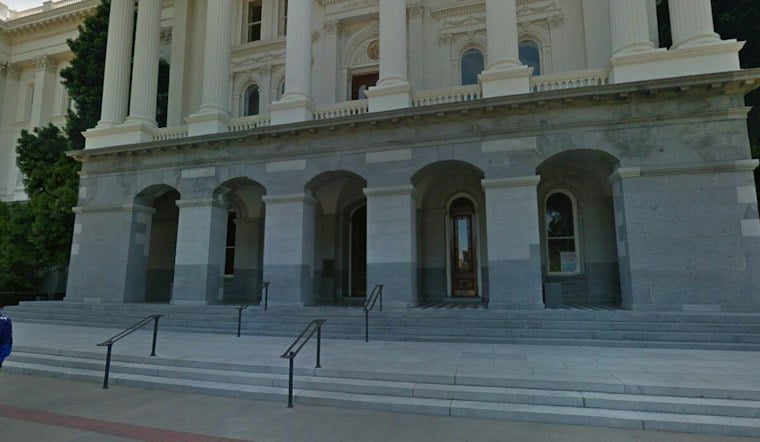
Governor Gavin Newsom has signed a law requiring his approval before another state, territory or Washington, D.C., sends National Guard troops into California for military duties or law enforcement. Senate Bill 1354 responds to the dispute over last year's deployment to Los Angeles and establishes a state-level limit on out-of-state Guard forces entering California.
The measure, sponsored by state Sen. Bob Archuleta of Pico Rivera, was reported on by the San Francisco Chronicle. It addresses Title 32 deployments, in which Guard troops remain under state command while receiving federal support, according to a Senate Committee on Public Safety analysis. The law does not restrict the President's separate Title 10 authority to federalize Guard forces, the Chronicle reported.
Archuleta said the bill reinforces the governor's authority as California's commander in chief. Newsom, for his part, said California's National Guard is deployed to serve the people, not to intimidate them.
The Los Angeles Deployment That Sparked the Fight
The dispute behind the law began in June 2025, when the Trump administration sent more than 4,000 National Guard troops and 700 Marines to Los Angeles in response to protests over federal immigration raids, despite Newsom's objections. The Chronicle reported that most of the soldiers were recalled in July and that California ultimately secured the withdrawal of troops from Los Angeles in December 2025.
How disaster aid differs from federalized deployments
California has used the Emergency Management Assistance Compact to receive firefighting aid from other states. According to the California Governor’s Office of Emergency Services, one wildfire response brought 25 engines and 94 personnel from Washington, 10 engines and 40 personnel from Utah, and one engine and three personnel from North Dakota. SB 1354's exemption for interstate compacts is intended to preserve that type of mutual aid. The legal distinction is between state-controlled and federally controlled forces. According to the Congressional Research Service, Guard members serving under Title 32 remain under their home-state governors' control, while Title 10 is a different federal status; SB 1354 addresses the former and does not limit the latter. The Senate committee's analysis also notes that Oregon and California challenged the President's September 2025 deployment of 400 federalized Texas and California Guard members to protect a federal building in Oregon, and describes an October effort involving 300 Illinois Guard members and 400 Texas soldiers for immigration operations in Chicago.
Newsom called the deployment a brazen abuse of power, and the fallout has been extensive. In December 2025, U.S. District Judge Charles Breyer ruled that the federal activation of California Guard troops lacked legal justification under 10 U.S.C. § 12406, according to Jurist.org. The order was stayed until the following Monday to permit an appeal. That ruling followed an earlier determination in September 2025 that using federalized troops for local policing violated the 1878 Posse Comitatus Act, a law that generally prohibits the use of the armed forces to enforce criminal laws.
Hoodline's own coverage tracked the deployment's ripple effects. The initial federalization sparked outrage in Los Angeles when troops arrived over Newsom's objections in June 2025. Weeks later, Hoodline reported that firefighting readiness took a hit when the diversion left CAL FIRE's specialized Task Force Rattlesnake hand-crew capacity down to 40% during peak fire season, since eight of the program's 14 teams rely heavily on Guard members. Newsom separately criticized the administration over public-safety consequences.
A Bill Softened, Then Passed With Bipartisan Votes
A March 25, 2026 version of SB 1354 included a fine of up to $10,000 and imprisonment for unauthorized out-of-state military entry, according to the Senate Committee on Public Safety's analysis. The enacted measure was later scaled down, the Chronicle reported. The Legislature passed it with overwhelming Democratic support and a handful of Republican votes, according to the Chronicle.
The law exempts existing interstate military compacts, including mutual-aid agreements used for natural disasters, and educational or training exercises held in California. The Senate committee's analysis says the carve-outs include California's participation in the Emergency Management Assistance Compact.
Washington state lawmakers passed a similar ban on outside National Guard troops in 2025.
Legal Battles and Political Fallout Continue
The Los Angeles deployment has generated legal fights well beyond the new statute.
Newsom also stopped paying dues to the National Governors Association amid the fallout, though he stayed in the organization. On the federal side, California U.S. Senator Alex Padilla introduced legislation in September 2025 requiring the President to submit a report to Congress containing information about civilian-Guard interactions and a certification that deployments did not interfere with disaster response, according to a statement from the Office of Senator Alex Padilla.
SB 1354 now sets a statutory approval requirement for covered Title 32 deployments while leaving federal Title 10 authority untouched. Its practical effect in a future conflict would likely depend on how courts and federal officials interpret the boundary, particularly after the legal and political disputes surrounding the Los Angeles deployment.



