

























































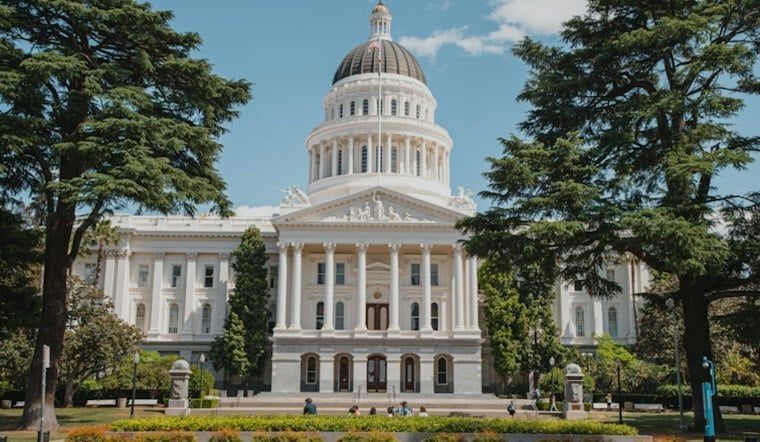
California state workers could eventually get a paid day off for Native American Day, but not right away. Governor Gavin Newsom signed legislation this week making the fourth Friday of September a paid holiday for state employees, though the statewide benefit requires legislative funding; individual bargaining units may separately negotiate the holiday.
The bill, AB 1841, was authored by Assemblymember James Ramos, and as reported by CBS Sacramento, it allows state bargaining units to negotiate Native American Day as a paid holiday, with the statewide benefit ultimately requiring funding from the California Legislature. Implementation also depends on CalHR determining that sufficient funding exists.
Native American Day has been a legal holiday in California since 1998, but it was never a regular paid day off for most state workers, who instead had to use personal-holiday credit if they wanted to take it. Newsom's signing came as this year's observance marked the state's 59th annual Native American Day, held under the theme “Inherent Sovereignty: Tribal Nations Fighting to Protect Our People and Defend Our Land,” per the Office of Governor Gavin Newsom.
A Governor's Words on Reckoning and Repair
Newsom framed the legislation as part of a broader accounting with the state's past. He said the law reflects California's reckoning with its treatment of Native people and its efforts to build a stronger relationship with tribes, according to the same CBS Sacramento report. “We have great remorse over the violent beginnings of this state and a strong commitment to forging a better path forward together,” Newsom said.
Those remarks echo a stance the governor has held for years. Newsom previously apologized for California's mistreatment of Native Americans. The law package signed alongside AB 1841 included an extension of California's formal apology for historical violence and other harms against Native Americans to the Legislature and the courts, CBS Sacramento reports.
Building on a Pattern Set by the Courts
This isn't the first time Native American Day has expanded its reach into California's public payroll. A 2021 law made it a judicial holiday beginning in 2022, replacing Columbus Day on the court calendar without adding another paid day off for court employees, meaning California courts already close for the observance. As Native News Online notes, AB 1841 expands upon that earlier measure, AB 855, extending a similar concept from the judicial branch toward the rest of the state workforce.
Ramos is a familiar name behind these efforts. A lifelong resident of the San Manuel Indian Reservation and a member of the Serrano/Cahuilla tribe, he became the first California Native American elected to the state Legislature in 2018, according to Capitol Weekly.
Part of a Wider Legislative Package
AB 1841 didn't arrive alone. It was part of a package of laws Newsom signed involving California tribes, and Ramos said the additional bills signed the same day advance important policies in higher education, protecting Indian children, and continuing to address the missing and murdered Indigenous people crisis, per CBS Sacramento. A separate law made the Governor's Office of Tribal Affairs permanent.
The same legislative session also produced AB 1881, which establishes enforceable protections for the free exercise of California Indian religious and spiritual practices on state lands.
A Long Road to Recognition
California's designated day honoring Native Americans has a decades-long history. It originated in 1939 when Governor Culbert Olson established October 1 as “Indian Day,” before Governor Ronald Reagan shifted the observance to the fourth Friday in September in 1968, and California has recognized it as a legal state holiday since 1998, according to ABC10.
For now, the practical effect of AB 1841 remains a waiting game. Whether state workers see a paid holiday next September — or the September after — depends on legislative funding and a CalHR determination that sufficient funding exists; individual bargaining units may negotiate the holiday separately.



